

Falafel Nutrition Facts: Calories, Protein & Benefits
Falafel is one of the most popular plant-based street foods in the world, loved for its crunchy outside, herby interior, and satisfying bite. But beyond the taste, many people want to know exactly what falafel does for the body. Is it a genuinely healthy food, or is it just a fried snack wearing a health-food reputation? This article breaks down complete falafel nutrition facts, including calories, protein, fat, fiber, vitamins and minerals, and explains how preparation method changes the picture entirely.
Also read the article : Traditional Beef Tacos Recipe: An Authentic Mexican Favorite
What Is Falafel and What’s In It?
Falafel is a traditional Middle Eastern dish made primarily from ground chickpeas or fava beans, sometimes a blend of both, mixed with fresh herbs like parsley and cilantro, along with garlic, onion, cumin and coriander. The mixture is shaped into small balls or patties and traditionally deep-fried, though baked and air-fried versions have become increasingly common.
The dish is widely believed to have originated in Egypt, where fava beans remain the traditional base, before spreading across the Levant and the wider Middle East, where chickpeas became the more common ingredient. Today falafel is a staple street food from Cairo to Beirut to Tel Aviv, typically stuffed into pita bread with salad, pickles and a tahini or yogurt-based sauce, or served as part of a mezze platter alongside hummus and baba ganoush. Its popularity has since spread globally, and falafel now appears on menus far beyond the region, from casual food trucks to sit-down Mediterranean restaurants, largely because it offers a satisfying, protein-rich option for vegetarians, vegans and meat-eaters alike.
The base ingredient, legumes, is what gives falafel its nutritional identity. Chickpeas and fava beans are naturally rich in plant protein, dietary fiber, complex carbohydrates, and micronutrients such as iron, magnesium, folate and potassium. Because falafel is legume-based rather than meat-based, it is naturally gluten-free (when no wheat flour binder is used) and completely plant-based, making it a popular choice among vegans, vegetarians and flexitarians alike.
Where falafel’s nutrition profile shifts significantly is in preparation. Deep-frying, the traditional method, adds a substantial amount of fat and calories compared to baking or air-frying the same mixture. This single variable is responsible for most of the difference between “falafel as a nutritious legume-based food” and “falafel as a high-calorie fried snack.”

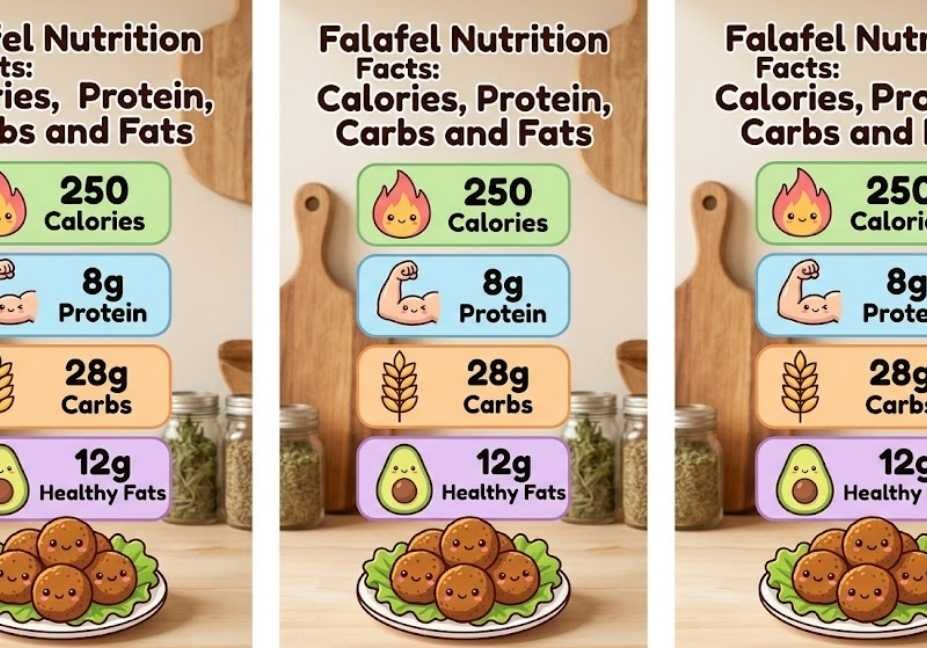
Falafel Nutrition Facts: Calories, Protein, Carbs and Fat
According to USDA FoodData Central figures for home-prepared, deep-fried falafel, a standard 100-gram serving, roughly three to four small balls, contains the following:
| Nutrient | Amount per 100g (approx. 4 balls) | % Daily Value* |
|---|---|---|
| Calories | 333 kcal | 17% |
| Total Fat | 18 g | 23% |
| Saturated Fat | 2.4 g | 12% |
| Sodium | 294 mg | 13% |
| Total Carbohydrate | 32 g | 12% |
| Dietary Fiber | ~4.9 g | 18% |
| Protein | 13 g | 26% |
| Potassium | 585 mg | 12% |
Based on a 2,000-calorie daily diet. Values are approximate and vary by recipe, portion size and frying oil.
Falafel’s calorie count comes from a fairly even split between carbohydrates and fat, with a meaningful protein contribution. Roughly 37% of its calories come from carbohydrates, 47% from fat, and 16% from protein, a macronutrient profile that reflects both its legume base and its frying method.
Vitamins and Minerals in Falafel
Beyond calories and macronutrients, falafel offers a genuinely useful micronutrient profile, largely thanks to its chickpea or fava bean base:
- Iron: around 3.4 mg per 100g, supporting oxygen transport and energy metabolism
- Potassium: around 585 mg per 100g, important for blood pressure regulation and muscle function
- Calcium: around 54 mg per 100g, contributing to bone health
- Folate and B vitamins: present in meaningful amounts, supporting energy production and cell growth
- Magnesium: contributed by the chickpea base, involved in over 300 enzymatic reactions in the body
Fresh herbs like parsley and cilantro, standard falafel ingredients, also add small amounts of vitamin C and antioxidant compounds, while garlic and cumin contribute mild anti-inflammatory properties without adding meaningful calories.
Health Benefits of Eating Falafel
Falafel’s biggest nutritional strength is its legume base.
- Supports satiety: the combination of protein and fiber slows digestion and helps control appetite
- Low glycemic index: chickpeas release glucose gradually, helping stabilize blood sugar levels
- Heart-supportive fiber: soluble fiber from legumes can help manage cholesterol levels over time
- Plant-based protein source: a useful option for people reducing red meat or animal protein intake
- Naturally gluten-free base: suitable for many gluten-sensitive diets when no wheat-based binder is used
That said, falafel is not automatically a “diet food.” Because traditional falafel is deep-fried, regular consumption of the fried version, especially served in large portions with creamy sauces and white pita, can add up in calories, fat and sodium. The dish’s health value depends heavily on preparation method and portion size, not just its core ingredients.
It is also useful to compare falafel with other common fried or fast-food options. Gram for gram, falafel generally comes out ahead of items like fried chicken nuggets or deep-fried potato snacks, mainly because its fiber and micronutrient content is considerably higher and it contains no cholesterol, since it is entirely plant-based. Compared with other legume-based patties, such as lentil or black bean burgers, falafel tends to be similar in protein but somewhat higher in fat due to its traditional frying method, which is worth keeping in mind when choosing between plant-based options on a menu.
How to Make Falafel Healthier
- Bake or air-fry instead of deep-frying to cut fat and calories significantly while keeping the texture crisp
- Watch portion size, since calories rise quickly when moving from three to six or seven pieces
- Choose whole-wheat pita instead of white pita to add fiber and micronutrients to the overall meal
- Go easy on creamy sauces like tahini or garlic mayo, which can significantly increase the fat content of a falafel meal
- Pair with fresh vegetables and salad to add volume, fiber and vitamins without many extra calories
Home preparation offers the most control, since restaurant and packaged falafel can vary widely in sodium and oil content depending on the brand or kitchen. Reading labels on frozen or packaged falafel is also worthwhile, since sodium content in particular can differ significantly between brands, sometimes by more than 150 milligrams per serving, which matters for anyone watching blood pressure.
Frequently Asked Questions
1. How many calories are in falafel?
A 100-gram serving of traditional deep-fried falafel, about three to four balls, contains approximately 333 calories. A single small patty is roughly 57 calories.
2. Is falafel a good source of protein?
Yes. Falafel provides around 13 grams of protein per 100-gram serving, making it a solid plant-based protein option, especially when paired with whole grains for a more complete amino acid profile.
3. Is falafel healthy or unhealthy?
Falafel can be a healthy choice because of its legume base, fiber and protein content, but traditional deep-frying increases its fat and calorie content. Baked or air-fried falafel is a healthier alternative.
4. Is falafel gluten-free?
Falafel made purely from chickpeas or fava beans, herbs and spices is naturally gluten-free. However, some recipes add wheat flour as a binder, so it is worth checking ingredients if you need a strictly gluten-free option.
5. Can falafel help with weight management?
The fiber and protein in falafel can support satiety and help control appetite, which may assist with weight management. However, portion size and preparation method, baked versus deep-fried, play a major role in whether falafel fits comfortably into a calorie-controlled diet.
Conclusion
Falafel sits in an interesting nutritional middle ground. Its core ingredients, chickpeas or fava beans, herbs and spices, offer genuine health benefits: solid plant protein, useful fiber, and a meaningful spread of vitamins and minerals. At the same time, its traditional deep-fried preparation can push up calories, fat and sodium if eaten frequently in large portions or paired with heavy sauces. Understanding the full falafel nutrition facts, rather than treating it as simply “healthy” or “unhealthy,” makes it easier to enjoy this Middle Eastern classic in a way that fits your goals, whether that means baking it at home, controlling portion size, or simply pairing it with a lighter salad and wholegrain pita.

2 Comments