
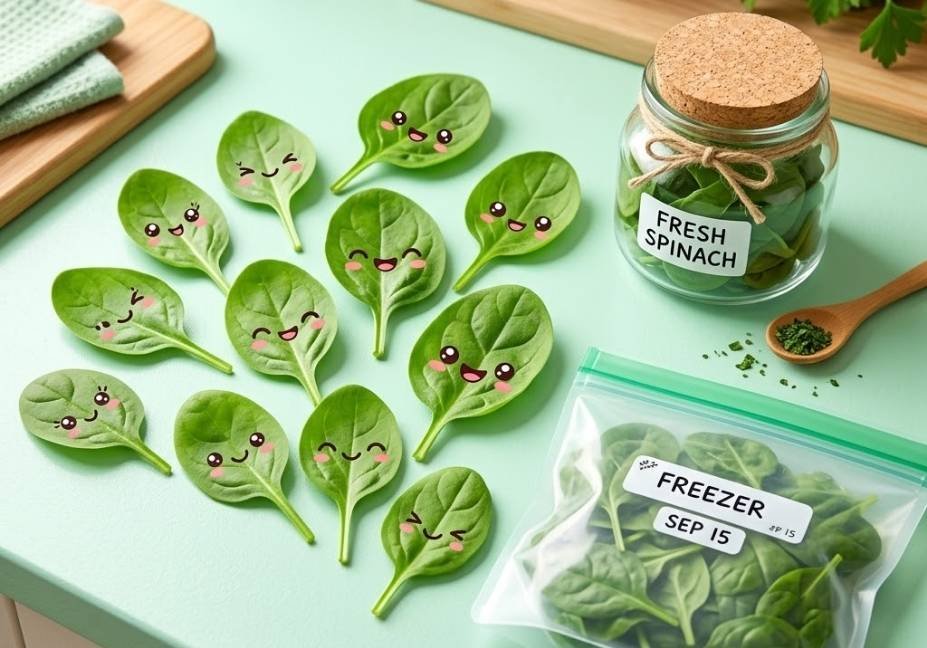
How to Freeze Spinach: Easy Step-by-Step Guide
Fresh spinach is nutritious, versatile, and easy to add to many meals. However, a large bag of spinach can spoil quickly in the refrigerator. Freezing is a practical way to preserve extra spinach and keep it ready for soups, smoothies, sauces, pasta, curries, and other cooked dishes.
The best method is not simply placing fresh spinach straight into the freezer. For better quality, spinach should be washed, blanched briefly, cooled quickly, drained well, and packed with as little air as possible. Proper blanching helps slow enzyme activity that can affect color, flavor, texture, and nutrient quality during frozen storage.
Also read the article : Restaurant Style Caramel Popcorn Recipe: Easy & Crunchy
How Do You Freeze Spinach?
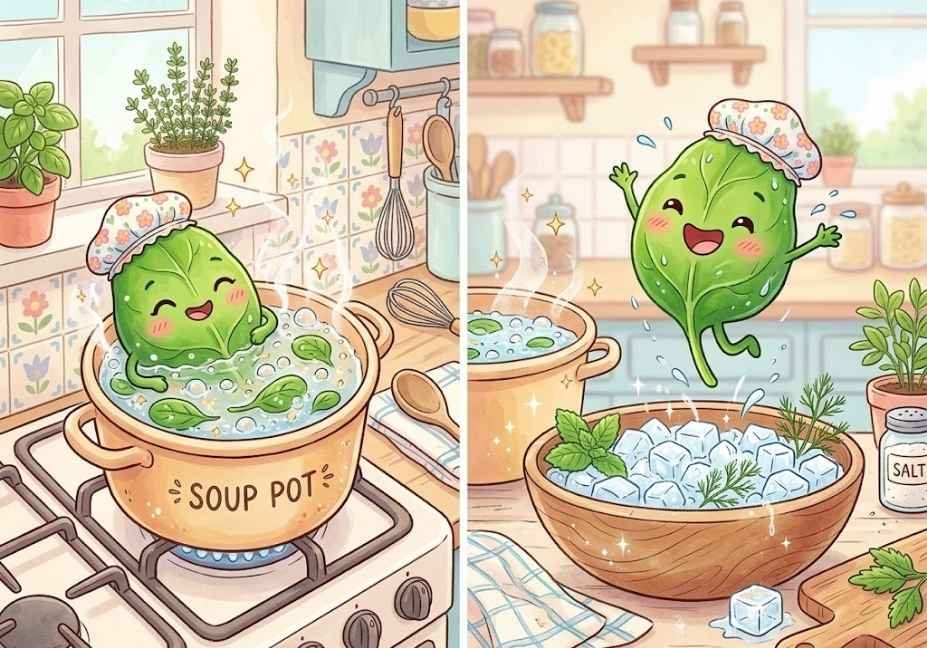
To freeze spinach, first wash the leaves thoroughly and remove tough stems or damaged leaves. Blanch the spinach in boiling water for 2 minutes, then immediately cool it in ice water or very cold water. Drain and squeeze out excess moisture before packing the spinach into freezer-safe bags or containers.
Remove as much air as possible, label the package, and freeze it at 0°F (-18°C) or below for good storage quality.
Also read the article : Falafel Nutrition Facts: Calories, Protein & Benefits

Why Should You Blanch Spinach Before Freezing?
Blanching means briefly heating vegetables in boiling water or steam and then cooling them quickly. This step is important because freezing slows enzyme activity but does not completely stop it.
Without proper blanching, vegetables can gradually lose quality in the freezer. Blanching helps maintain color, flavor, texture, and nutrient quality. It also softens spinach, making it easier to pack into freezer containers.
For spinach and most other greens, Penn State Extension recommends 2 minutes of water blanching. After blanching, the spinach should be cooled promptly and drained before freezing.
What You Need to Freeze Spinach
You do not need special equipment to freeze spinach at home.
Ingredients and Equipment
- Fresh spinach
- Large pot
- Plenty of water
- Large bowl
- Ice and cold water
- Colander
- Clean kitchen towel or paper towels
- Freezer-safe bags or containers
- Marker for labeling
Choose fresh, tender spinach when possible. Remove wilted, discolored, damaged, or spoiled leaves before processing.
How to Freeze Spinach Step by Step
1. Choose Fresh Spinach
Start with fresh spinach that looks green and healthy. Younger, tender leaves work especially well for freezing.
Avoid spinach with a slimy texture, strong unpleasant odor, or obvious spoilage. Freezing does not improve the quality of produce that has already started to deteriorate.
2. Wash the Spinach Thoroughly
Place the spinach under cold running water and rinse it carefully.
Spinach can hold dirt and grit around the leaves, so take time to clean it properly. Gently rub the leaves as you rinse them.
Penn State Extension recommends washing produce under cold running water rather than soaking it.
Drain the spinach well after washing.
3. Remove Tough Stems and Damaged Leaves
Inspect the spinach and remove thick stems, tough ribs, and damaged leaves.
Baby spinach usually needs very little trimming. Larger mature leaves may benefit from removing tougher parts before blanching.
4. Bring Water to a Boil
Fill a large pot with enough water to keep the spinach submerged.
Bring the water to a full boil before adding the spinach.
It is better to work in manageable batches rather than overcrowding the pot. This helps the water return to a boil quickly and makes the blanching time more consistent.
5. Blanch the Spinach for 2 Minutes
Add the spinach to the boiling water.
Blanch it for 2 minutes. Penn State Extension lists 2 minutes as the recommended water-blanching time for spinach and other greens except collards, which require longer.
Do not keep the spinach in the boiling water much longer than recommended. Overcooking can make the leaves softer and reduce their fresh quality.
6. Cool the Spinach Immediately
Prepare a large bowl of ice water before you start blanching.
When the 2 minutes are complete, remove the spinach from the boiling water and transfer it immediately to the ice-water bath.
Rapid cooling stops the cooking process and helps prevent the spinach from becoming more cooked than necessary. Penn State recommends cooling blanched vegetables promptly in cold water for at least as long as they are blanched.
7. Drain the Spinach Very Well
Drain the cooled spinach in a colander.
This step is extremely important.
Frozen spinach contains plenty of natural moisture, but extra water left on the leaves can form unwanted ice crystals. Excess moisture can also make the spinach freeze into a large, difficult-to-use block.
Gently press or squeeze the spinach to remove as much water as practical. You can also use a clean kitchen towel to blot away additional moisture.
8. Portion the Spinach
Divide the spinach into portions that match the way it will be used.
For example, if spinach is usually added to one smoothie or one pot of soup, freeze it in those approximate quantities.
Small portions make frozen spinach easier to use because you do not have to thaw the entire package for one recipe.
9. Pack the Spinach for the Freezer
Place the spinach into freezer-safe bags or containers.
If using freezer bags, press out as much excess air as possible before sealing. Air exposure can contribute to moisture loss and freezer burn. Penn State recommends removing air from freezer bags and sealing them tightly.
Do not use an ordinary thin storage bag when a freezer-specific bag is available. Proper freezer packaging provides better protection against air and moisture loss.
10. Label and Freeze
Write the date and contents on each package.
Place the spinach in the freezer as soon as it has been packaged.
For best quality, maintain the freezer at 0°F (-18°C) or below. Freezing quickly and maintaining a stable freezer temperature helps reduce quality loss.
Can You Freeze Spinach Without Blanching?
It is possible to place spinach directly into the freezer, but blanching is the preferred method for maintaining quality during frozen storage.
Freezing alone slows enzyme activity rather than stopping it completely. Over time, untreated vegetables can lose color, flavor, texture, and other quality characteristics. Extension guidance therefore recommends blanching vegetables before freezing.
If spinach will be used very soon and quality changes are not a concern, some people choose to freeze it raw. However, for longer frozen storage and better quality, blanching is the more reliable approach.
Also read the article : 10 Best Falafel Substitute Ingredients for Every Diet
Can You Freeze Spinach Without Cooking It?
For the best quality, spinach should receive a brief blanching treatment before freezing.
The spinach does not need to be fully cooked. A two-minute blanch followed by rapid cooling is enough for the recommended water-blanching method.
This gives the spinach a partially softened texture that works particularly well in cooked dishes.
How to Freeze Spinach in Portions
Portion freezing is one of the easiest ways to make frozen spinach more convenient.
After blanching and draining, divide the spinach into small recipe-size portions. Place each portion into its own freezer bag or container.
You can also tray-freeze drained spinach in small portions before transferring the pieces to a freezer bag. Penn State notes that tray freezing allows individual amounts to separate more easily, so you can remove only what you need.
This method works especially well if spinach is used regularly in smoothies, soups, pasta dishes, sauces, or omelets.
How to Thaw Frozen Spinach
The best thawing method depends on how the spinach will be used.
For cooked recipes, frozen spinach can often go directly into the dish. If the spinach has been frozen as one solid block, partially thawing it before heating can help prevent overcooking. Tray-frozen spinach does not usually require this step.
For recipes where excess moisture matters, thaw the spinach and squeeze out additional liquid before adding it.
This is especially useful for dishes such as spinach dip, stuffed pasta, savory pastries, and some egg dishes.
What Can You Make With Frozen Spinach?
Frozen spinach works particularly well in recipes where a soft texture is expected.
Soups
Add frozen spinach to vegetable soup, lentil soup, chicken soup, or other cooked soups.
Pasta
Frozen spinach can be mixed into creamy pasta sauces, tomato sauces, baked pasta, and stuffed pasta fillings.
Smoothies
Small frozen portions can be added to smoothies. Freezing the spinach in small portions makes it easier to measure.
Eggs
Thawed and well-drained spinach works well in omelets, scrambled eggs, frittatas, and other egg dishes.
Curries
Frozen spinach can be useful for cooked spinach-based curries and other dishes that already involve heating the greens.
How to Prevent Freezer Burn
Freezer burn happens when frozen food loses moisture and becomes exposed to air. It can affect texture, color, flavor, and aroma.
To reduce the risk:
- Remove excess air from freezer bags.
- Use bags designed for freezer storage.
- Seal packages tightly.
- Freeze spinach soon after packaging.
- Keep the freezer at 0°F (-18°C) or below.
- Avoid repeatedly opening the freezer for long periods.
- Freeze spinach in practical portions.
Good packaging is just as important as proper blanching when preserving spinach quality.
Common Mistakes When Freezing Spinach
Skipping the Blanching Step
Raw-frozen spinach can lose quality during storage. Blanching helps deactivate enzymes responsible for quality deterioration.
Blanching for Too Long
Spinach only needs a short blanch. Two minutes is the recommended water-blanching time for spinach and most greens.
Not Cooling It Quickly
Leaving blanched spinach hot allows cooking to continue. Transfer it to cold or ice water promptly.
Freezing Wet Spinach
Excess water can create more ice and make the spinach harder to portion later.
Leaving Too Much Air in the Package
Air exposure increases the risk of freezer burn and quality loss. Press excess air out before sealing freezer bags.
Freezing One Huge Block
A large block can be inconvenient when only a small amount is needed. Smaller portions are easier to thaw and use.
How Long Can Frozen Spinach Stay in the Freezer?
Frozen spinach can remain usable for an extended period when properly prepared and stored at 0°F (-18°C) or below, but quality gradually declines during storage.
Freezing prevents the growth of microorganisms while the food remains frozen, but it does not destroy most microorganisms that may already be present. Once food is thawed, those microorganisms can become active again. Proper handling remains important.
For the best eating quality, use frozen spinach within the recommended storage period for your freezer and packaging method rather than treating freezing as permanent preservation.
Frequently Asked Questions
Can I freeze fresh spinach?
Yes. Fresh spinach can be frozen, but blanching it first is recommended for better quality. Spinach should be water-blanched for 2 minutes, cooled quickly, drained, packaged, and frozen.
Do I need to blanch spinach before freezing?
For the best quality, yes. Blanching helps deactivate enzymes that can cause changes in color, flavor, texture, and nutrient quality during frozen storage.
How long should spinach be blanched?
Blanch spinach in boiling water for 2 minutes. Then cool it immediately in ice water or very cold water.
Can I freeze spinach in freezer bags?
Yes. Freezer-safe bags are convenient for spinach. Remove as much air as possible before sealing and label the package with the contents and date.
Can frozen spinach be used without thawing?
Yes, especially in cooked dishes such as soups, sauces, pasta, and curries. If spinach has frozen into a solid block, partially thawing it before heating can help prevent overcooking.
Why is my frozen spinach watery?
Spinach naturally contains a lot of water. Extra water left after blanching and cooling can increase the amount of ice and make the thawed spinach wetter. Drain and squeeze the spinach well before packaging.
Can I freeze spinach for smoothies?
Yes. Freeze it in small portions so you can easily add the amount needed for each smoothie.
Can I freeze cooked spinach?
Yes. Cooked spinach can also be frozen, although the final texture may be softer after thawing. Cool it appropriately, package it in freezer-safe containers, remove excess air where possible, and freeze promptly.
Can I freeze spinach without a freezer bag?
Yes. A freezer-safe airtight container can also be used. The important factors are good packaging, limited air exposure, and maintaining a freezer temperature of 0°F (-18°C) or below.
Key Takeaways
- Wash fresh spinach thoroughly before freezing.
- Remove tough stems and damaged leaves.
- Blanch spinach in boiling water for 2 minutes.
- Cool it immediately in ice water.
- Drain and squeeze out excess moisture.
- Freeze spinach in practical portions.
- Use freezer-safe bags or airtight containers.
- Remove as much air as possible from freezer bags.
- Label packages with the date.
- Keep the freezer at 0°F (-18°C) or below for good quality.
- Use frozen spinach in soups, sauces, pasta, smoothies, curries, and egg dishes.
Also read the article : Traditional Beef Tacos Recipe: An Authentic Mexican Favorite
Conclusion
Freezing spinach is a simple way to preserve extra fresh greens and make meal preparation easier. The most important part is proper preparation. Wash the leaves, blanch them for two minutes, cool them quickly, drain them thoroughly, and package them with minimal air.
For convenient everyday use, freezing spinach in small portions is especially helpful. The frozen spinach may not have the same texture as fresh leaves after thawing, but it works very well in cooked recipes, smoothies, sauces, soups, and other dishes.
Following these simple steps can help maintain better quality and make your frozen spinach easier to use whenever you need it.





5 Comments