
Vegetarian Omelette Recipe: Easy, Healthy and Delicious
Quick Answer
This vegetarian omelette recipe combines eggs with colorful vegetables, herbs, and optional cheese for a quick and filling breakfast. You can prepare it in about 15 minutes using one frying pan.
For the best texture, cook the vegetables first, then add the beaten eggs over medium-low heat. Keep the omelette soft and slightly moist while it finishes cooking, then fold and serve immediately.
What Is a Vegetarian Omelette?
A vegetarian omelette is an egg-based dish filled with vegetables, herbs, cheese, or other meat-free ingredients.
It works well for breakfast, brunch, lunch, or a light dinner. You can also change the vegetables according to what you already have in the kitchen.
This recipe uses simple vegetables such as onion, bell pepper, tomato, and spinach. Cheese adds extra flavor, but you can leave it out if you prefer a dairy-free option.
Vegetable-filled omelettes are also flexible. BBC Good Food uses combinations such as courgette, peas, and cheese in one vegetarian omelette, while another version combines eggs with tomatoes and feta.
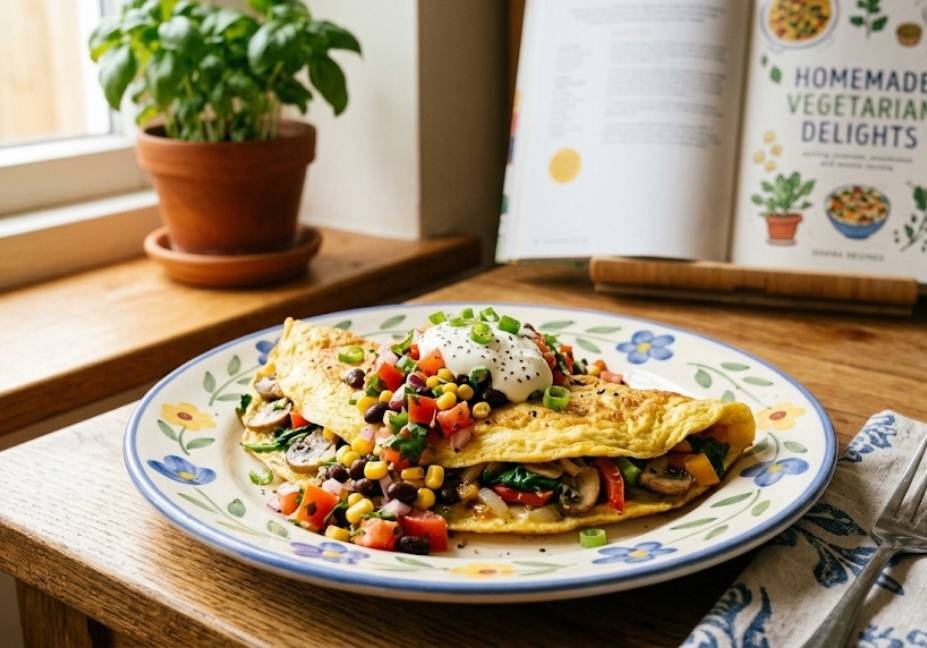
Vegetarian Omelette Ingredients
Main Ingredients
| Ingredient | Amount |
| Eggs | 3 large |
| Onion | 2 tbsp, finely chopped |
| Bell pepper | 2 tbsp, finely chopped |
| Tomato | 2 tbsp, diced |
| Spinach | 1 small handful |
| Cheddar cheese | 2 tbsp, grated |
| Olive oil or butter | 1 tsp |
| Salt | ¼ tsp |
| Black pepper | ¼ tsp |
| Fresh parsley or coriander | 1 tbsp, chopped |

Optional Ingredients
You can also add:
- Mushrooms
- Green chilies
- Spring onions
- Sweet corn
- Peas
- Grated mozzarella
- Feta cheese
- Cooked potatoes
- Fresh herbs
- Red chili flakes
Avoid adding too many wet vegetables at once. Excess moisture can make the omelette difficult to set properly.
How to Make a Vegetarian Omelette
Step 1: Prepare the Vegetables
Wash and chop the vegetables into small pieces.
Keep the pieces fairly small so they cook quickly and are easy to eat with the eggs.
If you are using spinach, mushrooms, or other vegetables that release water, cook them briefly before adding the eggs.
Step 2: Beat the Eggs
Crack three eggs into a bowl.
Add salt and black pepper, then beat gently with a fork until the yolks and whites are combined.
You do not need to beat the eggs for a long time.
Step 3: Cook the Vegetables
Heat a non-stick frying pan over medium heat.
Add the olive oil or butter. Once hot, add the onion and bell pepper.
Cook for about 2 to 3 minutes until they begin to soften.
Add the tomato and spinach. Cook for another minute.
Step 4: Add the Eggs
Reduce the heat to medium-low.
Pour the beaten eggs over the vegetables and gently move the pan so the egg spreads across the surface.
Let the eggs cook without stirring too much.
Step 5: Add Cheese
When the egg is mostly set but still slightly soft on top, sprinkle the grated cheese over one side.
Add fresh coriander or parsley if you like.
Step 6: Fold the Omelette
Use a spatula to carefully fold the omelette in half.
Cook for another 30 to 60 seconds, just until the cheese melts and the eggs are fully set.
Step 7: Serve
Slide the omelette onto a plate.
Serve immediately with toast, fresh fruit, salad, or yogurt.
A soft, freshly cooked omelette generally has the best texture.
Best Vegetables for a Vegetarian Omelette
You can use almost any quick-cooking vegetable in an omelette.
Bell Peppers
Bell peppers add sweetness, color, and a light crunch.
Red, yellow, and green peppers all work well.
Spinach
Spinach cooks quickly and pairs well with eggs and cheese.
Fresh spinach can be added near the end of the vegetable cooking stage so it wilts without becoming overly soft.
Mushrooms
Mushrooms add a rich, savory flavor.
Cook them before adding the eggs so excess moisture evaporates.
Tomatoes
Tomatoes add freshness and acidity.
Use a small amount if you want the omelette to remain firm.
Onions
Onions provide a sweet and savory base.
Cook them until slightly soft before adding the eggs.
Peas
Peas can add a mild sweetness and a soft texture. Frozen peas can work well without much preparation.
How to Make a Fluffy Omelette
A fluffy omelette does not require complicated techniques.
Follow these simple tips:
- Use fresh eggs.
- Beat the eggs until evenly combined.
- Do not overload the pan with vegetables.
- Use medium-low heat after adding the eggs.
- Avoid constantly stirring the mixture.
- Use a non-stick pan.
- Do not overcook the eggs.
- Fold the omelette while the center is still slightly soft.
A classic omelette method also relies on a properly heated non-stick pan and gentle handling of the eggs as they set.
Cheese and Seasoning Options
Cheese is optional, but it can add a creamy texture and stronger flavor.
Cheddar
Cheddar gives the omelette a familiar, savory flavor.
Mozzarella
Mozzarella melts easily and creates a softer, stretchy filling.
Feta
Feta adds a salty and slightly tangy taste. It works particularly well with tomatoes and herbs.
Herbs
Try:
- Parsley
- Coriander
- Chives
- Basil
- Oregano
For extra heat, add a small amount of chili flakes or finely chopped green chili.
Healthy Serving Ideas
A vegetarian omelette can become a complete meal when served with suitable sides.
With Whole-Grain Toast
Whole-grain toast adds carbohydrates and fiber to the meal.
With Fresh Salad
A simple salad made with cucumber, tomato, lettuce, and lemon juice gives the meal a fresh side.
With Fruit
Fresh berries, an orange, apple, or banana can work well for a breakfast plate.
With Yogurt
Plain yogurt can add a cool and creamy side to a savory omelette.
Vegetarian Omelette Nutrition
The exact nutrition depends on the number of eggs, cheese, oil, and vegetables used.
Eggs provide protein, while vegetables add fiber and micronutrients. Cheese can increase protein and calcium but also adds calories and fat.
For a lighter omelette, use less cheese and oil while adding more vegetables.
For a more filling meal, serve the omelette with whole-grain toast or another carbohydrate source.
Common Mistakes to Avoid
Using Too Many Vegetables
A large amount of filling can make the eggs difficult to cook evenly.
Use a moderate amount and chop everything into small pieces.
Adding Wet Vegetables Without Cooking Them
Mushrooms, tomatoes, and some leafy vegetables can release water.
Cook them briefly first when necessary.
Cooking on Very High Heat
High heat can brown the outside before the eggs are properly set.
Medium-low heat gives you more control.
Overcooking the Eggs
Overcooked eggs can become dry and rubbery.
Remove the omelette from the pan as soon as the eggs are set.
Using a Poor-Quality Pan
Eggs can stick easily to an unsuitable pan.
A good non-stick frying pan makes folding and serving much easier.
Vegetarian Omelette Variations
Mediterranean Omelette
Use:
- Tomato
- Spinach
- Feta
- Olives
- Oregano
This combination gives the omelette a fresh Mediterranean-style flavor.
Mushroom and Cheese Omelette
Use:
- Mushrooms
- Onion
- Cheddar
- Black pepper
- Parsley
Cook the mushrooms first so their moisture reduces before adding the eggs.
Spicy Vegetable Omelette
Use:
- Green chili
- Bell pepper
- Onion
- Tomato
- Chili flakes
- Coriander
This version works especially well for a savory breakfast.
Spinach and Feta Omelette
Combine spinach with crumbled feta and black pepper.
The salty feta pairs well with mild spinach.
Potato and Vegetable Omelette
Add small pieces of cooked potato with onion, peppers, and herbs.
Make sure the potato is already cooked before adding it to the egg mixture.
Can You Make a Vegetarian Omelette Without Cheese?
Yes.
Cheese is optional and mainly adds flavor and creaminess.
For a dairy-free version, simply leave it out. You can add more herbs, mushrooms, spinach, tomatoes, or peppers instead.
Can You Make a Vegetarian Omelette in an Air Fryer?
Yes, some air fryer models can cook omelettes in a suitable heatproof pan or dish.
BBC Good Food’s air fryer omelette method uses a heatproof non-stick pan and cooks the egg mixture at 180°C for around 8 to 10 minutes.
Always check that the cookware is safe for your particular air fryer.
Storage and Reheating
A cooked omelette is best eaten immediately.
If you have leftovers, cool them promptly and store them in a covered container in the refrigerator.
When reheating, heat until the center is properly hot.
Avoid repeatedly reheating the same omelette because the texture can become dry and firm.
Vegetarian Omelette Recipe at a Glance
| Detail | Information |
| Preparation time | 5 minutes |
| Cooking time | 8 to 10 minutes |
| Total time | About 15 minutes |
| Servings | 1 large omelette |
| Difficulty | Easy |
| Main ingredient | Eggs |
| Diet | Vegetarian |
| Cooking method | Stovetop |
Key Takeaway
This vegetarian omelette recipe is a simple way to make a filling meal with eggs and fresh vegetables.
The main trick is to cook the vegetables first, use medium-low heat for the eggs, and avoid overcooking. You can customize the filling with mushrooms, spinach, peppers, tomatoes, cheese, herbs, or chili.
Frequently Asked Questions
What vegetables are best for a vegetarian omelette?
Bell peppers, onions, spinach, mushrooms, tomatoes, peas, and spring onions are all good options. Cook vegetables that release a lot of moisture before adding the eggs.
How many eggs do I need for one omelette?
Three large eggs make a generous single-serving omelette. You can use two eggs for a smaller portion.
Should I add milk to a vegetarian omelette?
Milk is optional. You can make a good omelette without it. Focus on gentle cooking and avoid overcooking the eggs.
Why does my omelette become watery?
Too many wet vegetables can release water while the eggs cook. Cook mushrooms and other moisture-rich vegetables first and avoid using too much tomato.
Can I make a vegetarian omelette without cheese?
Yes. Cheese is optional. Add extra vegetables and herbs for flavor if you prefer a dairy-free omelette.
What is the best pan for making an omelette?
A small non-stick frying pan works well because it makes it easier to spread, fold, and remove the omelette without sticking.
How do I make my omelette fluffy?
Beat the eggs evenly, cook them over moderate heat, avoid excessive stirring, and remove the omelette before it becomes dry.
Conclusion
A homemade vegetarian omelette is quick, flexible, and easy to customize. With eggs, a few fresh vegetables, herbs, and optional cheese, you can prepare a satisfying meal in around 15 minutes.
Start with onion and bell pepper, add spinach and tomato, then pour in the beaten eggs and cook gently. Finish with cheese or fresh herbs, fold, and serve hot.
Once you have the basic method, you can change the filling based on your taste and the ingredients available in your kitchen.