

Beef Stroganoff Nutrition Facts: Calories, Protein, Fat and More
Quick Answer
Beef stroganoff can provide a good amount of protein, iron, zinc, and vitamin B12, but its calories and fat can rise when you use fatty beef, butter, full-fat sour cream, or large portions of noodles.
There is no single nutrition value for every beef stroganoff recipe. For example, a USDA MyPlate version provides 450 calories and 34 grams of protein per 6-ounce serving, while a Mayo Clinic version provides 322 calories and 27 grams of protein per serving.
Beef Stroganoff Nutrition Facts at a Glance
Nutrition depends on the recipe, so the following figures should be treated as examples rather than universal values.
| Nutrient | Example Amount |
| Calories | 322 to 450+ |
| Protein | 27 to 34 g |
| Carbohydrates | 38 to 59 g |
| Total fat | 6 to 7 g in lighter versions |
| Saturated fat | 2 g in some lighter versions |
| Fiber | 2 to 4 g |
| Sodium | 197 to 233 mg in selected lighter recipes |
| Iron | 3.5 to 5 mg |
| Potassium | 558 to 789 mg |
The USDA MyPlate recipe lists 450 calories, 34 grams of protein, 59 grams of carbohydrates, 7 grams of total fat, 4 grams of fiber, 233 mg of sodium, 5 mg of iron, and 789 mg of potassium per 6-ounce serving.
Mayo Clinic’s version has 322 calories, 27 grams of protein, 38 grams of carbohydrates, 6 grams of fat, 2 grams of fiber, 197 mg of sodium, and 3.5 mg of iron per serving.
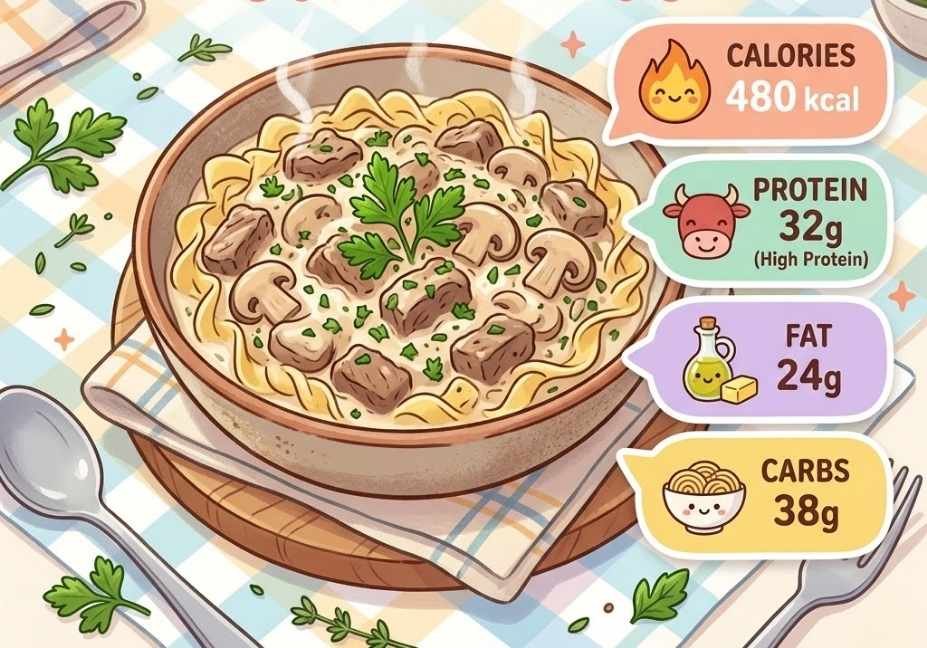
How Many Calories Are in Beef Stroganoff?
The calorie count can vary a lot from one recipe to another.
A beef stroganoff made with lean beef, a lighter sauce, and a moderate amount of pasta will usually contain fewer calories than one made with fatty beef, plenty of butter, full-fat dairy, and a large serving of noodles.
For a useful reference, the USDA FoodData Central entry for beef stroganoff lists about 150 calories per 100 grams. A 1-cup portion in the same database-based reference is about 384 calories.
Recipe-specific numbers can be different. For example, the USDA MyPlate recipe provides 450 calories for a 6-ounce serving, while Mayo Clinic’s recipe provides 322 calories per serving.
Why Calories Change
Several ingredients can raise the calorie count:
- Fatty cuts of beef
- Butter or extra cooking oil
- Full-fat sour cream
- Cream-based sauces
- Large portions of egg noodles
- Cheese added to the dish
- Large serving sizes
That is why checking the nutrition information for the exact recipe is more useful than relying on one number for all beef stroganoff.
Beef Stroganoff Protein
Protein is one of the strongest nutritional features of beef stroganoff.
Beef supplies most of the protein, while sour cream and other dairy ingredients can add smaller amounts.
A USDA MyPlate version contains 34 grams of protein per 6-ounce serving. Mayo Clinic’s recipe provides 27 grams per serving.
Another beef stroganoff recipe from Beef. It’s What’s For Dinner provides 31 grams of protein per serving.
Why Protein Matters
Protein helps the body build and maintain muscle and other tissues.
A meal that contains a good amount of protein may also feel more filling than a meal made mostly from refined carbohydrates.
If protein is the main goal, choose lean beef and keep the creamy sauce moderate.
Set against a bright pastel checkered background with scattered herbs and kitchen elements.
Beef Stroganoff Carbohydrates
Most of the carbohydrates in beef stroganoff usually come from the noodles, pasta, rice, flour, or another starch served with the beef.
The beef itself contributes very little carbohydrate.
The USDA MyPlate version contains 59 grams of carbohydrates per 6-ounce serving, while Mayo Clinic’s recipe contains 38 grams per serving.
The difference shows why the serving method matters.
A bowl served with a generous amount of noodles will have more carbohydrates than beef stroganoff served with a smaller portion of pasta.
How to Reduce Carbohydrates
If you want a lower-carb plate, try:
- Serving the stroganoff over cauliflower rice
- Using zucchini noodles
- Reducing the amount of egg noodles
- Serving it with roasted vegetables
- Increasing mushrooms and other vegetables
These changes can lower the amount of starch without removing the beef and mushroom base of the dish.
Beef Stroganoff Fat and Saturated Fat
Fat depends heavily on the beef cut and sauce.
Butter, oil, sour cream, cream, and fatty beef can all increase the total fat.
Some lighter recipes are much lower in fat. Mayo Clinic’s version contains 6 grams of total fat and 2 grams of saturated fat per serving.
A traditional or richer recipe can contain considerably more.
For example, one USDA-based nutrition listing gives beef stroganoff about 9.3 grams of fat per 100 grams and 3.4 grams of saturated fat per 100 grams.
How to Lower the Fat
You do not have to remove the creamy texture completely.
Try these changes:
- Choose lean beef
- Trim visible fat
- Use less butter
- Measure cooking oil instead of pouring freely
- Choose reduced-fat sour cream
- Add more mushrooms
- Keep the noodle portion reasonable
The result can still taste rich without relying on large amounts of added fat.
Beef Stroganoff Sodium
Sodium can vary greatly between recipes.
Beef broth, stock, seasoning mixes, Worcestershire sauce, soy sauce, salted butter, and added salt can all increase the final amount.
The Mayo Clinic recipe contains 197 mg of sodium per serving, while the USDA MyPlate version contains 233 mg.
However, some homemade and restaurant-style versions can contain much more sodium.
Ways to Lower Sodium
Use:
- Low-sodium beef broth
- Unsalted butter
- Fresh mushrooms
- Fresh onion and garlic
- Less added salt
- Homemade seasoning instead of salty packet mixes
Taste the sauce before adding more salt. Sour cream and beef already give the dish plenty of flavor when combined with mushrooms, pepper, onion, and herbs.
Vitamins and Minerals in Beef Stroganoff
Beef stroganoff can provide several useful vitamins and minerals.
The exact amount depends on the recipe, but beef is particularly useful for nutrients such as iron, zinc, selenium, and vitamin B12.
The USDA MyPlate version provides 5 mg of iron, 5 mg of zinc, 1.8 mcg of vitamin B12, and 82 mcg of selenium per 6-ounce serving.
Iron
Beef is a well-known source of iron.
Iron helps the body make hemoglobin, which carries oxygen through the blood.
The USDA MyPlate recipe provides 5 mg of iron per serving.
Vitamin B12
Vitamin B12 is naturally present in animal foods.
The USDA MyPlate recipe provides 1.8 mcg of vitamin B12 per serving.
Zinc
Beef also provides zinc, which supports normal immune function and many other body processes.
The USDA MyPlate version contains 5 mg of zinc per serving.
Selenium
Selenium is another mineral found in beef.
The same USDA recipe provides 82 mcg of selenium per serving.
Is Beef Stroganoff Healthy?
Beef stroganoff can fit into a balanced diet.
The answer depends on the ingredients, portion size, and what you serve with it.
Beef provides protein and several important minerals. Mushrooms and onions add vegetables, while noodles provide carbohydrates for energy.
At the same time, richer versions can contain more calories, saturated fat, and sodium.
So instead of calling every beef stroganoff recipe healthy or unhealthy, it makes more sense to look at the individual ingredients and portion.
How to Make Beef Stroganoff Healthier
You can make a few simple changes without turning it into a completely different meal.
Choose Lean Beef
Sirloin, lean ground beef, or another lean cut can reduce the amount of fat.
Trim visible fat before cooking.
Add More Mushrooms
Mushrooms add volume and texture while keeping the dish relatively light.
They also work naturally with the beef and creamy sauce.
Use Less Sour Cream
You can reduce the amount of sour cream and loosen the sauce with a little low-sodium broth.
This keeps some of the creamy texture while reducing the amount of dairy.
Pick Whole-Grain Pasta
Whole-grain pasta provides more fiber than regular refined pasta.
You can also use a smaller pasta portion and add extra vegetables.
Watch the Sauce
The sauce can quietly add a lot of calories.
Measure butter, oil, cream, and sour cream instead of adding them by eye.
Beef Stroganoff Nutrition With Noodles
Noodles can make a major difference to the nutrition of the complete meal.
The USDA MyPlate beef stroganoff recipe is served with macaroni and provides 59 grams of carbohydrates and 450 calories per 6-ounce serving.
Mayo Clinic’s version includes pasta and provides 38 grams of carbohydrates and 322 calories per serving.
This is why the nutrition of the beef and sauce alone should not be confused with the nutrition of a complete plate containing noodles.
Better Portion Idea
Instead of filling most of the plate with noodles, try making the beef, mushroom, and sauce the main part of the meal.
Then add a moderate serving of pasta.
A side of green vegetables can fill the rest of the plate.
Beef Stroganoff vs Other Beef Meals
Beef stroganoff can be compared with other beef dishes, but the recipe makes a huge difference.
| Dish | Main Nutrition Feature |
| Beef Stroganoff | Protein plus carbohydrates and creamy sauce |
| Grilled Beef | Usually high in protein with little carbohydrate |
| Beef Stir-Fry | Protein with vegetables and a sauce |
| Beef Stew | Protein with vegetables and broth |
| Beef and Rice | Protein with a larger carbohydrate portion |
A grilled steak without sauce will usually have a very different nutrition profile from beef stroganoff served with noodles and sour cream.
Is Beef Stroganoff Good for a High-Protein Diet?
It can be.
The beef provides a substantial amount of protein, and several recipe examples provide around 27 to 35 grams per serving.
For a higher-protein meal, use a lean beef portion and avoid letting the noodles take up most of the plate.
You can also increase the amount of beef and mushrooms while keeping the creamy sauce moderate.
Is Beef Stroganoff Good for Weight Loss?
Beef stroganoff can fit into a weight-loss diet when the total portion and daily calorie intake are appropriate.
The dish itself does not automatically cause weight gain or weight loss.
Calories can rise quickly when you combine fatty beef, butter, cream, sour cream, and a large amount of noodles.
A lighter version can use lean beef, more mushrooms, measured oil, reduced-fat dairy, and a moderate pasta portion.
The Mayo Clinic version is one example of a lighter preparation at 322 calories per serving.
What to Serve With Beef Stroganoff
Because the dish already contains beef and usually noodles, simple vegetable sides work well.
Good options include:
- Steamed broccoli
- Green beans
- Roasted carrots
- Side salad
- Roasted zucchini
- Cucumber salad
- Sautéed spinach
Adding vegetables can make the meal more filling without relying on a much larger portion of noodles.
Common Questions About Beef Stroganoff Nutrition
How many calories are in beef stroganoff?
There is no single calorie count. USDA MyPlate lists 450 calories per 6-ounce serving for one recipe, while Mayo Clinic lists 322 calories for its version.
Is beef stroganoff high in protein?
It can be a high-protein meal. Example recipes provide about 27 to 35 grams of protein per serving.
How many carbs are in beef stroganoff?
The amount depends largely on the noodles and sauce. Example recipes range from 38 to 59 grams of carbohydrates per serving.
Does beef stroganoff have a lot of fat?
Some versions do, especially recipes made with fatty beef, butter, cream, and full-fat sour cream. Lighter recipes can contain much less fat.
Is beef stroganoff good for a high-protein meal?
Yes. Beef provides substantial protein, and a serving can provide more than 25 grams in many recipes.
Does beef stroganoff contain iron?
Yes. Beef is a source of iron, and the USDA MyPlate version provides 5 mg per serving.
Does beef stroganoff contain vitamin B12?
Yes. Beef provides vitamin B12, and the USDA MyPlate recipe lists 1.8 mcg per serving.
How can I reduce calories in beef stroganoff?
Use lean beef, less oil or butter, reduced-fat sour cream, more mushrooms, and a moderate portion of noodles.
Is beef stroganoff low carb?
Traditional beef stroganoff served with noodles is not usually low carb. The noodles provide most of the carbohydrates.
Can I make beef stroganoff healthier?
Yes. Lean beef, extra mushrooms, reduced-fat dairy, low-sodium broth, and a smaller noodle portion can make the meal lighter while keeping its familiar flavor.
Key Takeaway
Beef stroganoff nutrition facts can vary widely from recipe to recipe.
A USDA MyPlate version provides 450 calories and 34 grams of protein per 6-ounce serving, while a Mayo Clinic version provides 322 calories and 27 grams of protein.
Beef makes the dish a good source of protein, iron, zinc, selenium, and vitamin B12. The main factors that can push calories and fat higher are fatty beef, butter, cream, sour cream, and large portions of noodles.
For a lighter plate, use lean beef, add plenty of mushrooms and vegetables, choose a moderate amount of pasta, and measure the creamy ingredients.
Conclusion
Beef stroganoff is a filling comfort-food meal that can provide plenty of protein along with several important vitamins and minerals.
The exact beef stroganoff nutrition facts depend on the recipe. A lighter homemade version may have a very different calorie and fat count from a rich restaurant-style version.
If you are tracking calories or macros, pay attention to the complete plate rather than the beef mixture alone. Noodles, butter, sour cream, cream, and cooking oil can change the numbers quickly.
For a balanced version, keep the beef portion sensible, add plenty of mushrooms or vegetables, and use a moderate amount of noodles and creamy sauce. That way, you can enjoy the familiar flavor of beef stroganoff while keeping the meal more balanced.

2 Comments