
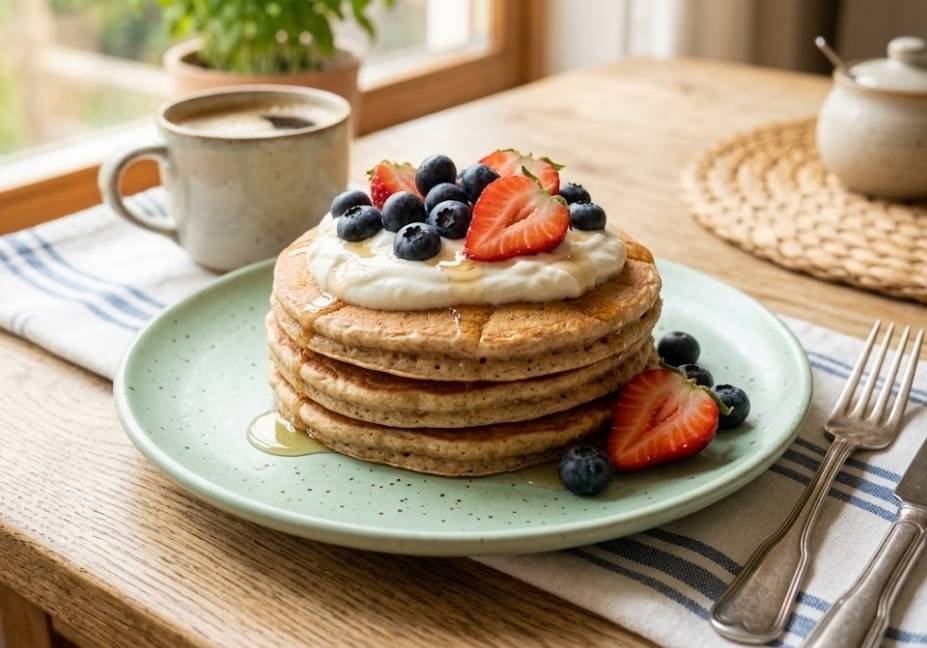
Pancakes for Diabetics: Healthy Recipe and Breakfast Guide
INTRODUCTION
Pancakes can still be part of breakfast when someone has diabetes. The important part is how the pancakes are prepared, how many carbohydrates they contain, what toppings are added, and what the rest of the meal looks like.
Traditional pancakes are often made with refined white flour and served with syrup, powdered sugar, or other sweet toppings. This combination can provide a large amount of carbohydrate and added sugar. The CDC explains that sugars and starches raise blood sugar, while fiber is not digested in the same way. It recommends choosing carbohydrate foods with more fiber and paying attention to portions.
That does not mean pancakes have to disappear from a diabetes-friendly eating plan. With ingredients such as oats, whole-grain flour, eggs, Greek yogurt, nuts, seeds, and berries, pancakes can become part of a more balanced breakfast.
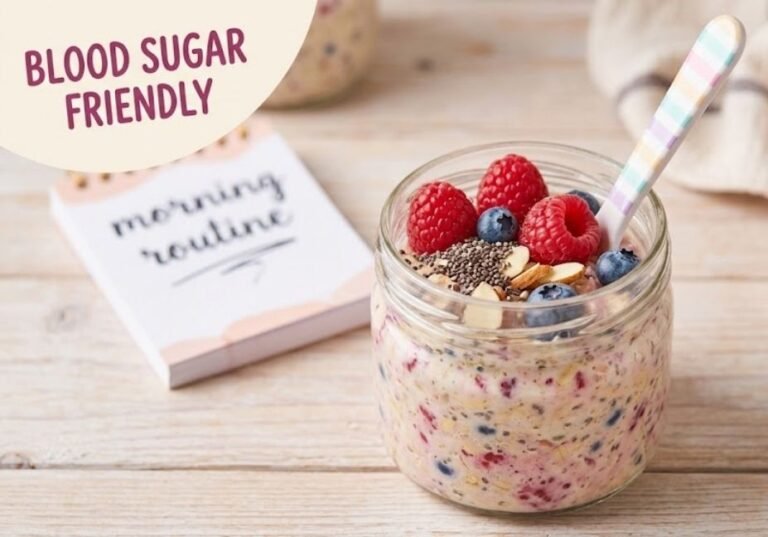
Also read the article : Overnight Oats for Diabetics: Easy Blood Sugar Friendly Recipe
Are Pancakes Good for Diabetics?
Yes, pancakes can fit into a diabetes-friendly meal, but the recipe and portion matter.
A better option usually contains more fiber and protein and less added sugar than traditional pancakes. Whole grains, oats, nuts, seeds, eggs, and unsweetened Greek yogurt can help create a more balanced meal.
Toppings also matter. Fresh berries, plain Greek yogurt, chopped nuts, or a small amount of nut butter can be more suitable choices than large amounts of regular pancake syrup.
The American Diabetes Association also features several pancake recipes designed with diabetes-friendly nutrition in mind, including high-protein banana pancakes, blueberry almond pancakes, and whole-wheat sweet potato pancakes.

What Makes Pancakes Better for People With Diabetes?
There is no single pancake recipe that is right for everyone with diabetes. Individual carbohydrate needs depend on factors such as medications, activity, health goals, and the person’s overall eating plan. The ADA specifically notes that there is no universal carbohydrate amount that works for everyone.
Still, several changes can make a pancake breakfast more balanced.
1. Choose Higher-Fiber Ingredients
Replacing some refined flour with oats, whole-wheat flour, almond flour, or ground flaxseed can increase the nutritional value of pancakes.
Fiber is particularly useful in a diabetes-friendly eating pattern. The CDC explains that fiber does not cause the same blood sugar rise as digestible carbohydrates and can support blood sugar control and weight management.
2. Add Protein
Eggs, plain Greek yogurt, cottage cheese, or another suitable protein source can make breakfast more filling.
Protein does not mean pancakes become carbohydrate-free. The flour, oats, fruit, and milk used in the recipe can still contribute carbohydrates. However, combining carbohydrate foods with protein, fat, or fiber can slow how quickly blood sugar rises.
3. Reduce Added Sugar
Sugar does not need to be added to the pancake batter if naturally flavorful ingredients such as cinnamon, vanilla, berries, or a small amount of mashed fruit are used.
The bigger issue can be the topping. Pancakes covered with several tablespoons of syrup can contain considerably more added sugar than the pancakes themselves.
Also read the article : Gluten-Free Pizza Dough Recipe: Easy Homemade Crust

Pancakes for Diabetics Recipe
This simple homemade recipe focuses on oats, whole-grain ingredients, protein, and no regular table sugar.
Ingredients
- 1 cup old-fashioned rolled oats
- 1/2 cup whole-wheat flour
- 2 large eggs
- 1/2 cup plain unsweetened Greek yogurt
- 1/2 cup unsweetened milk or unsweetened plant milk
- 1 teaspoon baking powder
- 1 teaspoon cinnamon
- 1 teaspoon vanilla extract
- 1 tablespoon ground flaxseed
- A small pinch of salt
- Cooking spray or a small amount of oil
Optional Toppings
- Fresh blueberries or strawberries
- Plain Greek yogurt
- Chopped almonds or walnuts
- Natural peanut butter without added sugar
- Cinnamon
- A small amount of unsweetened fruit
How to Make Them
- Blend the rolled oats until they have a flour-like texture.
- Add the oat flour, whole-wheat flour, baking powder, cinnamon, flaxseed, and salt to a bowl.
- In another bowl, whisk the eggs, Greek yogurt, milk, and vanilla.
- Combine the wet and dry ingredients and mix until a thick batter forms.
- Let the batter rest for several minutes.
- Heat a nonstick pan over medium heat and lightly coat it with cooking spray or oil.
- Add a small portion of batter to the pan.
- Cook until bubbles begin to appear and the edges look set.
- Flip and cook the other side until done.
- Serve with a diabetes-friendly topping such as berries, Greek yogurt, or a small amount of nut butter.
The exact carbohydrate content will depend on the brands and quantities used, so the nutrition label of each ingredient should be checked when accurate carbohydrate counting is important.
Also read the article : 10 Best Falafel Substitute Ingredients for Every Diet
Why These Pancakes Can Be a Better Choice
The goal is not to make pancakes completely carbohydrate-free. Instead, the recipe uses ingredients that can provide more fiber and protein than a basic white-flour pancake.
Oats and whole grains provide carbohydrates along with fiber. Flaxseed adds fiber and healthy fats, while eggs and Greek yogurt provide protein.
The CDC recommends choosing carbohydrate foods that contain fiber and nutrients and paying attention to serving sizes.
The American Diabetes Association similarly recommends looking at total carbohydrate and fiber when choosing breakfast foods and highlights whole grains, Greek yogurt, nuts, seeds, and fruit as useful components of a balanced breakfast.
Best Flour for Pancakes for Diabetics
Oat Flour
Oat flour can be made by blending old-fashioned rolled oats. It provides the familiar pancake texture while adding whole-grain ingredients.
Whole-Wheat Flour
Whole-wheat flour contains more of the grain’s natural fiber than refined white flour. It can be combined with oat flour for a softer pancake.
Almond Flour
Almond flour is commonly used in lower-carbohydrate pancake recipes. The ADA’s blueberry almond pancake recipe uses almond flour, flaxseed, eggs, ricotta, and other ingredients to create a higher-fiber, lower-carbohydrate pancake.
However, lower carbohydrate does not automatically mean unlimited portions. The complete meal still needs to fit an individual’s eating plan.
Chickpea Flour
For a savory alternative, chickpea flour can be used to make besan chilla, a traditional South Asian pancake.
The American Diabetes Association features a Pakistani besan chilla made with chickpea flour, vegetables, spices, and Greek yogurt. One pancake in that recipe provides 25 grams of total carbohydrate, 6 grams of fiber, and 7 grams of protein.
Also read the article : Falafel Nutrition Facts: Calories, Protein & Benefits
Best Toppings for Diabetes-Friendly Pancakes
Toppings can completely change the nutritional profile of a pancake breakfast.
Better Options
- Fresh strawberries
- Blueberries
- Raspberries
- Plain Greek yogurt
- Chopped walnuts
- Chopped almonds
- Natural peanut butter
- Chia seeds
- Ground flaxseed
- Cinnamon
Berries can add flavor and sweetness without requiring large amounts of added sugar.
Plain Greek yogurt can add protein, while nuts and seeds can provide healthy fats and fiber.
Toppings to Limit
Large amounts of:
- Regular pancake syrup
- Honey
- Powdered sugar
- Sweetened whipped cream
- Chocolate syrup
- Sweetened condensed milk
- Sugar-heavy fruit sauces
These toppings can add substantial amounts of sugar and carbohydrates to an otherwise moderate breakfast.
The CDC specifically lists table sugar, honey, fruit juice, and syrup among simple carbohydrate sources that can raise blood sugar quickly.
How Many Pancakes Can a Person With Diabetes Eat?
There is no universal number of pancakes that is appropriate for every person with diabetes.
Portion size should depend on the recipe, pancake size, total carbohydrate content, and the person’s individual meal plan.
For context, the CDC lists one 4-inch pancake as approximately one carbohydrate choice, or about 15 grams of carbohydrate. However, homemade pancakes vary considerably depending on ingredients and size, so this should not be treated as the carbohydrate content of every pancake.
Checking the nutrition information for the specific recipe is a better approach.
Someone who counts carbohydrates may also consider what else is being eaten with the pancakes. Milk, fruit, yogurt, and toppings can all contribute additional carbohydrates.
Do Sugar-Free Pancakes Prevent Blood Sugar Spikes?
No. Removing table sugar does not automatically make pancakes carbohydrate-free or prevent a blood sugar rise.
Flour, oats, milk, fruit, and other ingredients can contain carbohydrates. The CDC explains that sugars and starches raise blood sugar, while fiber is not digested in the same way.
This is why “sugar-free” and “diabetes-friendly” should not be treated as identical terms.
A pancake recipe can contain no added sugar and still contain a meaningful amount of carbohydrate.
Pancakes for Type 1 vs. Type 2 Diabetes
People with both type 1 and type 2 diabetes can potentially include pancakes in their meal plans, but carbohydrate management can be different for each person.
Someone using mealtime insulin may need to count the carbohydrates in pancakes and toppings to match their prescribed insulin plan. The CDC notes that people taking mealtime insulin may count carbohydrates to match insulin doses.
People with type 2 diabetes may also monitor carbohydrate portions as part of their overall eating plan.
Because medications and insulin requirements vary, a doctor or registered dietitian can provide individualized guidance.
Common Mistakes to Avoid
Using Too Much Syrup
A healthy pancake recipe can become much higher in added sugar when covered with a large amount of syrup.
Eating a Large Stack
Even nutritious ingredients contain calories and carbohydrates. Larger portions can increase the total carbohydrate load.
Assuming Gluten-Free Means Diabetes-Friendly
Gluten-free does not automatically mean low in carbohydrate or low in added sugar. The full ingredient list and nutrition facts still matter.
Ignoring Toppings
Fruit, milk, yogurt, nut butter, and syrup can all contribute carbohydrates. The complete meal should be considered.
Making Every Pancake Extremely Low Carb
Very-low-carbohydrate eating is not necessary for everyone with diabetes. The ADA notes that carbohydrate needs are individual and should fit the person’s overall meal plan.
5 Easy Pancake Variations for Diabetics
1. Blueberry Almond Pancakes
Use almond flour and ground flaxseed, then add fresh blueberries. The ADA has a blueberry almond pancake recipe that is described as high fiber, lower in carbohydrates, gluten-free, no added sugar, and high in protein.
2. Oatmeal Pancakes
Use ground rolled oats as the main flour and serve with Greek yogurt and berries.
3. Whole-Wheat Sweet Potato Pancakes
Sweet potatoes can add flavor and nutrients. The ADA’s whole-wheat sweet potato pancake recipe combines oats, wheat germ, Greek yogurt, eggs, sweet potato, and whole-wheat flour.
4. Banana Protein Pancakes
Mashed bananas can provide sweetness without using regular table sugar. However, bananas still contain carbohydrates, so the amount should be considered as part of the total meal.
The ADA also lists high-protein banana pancakes at 27 grams of carbohydrate and 20 grams of protein per serving of two pancakes in its breakfast collection.
5. Savory Besan Chilla
For a non-sweet breakfast, chickpea flour can be mixed with vegetables and spices. This can be especially useful for people who enjoy savory South Asian breakfasts.
The ADA’s Pakistani besan chilla recipe provides fiber and protein and uses onion, carrot, cilantro, turmeric, chili powder, cumin, and chickpea flour.
Can Diabetics Eat Pancakes Every Day?
It depends on the person’s overall eating plan, blood glucose response, medication, nutritional needs, and portion size.
Eating the same breakfast every day can make carbohydrate tracking easier for some people, but variety is also useful for obtaining different nutrients.
A person with diabetes who wants pancakes frequently can experiment with different combinations of whole grains, protein, fruit, seeds, and unsweetened toppings while keeping portions appropriate.
Monitoring blood glucose as recommended by a healthcare professional can also help a person understand how a particular meal affects them.
Key Takeaways
- Pancakes can be included in a diabetes-friendly eating plan.
- Whole grains and higher-fiber ingredients can improve the nutritional profile.
- Eggs, Greek yogurt, nuts, and seeds can add protein and healthy fats.
- Avoid relying on large amounts of syrup or other sugary toppings.
- “Sugar-free” does not mean carbohydrate-free.
- Portion size matters because pancakes still contain carbohydrates.
- The ideal carbohydrate amount varies from person to person.
- Fresh berries, Greek yogurt, nuts, and seeds are useful topping options.
- People using insulin or glucose-lowering medication should follow their individualized meal and medication plan.
Frequently Asked Questions
Are pancakes OK for diabetics?
Yes. Pancakes can fit into a diabetes-friendly meal when portions and ingredients are considered. Higher-fiber ingredients, protein, and lower-sugar toppings can make the meal more balanced.
What type of pancakes are best for diabetics?
There is no single best type for everyone. Oat, whole-wheat, almond-flour, and chickpea-flour pancakes can all be options depending on individual carbohydrate needs and dietary preferences.
Can diabetics eat pancakes with syrup?
They can, but syrup adds sugar and carbohydrates. A smaller amount or an alternative topping such as berries, plain Greek yogurt, or nut butter may help reduce added sugar.
Are oat pancakes good for diabetes?
Oat pancakes can be a useful option because oats provide whole-grain fiber. However, oats still contain carbohydrates, so portion size and the total meal should be considered.
Are banana pancakes good for diabetics?
Banana pancakes can fit into a diabetes-friendly meal, but bananas contain carbohydrates. The amount of banana and the other ingredients should be considered when calculating the meal’s total carbohydrate.
Can pancakes raise blood sugar?
Yes. Pancakes usually contain carbohydrates from flour, oats, milk, fruit, or other ingredients, and digestible carbohydrates can raise blood glucose. The effect varies by recipe, portion, and individual.
What can diabetics put on pancakes instead of syrup?
Fresh berries, plain Greek yogurt, chopped nuts, seeds, cinnamon, and natural nut butter are options that can add flavor without relying on large amounts of syrup.
Also read the article : Traditional Beef Tacos Recipe: An Authentic Mexican Favorite
Conclusion
Pancakes do not have to be completely removed from a diabetes-friendly breakfast. The better approach is to look at the complete meal rather than one ingredient.
Using oats, whole-wheat flour, almond flour, or chickpea flour can provide different nutritional benefits. Adding eggs, Greek yogurt, nuts, or seeds can increase protein and improve the balance of the meal. Fresh berries and unsweetened toppings can provide sweetness without relying heavily on syrup.
Most importantly, pancakes still contain carbohydrates, so portion size and the individual’s overall diabetes meal plan matter. The CDC and American Diabetes Association both emphasize individualized carbohydrate planning rather than a single carbohydrate target for everyone.
For people taking insulin or other glucose-lowering medications, personalized guidance from a healthcare professional is especially important.


3 Comments