
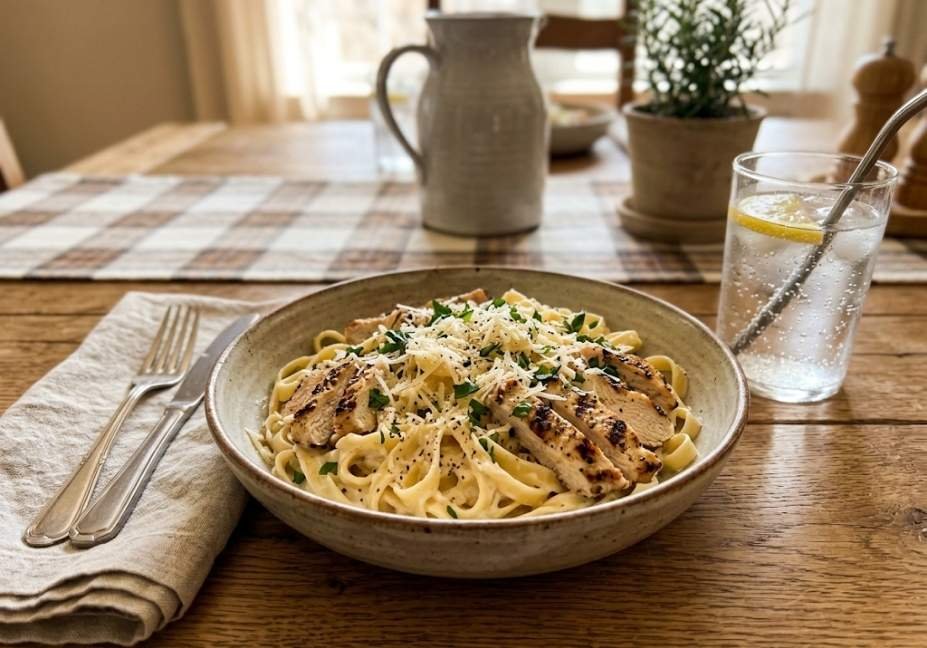
Simple Chicken Alfredo Recipe for Easy Weeknight Dinners
A simple chicken alfredo recipe should not need a long ingredient list or fancy tools. This one uses fettuccine, pan-cooked chicken breast, garlic, butter, heavy cream and Parmesan. You can make it in one large skillet and one pot.
This guide gives you exact amounts, clear steps and a safe way to check the chicken. You will also find easy swaps, fixes for common sauce problems and storage tips. Each part is written so a beginner can follow it.
Quick Answer
Simple chicken alfredo is fettuccine tossed with sliced chicken breast and a creamy sauce of butter, garlic, heavy cream and Parmesan. The recipe below serves 4 and takes about 35 minutes. Cook the chicken to 165°F, add the cheese off the heat and loosen the sauce with pasta water.
What Makes This Chicken Alfredo Simple
This version skips flour, eggs and jarred sauce. The sauce comes from cream, butter and cheese alone. Because there are few ingredients, each one matters, so the quality of your Parmesan makes a real difference.
The method also keeps cleanup low. You cook the chicken first, then build the sauce in the same skillet. The browned bits left behind add flavor without extra work.
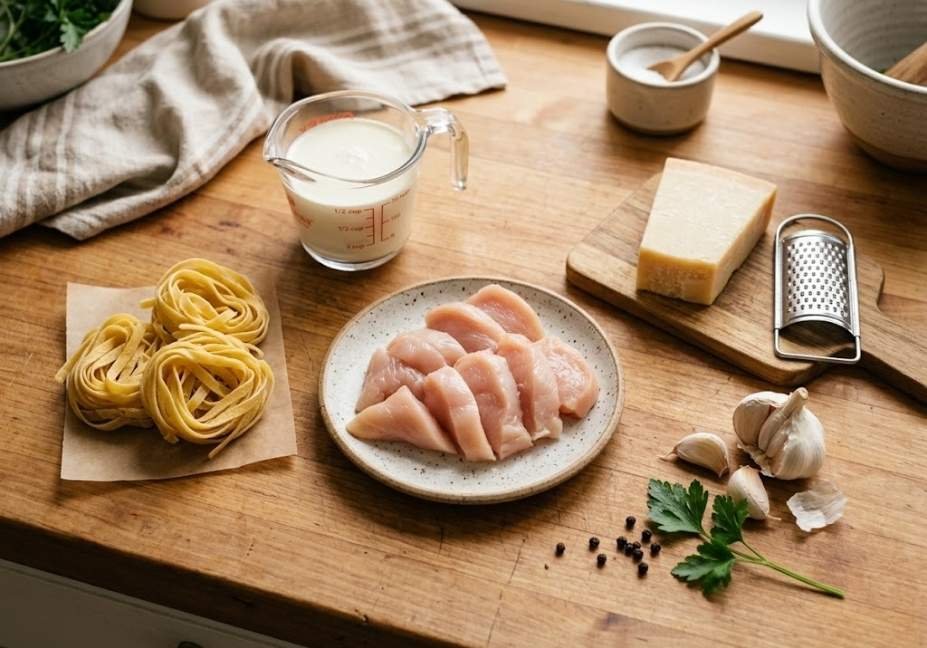
Simple Chicken Alfredo Recipe
Prep time: 10 minutes
Cook time: 25 minutes
Total time: 35 minutes
Serves: 4
Ingredients
- 12 oz (340 g) fettuccine
- 1 lb (450 g) boneless skinless chicken breasts, cut into thin strips
- 1 tablespoon olive oil
- 1 tablespoon salt for the pasta water
- 1/2 teaspoon salt for the chicken
- 1/4 teaspoon black pepper for the chicken
- 2 tablespoons unsalted butter
- 3 garlic cloves, minced
- 1 1/2 cups heavy cream
- 1 1/2 cups freshly grated Parmesan cheese (about 4 oz or 115 g)
- 1/2 cup reserved pasta water
- Extra salt and black pepper to taste
- 2 tablespoons chopped fresh parsley (optional)
Equipment
- Large pot
- Large deep skillet
- Instant-read food thermometer
- Fine grater
- Tongs
- Colander
Instructions
- Boil the water. Fill a large pot with water and add 1 tablespoon of salt. Bring it to a rolling boil over high heat.
- Season the chicken. Pat the chicken strips dry with paper towels. Toss them with 1/2 teaspoon of salt and 1/4 teaspoon of black pepper.
- Cook the chicken. Heat the olive oil in the skillet over medium-high heat. Add the chicken in a single layer. Cook for about 5 to 8 minutes, turning once, until a thermometer reads 165°F in the thickest piece. Move the chicken to a plate and cover it loosely.
- Start the pasta. Add the fettuccine to the boiling water. Cook it according to the package directions until al dente. Al dente means tender with a slight chew in the center.
- Melt the butter. Turn the skillet to medium-low heat. If the pan has very dark bits, wipe it out. Light brown bits can stay for extra flavor. Add the butter and let it melt.
- Cook the garlic. Stir in the minced garlic. Cook for about 30 seconds until it smells fragrant. Do not let it brown.
- Simmer the cream. Pour in the heavy cream. Simmer gently for 4 to 5 minutes, stirring often, until it thickens slightly. Small bubbles at the edge mean the heat is right.
- Save pasta water. Before you drain the pasta, scoop out 1/2 cup of the cooking water. Then drain the pasta in the colander.
- Add the cheese. Take the skillet off the heat. Stir in the Parmesan a handful at a time until the sauce turns smooth.
- Combine everything. Add the pasta and chicken to the skillet. Toss with tongs. Pour in pasta water a splash at a time until the sauce coats the noodles.
- Season and serve. Taste the dish. Add salt and pepper if needed. Top with parsley and serve right away.
Why the Chicken Must Reach 165°F
Color and cook time can mislead you. A thermometer gives a far better answer. The USDA lists 165°F as the safe minimum internal temperature for all poultry, including breasts. Check the thickest piece, not the thinnest. usda
If a strip falls short, return it to the pan for another minute and check again. Thin strips cook fast, so start checking early.
Ingredient Tips for a Smooth Sauce
Use Freshly Grated Parmesan
Grate a block of Parmesan yourself when you can. Bagged shredded cheese often contains anti-caking agents. These can make the sauce less smooth. Finely grated cheese also melts faster, which helps the sauce stay creamy.
Choose Heavy Cream
Heavy cream has enough fat to stay stable when you simmer it. Milk and half and half make a thinner sauce. They are also more likely to split. If you want a lighter result, see the swaps below.
Keep the Pasta Water
Starchy pasta water helps the sauce cling to the noodles. It also loosens a sauce that has grown too thick. Always scoop some out before you drain.
Easy Swaps and Variations
- Chicken thighs: Use boneless skinless thighs instead of breasts. They still need to reach 165°F. They often take a little longer.
- Pasta shape: Penne or rotini work well if you have no fettuccine. Cook them until al dente.
- Milder garlic: Use 2 cloves instead of 3 for a softer garlic taste.
- Thicker sauce: Stir in 2 oz of softened cream cheese with the cream. Expect a slightly tangier flavor.
- Lighter sauce: Replace half the cream with whole milk. The sauce will be thinner. Add the cheese off the heat and use less pasta water.
- Extra vegetables: Add cooked broccoli florets in step 10. Steamed or roasted broccoli both work well.
- Extra flavor: Add a pinch of Italian seasoning or fresh lemon zest at the end.
Some swaps will not work well. Skip low-fat milk as the main liquid, because the sauce may turn thin or split. Powdered Parmesan from a shaker will not melt into a creamy sauce.
Common Mistakes and How to Fix Them
The sauce looks grainy or clumpy. The heat was probably too high when the cheese went in. Take the pan off the heat before adding Parmesan. Stir in a splash of warm pasta water to smooth it.
The sauce is too thin. Let it simmer a few minutes longer before adding cheese. You can also toss the pasta in the sauce over low heat. The noodles will absorb some liquid.
The sauce is too thick. Add pasta water one tablespoon at a time. Stir well after each splash.
The sauce tastes flat. Add a pinch of salt and a grind of black pepper. Fresh Parmesan is salty, so taste first.
The chicken is dry. The strips may have cooked too long. Use a thermometer and pull them off the heat as soon as they reach 165°F. Cut the strips thin so they cook evenly.
The garlic tastes bitter. It burned in the pan. Cook garlic for only about 30 seconds over medium-low heat.
Serving Ideas
Serve the pasta hot, since the sauce thickens as it cools. A simple green salad or steamed broccoli goes well with it. Garlic bread also works. Finish each plate with a little extra Parmesan and black pepper.
How to Store and Reheat Leftovers
Cool the leftovers and refrigerate them promptly. The USDA advises that cooked food is only safe at room temperature for 2 hours. That drops to 1 hour when the air is hotter than 90°F. temperatures
Store the pasta in a shallow airtight container. The USDA leftovers guidance says to keep leftovers in the refrigerator for 3 to 4 days.
Reheat in a skillet over low heat. Add a splash of milk or water to loosen the sauce. Stir often. The USDA safe temperature chart lists 165°F for leftovers, so check the center with a thermometer.
I do not suggest freezing this dish. Cream sauces often separate after thawing.
FAQs
Can I use milk instead of heavy cream?
You can, but the sauce will be thinner and may split more easily. Keep the heat low. Add the cheese off the heat. Expect a lighter texture than the cream version.
What is the best chicken cut for alfredo?
Boneless skinless chicken breast works well and cooks quickly when sliced thin. Boneless thighs also work. Cook either cut to 165°F.
Why did my alfredo sauce turn oily or grainy?
High heat is the usual cause. Cream and cheese can separate when they get too hot. Add the Parmesan off the heat. Fix it with a splash of warm pasta water.
Can I make chicken alfredo ahead of time?
The sauce is best fresh. You can cook the chicken and grate the cheese earlier. Keep them in the refrigerator. Then make the sauce and pasta just before serving.
Final Takeaway
This simple chicken alfredo recipe works best when you control the heat. Cook the chicken to 165°F, simmer the cream gently and add the Parmesan off the heat. Save a little pasta water so you can adjust the sauce at the end. Serve it straight away for the creamiest result.
One Comment