Perfect Sushi Rice: Easy Japanese Recipe for Beginners
Quick Answer
To make perfect sushi rice, use Japanese short-grain rice, rinse it well, cook it with roughly equal parts rice and water, then season the hot rice with rice vinegar, sugar and salt. Gently fold the seasoning into the rice without crushing the grains.
The most important part is the texture. Sushi rice should hold together when shaped but should not become wet, mushy or paste-like.
What Is Sushi Rice?
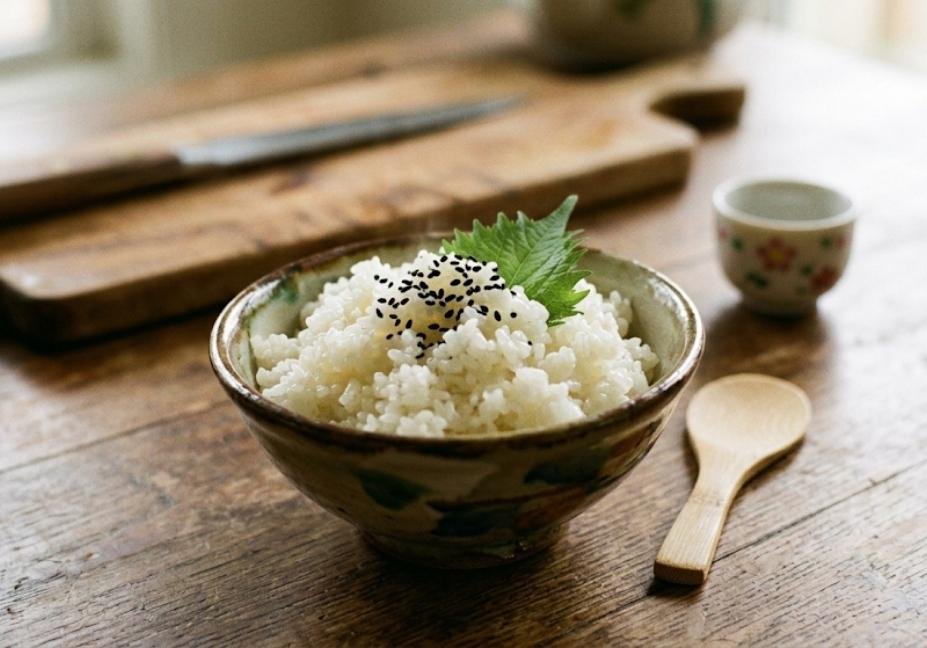
Sushi rice is Japanese short-grain rice that has been cooked and seasoned with a mixture of rice vinegar, sugar and salt.
The rice itself is not simply “sushi rice” because of the seasoning. The cooked and seasoned rice is commonly called sushi-meshi or shari in Japanese.
Good sushi rice has three main qualities:
- Soft but slightly firm grains
- Enough stickiness to hold its shape
- A mild sweet and tangy flavor
Japanese short-grain rice works particularly well because its texture allows the grains to stick together without becoming a paste.
Long-grain rice such as basmati or jasmine is not a good choice because the grains do not hold together in the same way.
Ingredients for Perfect Sushi Rice
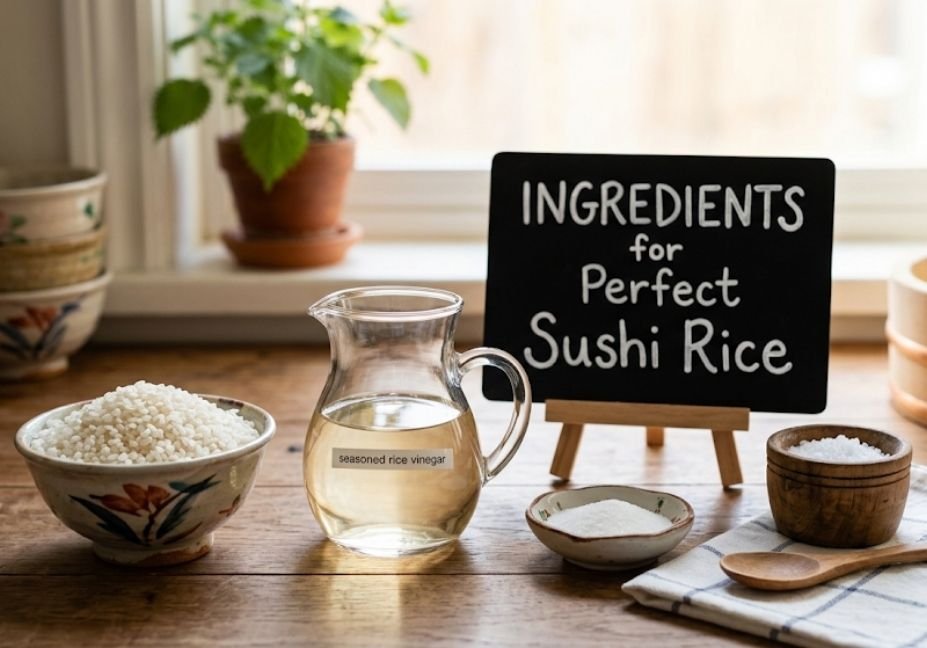
This recipe makes enough rice for about four medium sushi rolls.
| Ingredient | Amount |
| Japanese short-grain white rice | 1½ cups |
| Water | 1½ cups |
| Rice vinegar | 4 tablespoons |
| Sugar | 2 tablespoons |
| Salt | 1 teaspoon |
| Kombu | 1 small piece, optional |
These measurements are based on a classic Japanese-style sushi rice method.
Choosing the Right Rice
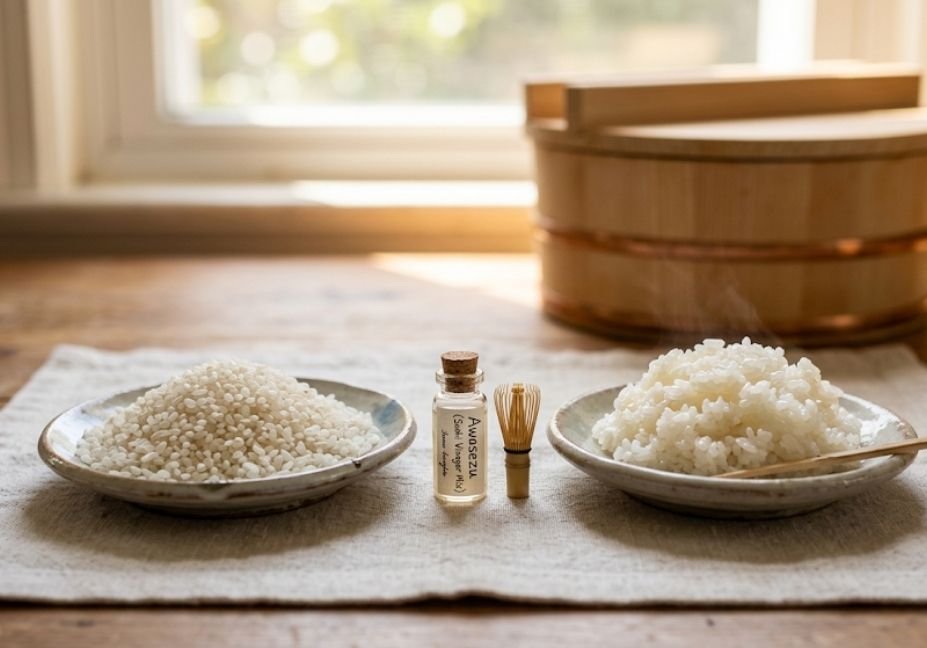
Look for Japanese short-grain rice or Japonica rice.
Koshihikari is one well-known variety, but other Japanese short-grain varieties can also work well. Korean short-grain rice can also be used as a substitute.
Avoid:
- Basmati rice
- Jasmine rice
- Long-grain white rice
- Brown rice
- Risotto rice
The goal is to get rice that stays together without turning sticky like porridge.
How to Make Perfect Sushi Rice
Step 1: Measure the Rice
Measure 1½ cups of Japanese short-grain rice.
Place it in a large bowl. Accurate measurement helps keep the rice-to-water ratio consistent.
Step 2: Rinse the Rice
Add a little cold water to the rice and quickly drain it.
Then add fresh water and gently rub the grains together with your fingers. Drain the cloudy water.
Repeat the washing and rinsing process several times until the water becomes much clearer.
Do not scrub the rice aggressively because the grains can break.
Thorough rinsing is one of the key steps in making good sushi rice.
Step 3: Drain the Rice
After rinsing, drain the rice thoroughly.
Excess water can change the final texture, so give the rice enough time to drain before cooking.
Step 4: Soak the Rice
Place the drained rice in your rice cooker or cooking pot.
Add 1½ cups of water.
Let the rice soak for about 20 to 30 minutes before cooking. This allows the grains to absorb some water before the heat starts.
If you have kombu, place one small piece on top of the rice.
Kombu is optional, but it can add a gentle savory flavor.
Step 5: Cook the Rice
Cook the rice according to your rice cooker instructions.
If your rice cooker has a Sushi Rice setting, use it.
If you are cooking the rice in a regular pot, bring the water to a boil, cover the pot and reduce the heat. Cook gently and keep the lid closed.
Avoid repeatedly opening the lid because escaping steam can affect the cooking process.
Step 6: Let the Rice Rest
Once the rice has finished cooking, allow it to rest briefly with the lid closed.
This helps the moisture distribute through the grains.
Step 7: Prepare the Sushi Seasoning
While the rice cooks, prepare the sushi seasoning.
Combine:
- 4 tablespoons rice vinegar
- 2 tablespoons sugar
- 1 teaspoon salt
Warm the mixture gently until the sugar and salt dissolve.
Do not aggressively boil the mixture.
You can also use ready-made seasoned rice vinegar. If you use seasoned vinegar, check the label because it may already contain sugar and salt.
Step 8: Transfer the Hot Rice
Move the cooked rice into a wide bowl, baking dish or traditional sushi rice tub.
Spread the rice out gently.
A wide container helps steam escape and makes cooling easier.
Step 9: Add the Seasoning
Pour the sushi seasoning over the hot rice.
Now comes one of the most important steps.
Do not stir the rice like normal cooked rice.
Instead, use a rice paddle or wooden spoon to cut through the rice at an angle. Gently separate the clumps while spreading the seasoning.
This keeps the grains intact and helps prevent mushy rice.
Step 10: Cool the Rice
Fan the rice gently while mixing.
Fanning helps remove excess moisture and gives the rice a glossy appearance.
Continue until the rice is around room temperature or just slightly warm.
Your perfect sushi rice is now ready.
How to Season Sushi Rice
The basic seasoning contains three ingredients:
Rice vinegar: Adds the signature tangy flavor.
Sugar: Balances the sharpness of the vinegar.
Salt: Adds depth and balances the sweetness.
The exact amount can be adjusted slightly depending on your taste.
For a more traditional flavor, use Japanese rice vinegar because it has a milder taste than many Western vinegars.
Why Rinsing Rice Matters
Unwashed rice can release excess starch during cooking. Too much surface starch can make the finished rice heavy and overly sticky.
Rinsing helps remove excess starch from the surface while keeping the grains intact.
You do not need the water to become perfectly crystal clear. The main goal is to remove much of the cloudy water before cooking.
Why Is Sushi Rice Sticky?
Sushi rice is naturally more cohesive because Japanese short-grain rice contains the starch characteristics needed to make the grains stick together.
The cooking method also matters.
Using the correct water amount, soaking the rice and adding the vinegar mixture after cooking all help create the final texture.
The rice should be sticky enough to shape but should still have individual grains.
Common Sushi Rice Mistakes
Using the Wrong Rice
The biggest mistake is using long-grain rice.
Basmati and jasmine rice are excellent for many dishes, but they do not provide the texture needed for sushi.
Adding Too Much Water
Too much water can make sushi rice soft and mushy.
A common Japanese method uses roughly a 1:1 rice-to-water ratio because the rice will receive additional liquid from the sushi seasoning later.
Skipping the Rinse
Unwashed rice can produce a heavier texture.
Take a few minutes to rinse the grains properly.
Stirring the Rice
Regular stirring can crush the cooked grains.
Instead, use a slicing motion with your rice paddle.
Adding Cold Seasoning
Very cold seasoning does not mix as evenly with hot rice.
Allow refrigerated seasoned vinegar to come closer to room temperature before using it.
Refrigerating Prepared Sushi Rice
Cold temperatures can make cooked rice harder and less pleasant to shape.
For the best texture, use prepared sushi rice while it is fresh and keep it covered with a damp cloth if you need to wait briefly.
How to Fix Sushi Rice
Rice Is Too Mushy
If the rice is already mushy, you cannot completely reverse the texture.
Spread it across a wide tray and allow some steam to escape. Avoid adding more liquid.
For the next batch, reduce the water slightly and make sure the rice is properly drained after rinsing.
Rice Is Too Hard
Hard rice usually means it did not receive enough water or cooking time.
If the center of the grains is still hard, add a small amount of water and continue cooking gently.
Rice Is Too Dry
Keep finished sushi rice covered with a damp, clean cloth.
Uncovered rice loses moisture quickly and becomes harder to shape.
Rice Is Too Vinegary
If you added too much seasoning, prepare another small amount of plain cooked rice and combine it gradually with the seasoned rice.
This is easier than trying to remove vinegar from already seasoned rice.
How to Store Sushi Rice
Fresh sushi rice gives the best texture.
If you need to hold it for a short period, keep it covered with a damp cloth at room temperature rather than leaving it exposed.
BBC Good Food recommends using prepared sushi rice within a short period and notes that refrigeration can make it dry and hard.
For food safety, avoid leaving cooked rice at room temperature for long periods. If the rice will not be used promptly, follow safe food-storage practices and refrigerate it.
Best Ways to Use Sushi Rice
Once you know how to make perfect sushi rice, you can use it for many Japanese dishes.
Sushi Rolls
Use sushi rice with nori and fillings such as cucumber, avocado, cooked seafood or other suitable ingredients.
Nigiri
Shape small portions of sushi rice and place suitable toppings over them.
Chirashi Sushi
Spread the seasoned rice in a bowl and add different toppings over the surface.
Temaki
Use the rice as a base for Japanese hand rolls.
Inari Sushi
Seasoned sushi rice can also be placed inside sweet fried tofu pockets.
Perfect Sushi Rice Tips
For the best results, remember these simple rules:
- Use Japanese short-grain rice.
- Rinse the rice several times.
- Drain it properly.
- Use roughly equal amounts of rice and water.
- Soak the rice before cooking.
- Season the rice while it is hot.
- Slice the rice instead of aggressively stirring it.
- Cool it gently.
- Keep it covered so it does not dry out.
- Use the rice while it is fresh.
Key Takeaway
Making perfect sushi rice is mainly about controlling the texture.
Use Japanese short-grain rice, rinse it properly, cook it with the right amount of water and season it with rice vinegar, sugar and salt while it is still hot.
The most important technique is to slice rather than stir the cooked rice. This helps preserve the grains and prevents the rice from becoming mushy.
Once you get the basic method right, homemade sushi becomes much easier.
FAQs
What is the best rice for sushi?
Japanese short-grain white rice is the best choice for sushi. Korean short-grain rice can also work as a substitute.
What is the correct rice-to-water ratio for sushi rice?
A common method uses a 1:1 ratio of rice to water. The rice is cooked slightly firm because the sushi seasoning adds additional liquid afterward.
Do I need to rinse sushi rice?
Yes. Rinsing helps remove excess surface starch and improves the final texture.
Why does my sushi rice become mushy?
Too much water, excessive stirring or adding too much liquid seasoning can make sushi rice mushy.
Can I use normal white rice for sushi?
You can experiment with other rice, but Japanese short-grain rice gives a much better texture for shaping sushi.
Should sushi rice be hot or cold?
Sushi rice should be cooled to around room temperature or slightly warm before shaping. It should not be refrigerator-cold.
Can I use seasoned rice vinegar?
Yes. Bottled seasoned rice vinegar can be used. If it already contains sugar and salt, you generally do not need to add them separately.
How long should sushi rice soak?
Around 20 to 30 minutes is a useful soaking period for Japanese short-grain rice.
Why do you fan sushi rice?
Fanning helps remove excess moisture while the seasoning is incorporated. It also helps create the glossy surface associated with good sushi rice.
Can I make sushi rice without a rice cooker?
Yes. You can cook Japanese short-grain rice in a regular pot. The important part is controlling the water, cooking time and steam.
Conclusion
Perfect sushi rice does not require complicated equipment. The key is choosing the right short-grain rice, rinsing it properly, using the right amount of water and seasoning it carefully after cooking.
Once the rice has a soft but firm texture with a mild sweet and tangy flavor, it becomes an excellent base for sushi rolls, nigiri, hand rolls and other Japanese dishes.