
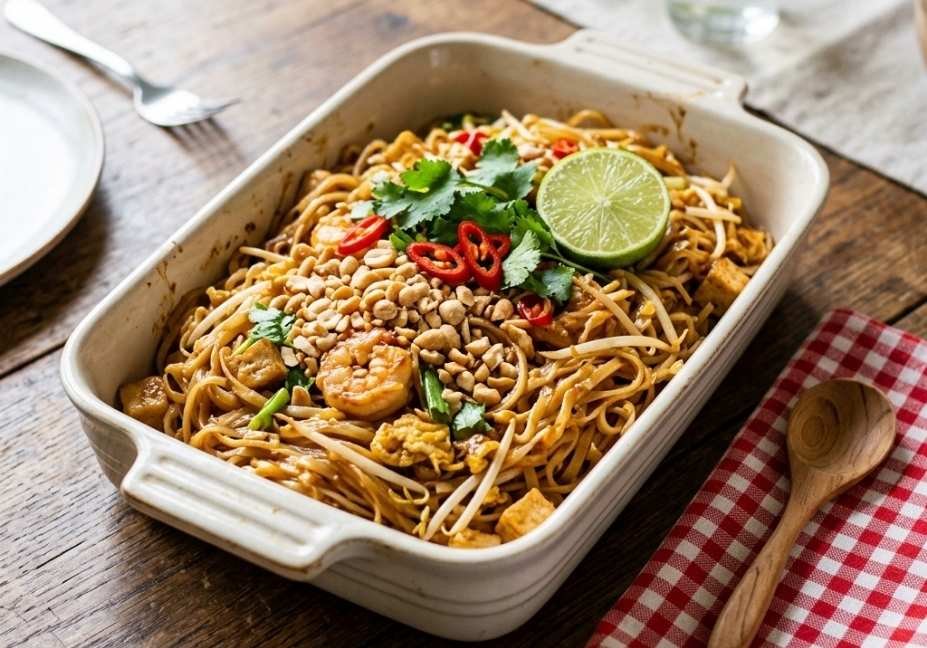
Baked Pad Thai Recipe: Easy Oven-Baked Thai Noodles
What Is Baked Pad Thai?
A baked Pad Thai recipe is an oven-friendly version of the popular Thai noodle dish. Instead of cooking everything in a wok from start to finish, the ingredients are combined in a baking dish and finished in the oven.
Traditional Pad Thai is usually stir-fried with rice noodles, sauce, vegetables, eggs, protein, and toppings such as peanuts and lime. Baked Pad Thai changes the cooking method while keeping the familiar sweet, sour, salty, and savory flavor profile.
This version is especially useful for busy weeknight dinners because most of the ingredients can be prepared and mixed before the dish goes into the oven.
Quick Answer
The easiest way to make baked Pad Thai is to soften rice noodles, prepare a balanced tamarind sauce, combine the noodles with cooked chicken, vegetables, eggs, and sauce, then bake everything in a greased casserole dish.
Bake at 375°F (190°C) for about 25 to 30 minutes, or until the dish is hot and the top is lightly golden. Finish it with crushed peanuts, green onions, cilantro, and fresh lime.
Baked Pad Thai at a Glance
| Detail | Information |
| Recipe type | Baked noodle dinner |
| Cuisine | Thai-inspired |
| Main ingredient | Rice noodles |
| Protein | Chicken |
| Cooking method | Oven baking |
| Oven temperature | 375°F (190°C) |
| Baking time | 25 to 30 minutes |
| Servings | 4 |
| Best toppings | Peanuts, lime, green onions, cilantro |
| Difficulty | Easy to moderate |
Why This Baked Pad Thai Recipe Works
This recipe combines the familiar flavors of Pad Thai with the convenience of a casserole.
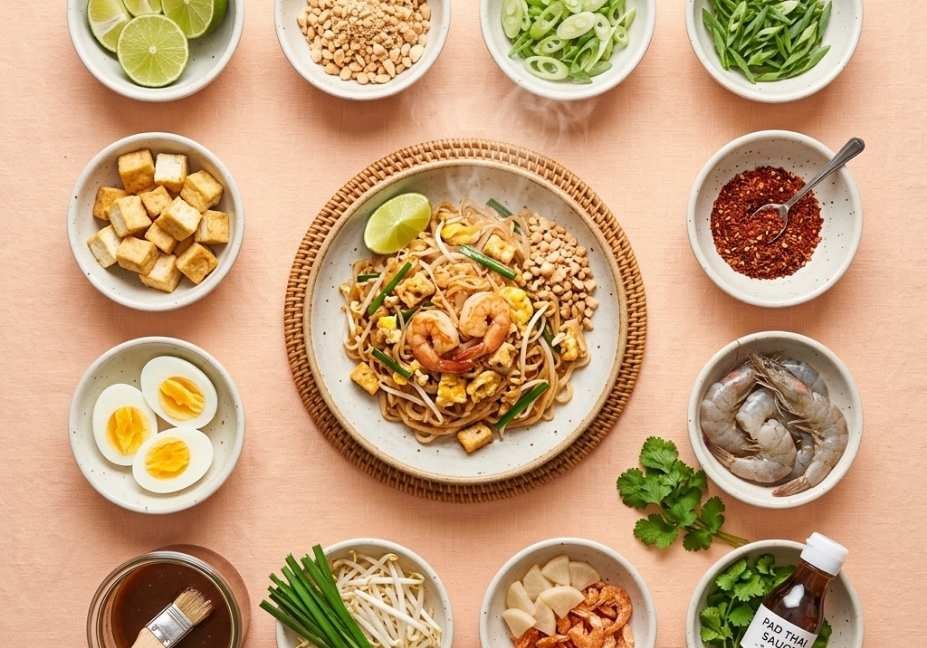
The rice noodles provide the chewy base, while tamarind adds a bright sour note. Fish sauce brings salty umami flavor, and brown sugar balances the sourness. Lime adds freshness at the end.
Chicken makes the dish filling, while bean sprouts, carrots, and green onions provide different textures.
The oven also makes this recipe convenient when several dishes need to be prepared at the same time. Similar Pad Thai casserole recipes use the same basic idea of combining noodles, protein, sauce, eggs, vegetables, and toppings before baking.
Baked Pad Thai Ingredients
Main Ingredients
For about 4 servings, the recipe needs:
- 8 ounces rice noodles
- 2 tablespoons vegetable oil
- 1 cup cooked chicken breast, shredded or chopped
- 1 cup bean sprouts
- 1 small carrot, thinly sliced or julienned
- 2 green onions, sliced
- 2 cloves garlic, minced
- 2 large eggs
- 1/4 cup crushed roasted peanuts
- Fresh cilantro for serving
- Lime wedges for serving
For the Pad Thai Sauce
The sauce is what gives this dish its signature flavor.
- 2 tablespoons tamarind paste
- 2 tablespoons fish sauce
- 1 tablespoon soy sauce
- 2 tablespoons lime juice
- 2 tablespoons brown sugar
- 1/4 cup warm water
- 1 teaspoon chili flakes or chili sauce, optional
Traditional Pad Thai recipes commonly use a combination of tamarind, fish sauce, sugar, noodles, eggs, vegetables, and peanuts. Exact proportions vary between recipes, so the sauce can be adjusted to personal taste.
How to Make Baked Pad Thai
Step 1: Prepare the Rice Noodles
Place the dry rice noodles in a large bowl.
Cover them with warm water and allow them to soften according to the package instructions. The noodles should become flexible but should not turn extremely soft or mushy.
Drain them well and rinse briefly with cool water if needed.
This step is important because the noodles continue to soften during baking.
Step 2: Make the Pad Thai Sauce
Add tamarind paste, fish sauce, soy sauce, lime juice, brown sugar, and warm water to a small bowl.
Whisk until the sugar is mostly dissolved.
Taste the sauce before adding it to the noodles.
The flavor should have a balance of:
- Sour from tamarind and lime
- Salty from fish sauce and soy sauce
- Sweet from brown sugar
- Spicy from chili if added
If the sauce tastes too sour, add a little more sugar. If it tastes too sweet, add a small amount of lime juice.
Step 3: Prepare the Chicken and Vegetables
If using raw chicken, cook it completely in a skillet before assembling the casserole.
Add a small amount of oil to a pan and cook the chicken until it is no longer pink in the center.
Add the garlic and carrot and cook briefly.
The vegetables do not need to become completely soft because they will continue cooking in the oven.
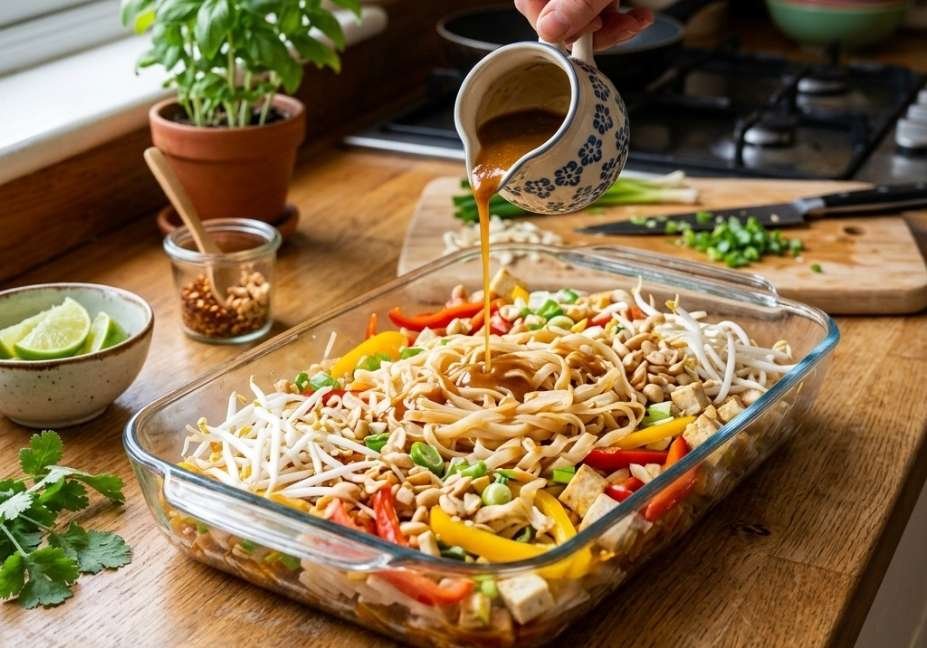
Step 4: Combine the Ingredients
Place the softened noodles in a large mixing bowl. Add the cooked chicken, carrot, garlic, bean sprouts, and green onions.
Pour the Pad Thai sauce over the mixture. Add the beaten eggs and gently toss everything together. Avoid crushing the noodles while mixing.
Step 5: Transfer to a Baking Dish
Lightly grease a medium baking dish with vegetable oil. Transfer the noodle mixture into the dish and spread it into an even layer.
Sprinkle a small amount of crushed peanuts over the top. Keep most of the peanuts for serving so they stay crunchy.
Step 6: Bake the Pad Thai
Preheat the oven to 375°F (190°C). Place the baking dish in the oven and bake for approximately 25 to 30 minutes.
The center should be hot, the egg should be fully cooked, and the top should look lightly set. If the top begins to brown too quickly, loosely cover the dish with foil.
Step 7: Add Fresh Toppings
Remove the baked Pad Thai from the oven. Allow it to rest for a few minutes.
Top with crushed peanuts, green onions, fresh cilantro, and lime wedges. A squeeze of fresh lime just before eating helps brighten the rich sauce.
How to Adjust the Flavor
Make Baked Pad Thai Spicier
For a hotter version, add:
- Red chili flakes
- Sriracha
- Fresh sliced chili
- Thai chili powder
Start with a small amount because the heat can become stronger than expected.
Make It Milder
For a family-friendly version, leave out the chili. The tamarind, lime, sugar, and fish sauce still provide plenty of flavor without making the dish hot.
Make It More Sour
Add another small squeeze of lime after baking. Fresh lime is especially useful because it adds acidity without making the entire sauce watery.
Make It Sweeter
Add a little extra brown sugar to the sauce. However, it is better to increase the sugar gradually because too much sweetness can hide the sour and savory flavors.
Easy Protein Variations
Chicken Baked Pad Thai
Chicken is an easy option for a filling family dinner. Use cooked chicken breast or boneless chicken thighs. Shredded leftover chicken can also work well.
Shrimp Baked Pad Thai
Shrimp gives the dish a classic seafood flavor. Cook the shrimp before adding them to the casserole, especially when using larger shrimp. This helps prevent excess liquid from entering the baking dish.
Tofu Baked Pad Thai
Firm tofu works well for a vegetarian version. Press the tofu first to remove excess moisture. Cut it into small cubes and lightly cook it before mixing it with the noodles.
Vegetarian Baked Pad Thai
For a vegetarian version, replace the chicken with tofu and use a vegetarian fish sauce alternative or additional soy sauce.
Add extra vegetables such as:
- Bell peppers
- Broccoli
- Mushrooms
- Shredded cabbage
- Carrots
Common Mistakes to Avoid
Overcooking the Rice Noodles
Soft noodles can become mushy during baking. The noodles should be flexible but still have some firmness before entering the oven.
Using Too Much Sauce
Extra sauce may make the casserole watery. Start with the recommended amount and add more only if the noodles appear unusually dry.
Skipping the Tamarind
Tamarind provides the characteristic sour depth associated with Pad Thai. Lime juice can provide acidity, but it does not completely replace the flavor of tamarind.
Adding All the Peanuts Before Baking
Peanuts can lose their crunch in the oven. Keeping most of them for the final topping gives the finished dish better texture.
Cutting the Vegetables Too Large
Large pieces may remain too firm while the noodles become fully cooked. Thinly sliced vegetables work better in a baked noodle casserole.
Not Checking the Center
The top can look finished before the center becomes hot. Check the middle of the casserole before serving, especially when using a deeper baking dish.
How to Serve Baked Pad Thai
Baked Pad Thai works well as a complete dinner because it already contains noodles, vegetables, eggs, and protein.
For a more colorful meal, serve it with:
- Fresh lime wedges
- Crushed roasted peanuts
- Green onions
- Fresh cilantro
- Bean sprouts
- Sliced cucumber
- Fresh chili
A simple cucumber salad can also provide a cool contrast to the warm noodles.
How to Store and Reheat Baked Pad Thai
Allow leftovers to cool before placing them in an airtight container.
Store the leftovers in the refrigerator and use them within about 3 days for best quality.
To reheat, place a serving in the microwave and heat until hot throughout. A small splash of water can help loosen the noodles.
For larger portions, reheat the Pad Thai in a covered oven-safe dish at a moderate temperature until heated through.
Avoid repeatedly reheating the entire casserole. Reheat only the portion that will be eaten.
Can Baked Pad Thai Be Made Ahead?
Yes. The casserole can be assembled ahead of time and refrigerated before baking. A similar baked Pad Thai casserole approach recommends preparing the dish in advance and refrigerating it before baking.
For the best texture, keep the noodles slightly firm during preparation.
If the assembled dish becomes very cold in the refrigerator, it may need additional baking time. Always make sure the center becomes fully hot before serving.
Frequently Asked Questions
Can Pad Thai Be Baked Instead of Stir-Fried?
Yes. A baked version can combine softened rice noodles, sauce, protein, vegetables, and eggs in a casserole dish before baking. It will have a slightly different texture from wok-fried Pad Thai but can still deliver the familiar flavors.
What Temperature Is Best for Baked Pad Thai?
A temperature of 375°F (190°C) works well for this casserole-style recipe. Baking time can vary depending on the depth and size of the dish.
Do Rice Noodles Need to Be Fully Cooked Before Baking?
No. It is better to soften them without making them completely soft. They continue cooking as the casserole bakes.
Can Chicken Be Replaced With Shrimp?
Yes. Shrimp can replace chicken. Tofu is another useful option for a vegetarian version.
Can Baked Pad Thai Be Made Vegetarian?
Yes. Use tofu or vegetables instead of chicken and replace fish sauce with a suitable vegetarian alternative.
Can Fish Sauce Be Replaced?
Soy sauce or tamari can provide a salty flavor, although the final taste will be different from traditional Pad Thai.
Why Did My Baked Pad Thai Become Mushy?
The most common causes are over-softened noodles, too much sauce, or excessive baking time. Start with firm noodles and avoid adding more liquid than the recipe needs.
How Can Baked Pad Thai Be Made Spicy?
Add chili flakes, Sriracha, fresh red chili, or Thai chili powder to the sauce.
Can Baked Pad Thai Be Frozen?
It can be frozen, but the rice noodle texture may change after thawing and reheating. For the best texture, refrigeration and short-term storage are preferable.
What Should Be Served With Baked Pad Thai?
Fresh lime, peanuts, cilantro, green onions, bean sprouts, and cucumber all work well as toppings or sides.
Key Takeaway
A baked Pad Thai recipe offers an easy alternative to traditional wok cooking. Softened rice noodles are combined with a sweet, sour, and savory tamarind sauce, chicken, vegetables, and eggs before being baked until hot.
The most important step is keeping the noodles slightly firm before baking. Fresh lime, peanuts, and herbs added at the end provide the contrast that makes the dish more enjoyable.
Conclusion
This oven-baked Pad Thai is a practical way to enjoy Thai-inspired noodles without spending the entire cooking process at the stove.
The combination of rice noodles, tamarind, fish sauce, brown sugar, chicken, vegetables, eggs, and peanuts creates a balanced meal with plenty of flavor and texture.
For the best result, the noodles should not be overcooked before baking. The sauce should also have a clear balance of sweet, sour, and salty flavors.
Once the casserole comes out of the oven, fresh lime, crunchy peanuts, green onions, and cilantro can bring the dish together.






2 Comments