
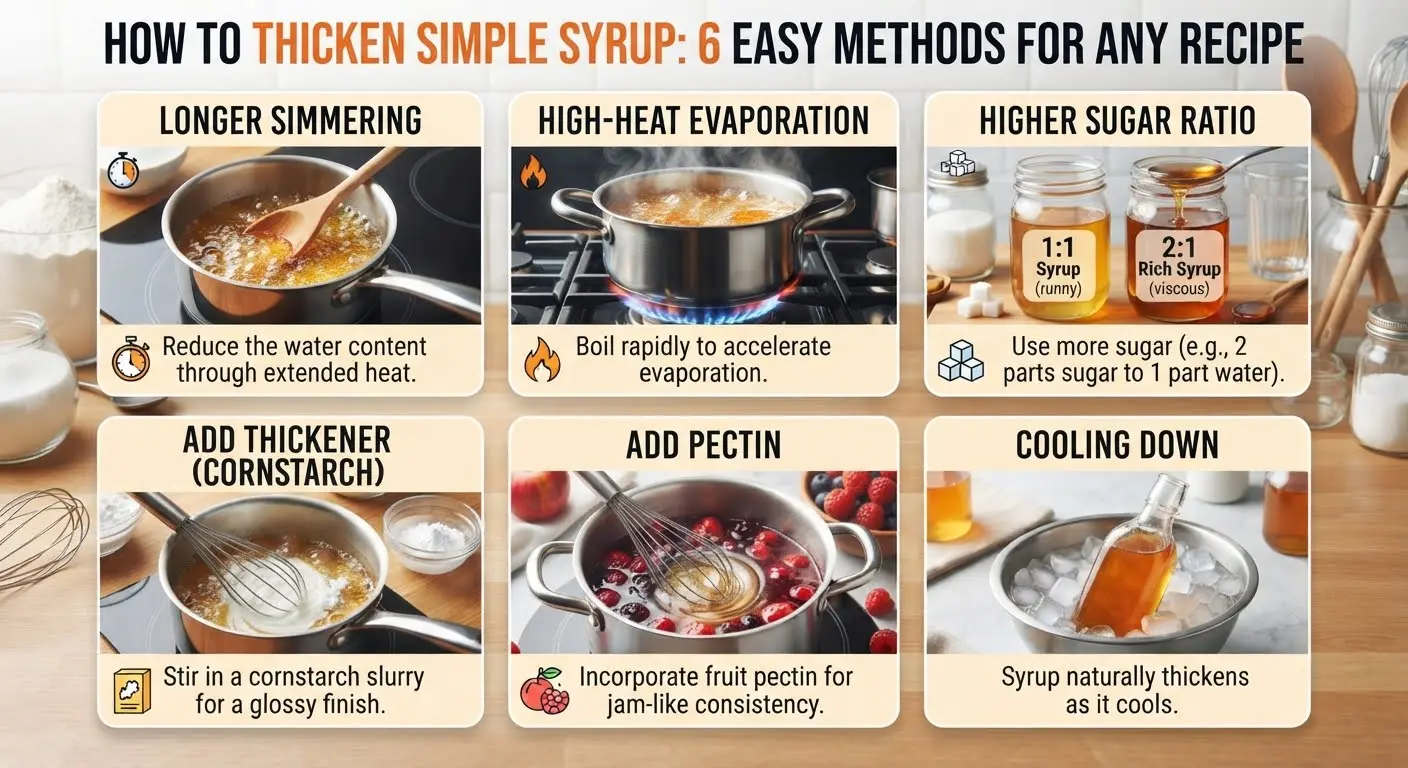
How to Thicken Simple Syrup: 6 Easy Methods for Any Recipe
Basic simple syrup pours like water, and that is fine for iced tea. It is not fine when you want a rich drizzle for pancakes, a glossy glaze for cakes or a cocktail syrup with real body. If you need to know how to thicken simple syrup, you have several easy options, and most of them use ingredients you already own.
This guide explains why simple syrup runs thin and how each thickening method works. You will learn how to adjust the sugar ratio, reduce the syrup on the stove and use honey, corn syrup, cornflour or xanthan gum. You will also find fixes for crystals, cloudiness and syrup that turns too thick.
Quick Answer: How Do You Thicken Simple Syrup?
The easiest way to thicken simple syrup is to raise the sugar level. Make it with 2 parts sugar to 1 part water, or simmer a finished 1:1 syrup so some water evaporates. For a quick fix, stir in a spoonful of honey or corn syrup. Remember that syrup always looks thinner while hot and thickens as it cools.
Why Simple Syrup Is Thin
Classic simple syrup uses equal parts sugar and water. This 1:1 ratio dissolves fast and pours easily. Alphafoodie describes the basic version as thin and easy to pour, while the rich 2:1 version comes out thicker.
Thickness comes down to how much sugar sits in the liquid. More sugar and less water means a heavier, more viscous syrup. That single idea explains almost every method in this article.
Hot Syrup Looks Thinner Than It Is
Heat makes syrup flow more freely. A syrup that seems too thin in the pan will often feel much thicker after it cools. Because of this, you should stop heating before the syrup looks perfect. Otherwise you will end up with something closer to candy.
6 Ways to Thicken Simple Syrup
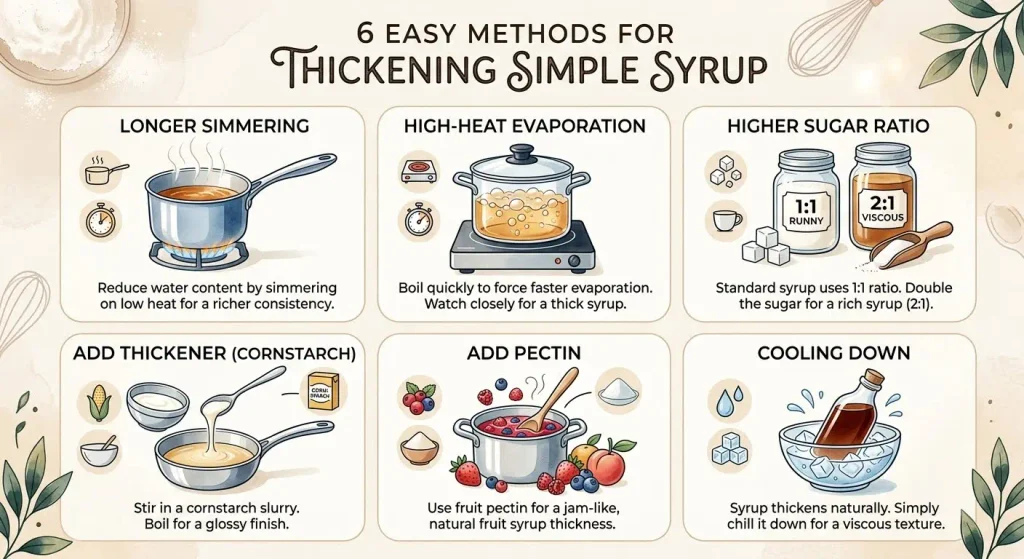
Each method below suits a different goal. Some keep the syrup clear and pure. Others work faster but change the taste or look. Pick the one that matches how you plan to use the syrup.
1. Start With a 2:1 Ratio
This is the cleanest fix. Rich simple syrup uses 2 parts sugar to 1 part water. It tastes sweeter and feels heavier on the tongue, which is why bartenders like it.
Use 1 cup of white sugar and 1/2 cup of water. Warm the water in a small saucepan over medium heat. Stir in the sugar until you see no grains. Remove the pan from the heat before the syrup boils hard. Let it cool, then pour it into a clean jar.
This batch makes roughly 1 cup of syrup. Because rich syrup is much sweeter, use less of it in recipes that call for regular simple syrup.
2. Add More Sugar to Thin Syrup
You can thicken an existing 1:1 batch without starting over. Warm the syrup gently over low heat. Add sugar 1 tablespoon at a time and stir until each addition dissolves. Stop when the syrup reaches the thickness you want.
Go slowly with this method. Too much sugar can leave crystals in the jar later. If the syrup turns grainy, add a splash of water and heat it until the grains dissolve.
3. Simmer the Syrup to Reduce It
Reducing means cooking off water. Less water leaves a higher share of sugar, so the syrup thickens. Alphafoodie notes that this works but also changes the water-to-sugar ratio. That matters if a recipe depends on exact sweetness.
Follow these steps:
- Pour the syrup into a wide saucepan. A wider pan lets water escape faster.
- Heat it over medium-low heat until it simmers gently.
- Leave the lid off and avoid stirring once the sugar has dissolved.
- Simmer for about 5 minutes, then check the thickness.
- Take the pan off the heat while the syrup still looks slightly thin.
- Let it cool for 10 to 15 minutes and test again.
As a rough guide, reducing the syrup by about one third gives a noticeably thicker result. Your stove and pan will change the timing, so watch the syrup rather than the clock. Hot sugar can burn skin badly, so keep children away from the stove and handle the pan with care.
4. Stir In Honey, Maple Syrup or Corn Syrup
Other liquid sweeteners are already thick, and they blend easily into warm syrup. Start with 1 tablespoon per 1 cup of simple syrup. Stir well and wait a minute before you add more.
- Honey: adds body and a floral flavour.
- Maple syrup: adds a warm, woody sweetness that suits pancakes and coffee drinks.
- Light corn syrup: adds thickness with almost no flavour and helps keep the syrup smooth.
- Agave nectar: adds a mild sweetness and a slightly thicker pour.
This method is fast, but it changes the flavour of the syrup, except with corn syrup. If you want a neutral cocktail syrup, corn syrup or the 2:1 ratio works better than honey.
5. Use a Cornflour Slurry
Cornflour thickens syrup quickly. It works well for fruit syrups, pancake toppings and dessert sauces. It is not a good choice when you want a crystal clear syrup, because starch makes the liquid a little cloudy.
Mix 1 teaspoon of cornflour with 1 tablespoon of cold water in a small bowl. Stir until smooth. This mixture is called a slurry. Bring 1 cup of syrup to a gentle simmer, then whisk in the slurry. Cook for 1 to 2 minutes while you stir. The syrup should look glossier and coat the back of a spoon.
Treat these amounts as a starting point. If the syrup is still thin after cooling, repeat with a small second slurry. Always mix the starch with cold water first. Dry cornflour added straight to hot syrup forms lumps.
6. Add a pinch of xanthan gum.
Xanthan gum is a powder used to thicken drinks and sauces. It thickens cold or hot liquids and keeps syrup clear, so some home bartenders like it.
Start with 1/8 teaspoon for 1 cup of syrup. Sprinkle it over the surface while you whisk hard or blend. Wait a few minutes because it keeps thickening as it absorbs liquid. Add more in tiny amounts only. Too much turns the syrup slimy.
Which Method Should You Choose?

Match the method to your goal:
- Cocktails: use the 2:1 ratio or a pinch of xanthan gum.
- Pancakes and waffles: reduce the syrup or stir in maple syrup.
- Cake glazes: use the 2:1 ratio or reduce the syrup gently.
- Fruit sauces: use a cornflour slurry.
- Smooth, crystal-resistant syrup: add a little corn syrup.
How to Tell When Simple Syrup Is Thick Enough
Do not judge the thickness while the syrup is boiling hot. Use one of these checks instead.
The Spoon Test
Dip a cold metal spoon into the syrup and lift it out. Thin syrup runs off in a quick stream. Medium syrup leaves a light coating. Thick syrup clings and drips slowly.
The Cold Plate Test
Place a small plate in the freezer for a few minutes. Drop a teaspoon of hot syrup onto it and wait 30 seconds. Tilt the plate. The syrup tells you how it will behave at room temperature or in the fridge.
If the drop barely moves, the syrup is thick. If it runs fast, simmer it a little longer or add more of your chosen thickener.
Common Mistakes and How to Fix Them

The Syrup Turns Grainy or Crystallises
Sugar crystals form when stray grains fall back into a concentrated syrup. Stirring too much after the sugar dissolves can also trigger crystals. To prevent this, stir only until the grains disappear. Brush the inside of the pan with a wet pastry brush to wash down stray crystals. Adding a small spoonful of corn syrup also helps keep the syrup smooth.
If crystals have already formed, add a splash of water and warm the syrup until it turns clear again.
The Syrup Is Too Thick
Thinning is easy. Warm the syrup and stir in water 1 teaspoon at a time. Check the thickness after each addition. Cold syrup always looks thicker, so warm it slightly before you judge it.
The Syrup Turns Dark or Smells Burnt
Sugar starts to caramelise when it cooks too long or too hot. A pale golden colour means caramel is beginning to form. That changes the flavour, so lower the heat or start again if you want a clean sweet taste. Caramelised syrup is not a mistake if you want a deeper flavour, but plan for it.
The Syrup Looks Cloudy
Cloudiness has several causes. Cornflour can cause it, and so can undissolved sugar or tap water with high mineral content. Cloudiness in plain syrup that has been stored for weeks can also signal spoilage. Alphafoodie advises discarding syrup that turns cloudy after storage. When in doubt, throw it out.
How to Store Thickened Simple Syrup
Let the syrup cool completely. Pour it into a clean jar or bottle with a tight lid. Store it in the refrigerator.
Storage times vary by source and by recipe. Alphafoodie lists about 3 to 4 weeks in the fridge for a standard 1:1 syrup and up to several months for a rich 2:1 syrup. More sugar generally helps a syrup last longer. Syrups with starch, fruit or other add-ins usually keep less well, so make small batches and use them sooner.
Always use a clean spoon or pour straight from the bottle. Throw the syrup away if it smells sour or looks cloudy, slimy or mouldy.
Ways to Use Thicker Simple Syrup
- Drizzle it over pancakes, waffles or French toast.
- Brush it on cake layers to keep them moist.
- Stir it into iced coffee for a smooth sweetener.
- Add body to old fashioneds, mojitos and other cocktails.
- Spoon it over fruit salad or yoghurt.
Keep in mind that thicker syrup is often sweeter per spoonful. Use a little less than a recipe calls for, then taste and adjust.
Frequently Asked Questions
Can I thicken simple syrup without cooking it?
Yes. Stir in honey, agave or corn syrup, or blend in a tiny pinch of xanthan gum. You can also make a cold 2:1 syrup by shaking sugar and water in a jar, though it takes longer to dissolve.
Does simple syrup thicken as it cools?
Yes. Heat thins syrup, so it feels thicker after cooling. Check the thickness at room temperature before you decide to cook it longer.
How do I thicken simple syrup for pancakes?
Simmer it for a few minutes to reduce it, or stir in maple syrup. A teaspoon of cornflour slurry per cup also works if you do not mind a slightly cloudy look.
Why did my thickened simple syrup turn hard?
You probably cooked off too much water. Very concentrated syrup can set firm when cool. Warm it gently with a splash of water to loosen it.
What is the difference between simple syrup and rich simple syrup?
Simple syrup uses equal parts sugar and water. Rich simple syrup uses 2 parts sugar to 1 part water, so it is thicker and sweeter.
Final Thoughts
For the cleanest result, make a 2:1 rich syrup from the start. For a quick rescue, reduce the syrup gently or add a spoonful of corn syrup. Whichever method you choose, stop heating while the syrup still looks a little thin, because it thickens as it cools. Try a small batch first, and adjust from there.

![[A tall glass of strawberry protein smoothie topped with whipped cream and sprinkles, surrounded by a banana, protein powder, almond milk, peanut butter, and strawberries on a yellow marble counter.]](https://polycooks.com/wp-content/uploads/2026/09/5-ing-protein-shake-1-768x537.jpg)