
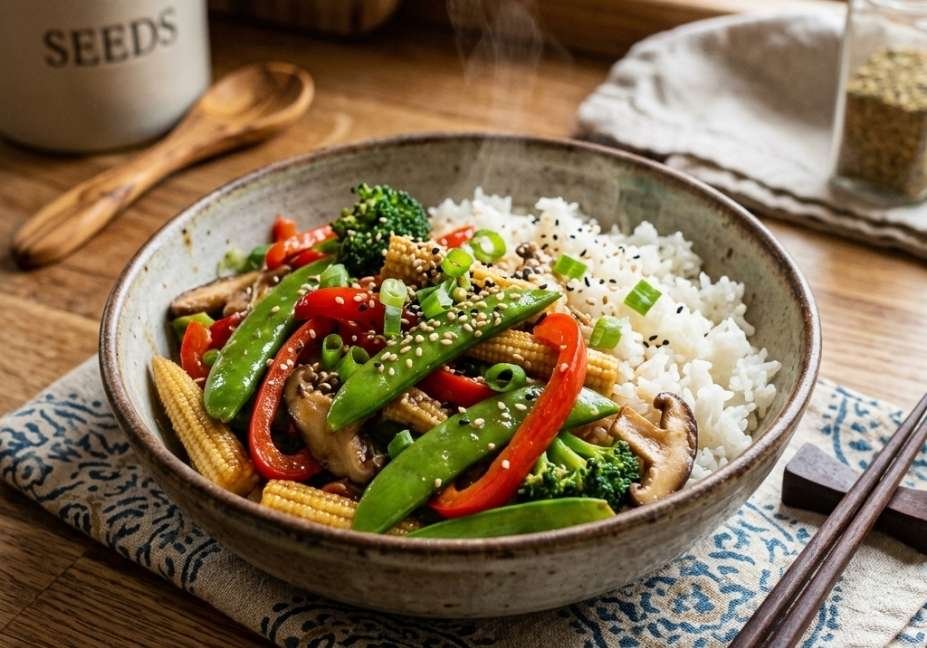
Fusion Vegetable Stir Fry Recipe: Easy Flavorful Weeknight Meal
What Is a Fusion Vegetable Stir Fry?
A fusion vegetable stir fry combines the fast cooking method of a classic stir fry with flavors and ingredients from different cuisines.
Instead of following one traditional regional recipe, a fusion version can combine ingredients such as soy sauce, ginger, garlic, sesame oil, lime, chili, peanut butter, teriyaki sauce, or even curry spices.
The result is a colorful vegetable dish with plenty of texture and flavor.
This approach also makes the recipe flexible. Different vegetables can be used based on the season, budget, or ingredients already available in the kitchen.
Quick Answer
A fusion vegetable stir fry recipe can be made by cooking fresh vegetables quickly over medium-high to high heat, then adding a homemade sauce made with soy sauce, ginger, garlic, lime juice, honey, and sesame oil.
Broccoli, carrots, bell peppers, mushrooms, snap peas, and zucchini work well together. The finished stir fry can be served with steamed rice, fried rice, rice noodles, or other noodles.
The key is to avoid overcrowding the pan and to add vegetables according to their cooking time.
Fusion Vegetable Stir Fry at a Glance
| Detail | Information |
| Recipe type | Vegetable stir fry |
| Cuisine style | Asian fusion |
| Servings | 4 |
| Prep time | 15 minutes |
| Cook time | 10 to 12 minutes |
| Total time | About 25 to 27 minutes |
| Main ingredients | Mixed vegetables |
| Cooking method | Wok or large skillet |
| Best sauce | Soy, ginger, garlic, lime, and sesame |
| Serving options | Rice or noodles |
| Difficulty | Easy |
Why This Fusion Stir Fry Works
This recipe uses a simple cooking formula that can be adapted to many ingredients.
First, the vegetables are cut into similar sizes. Next, the harder vegetables go into the hot pan before softer vegetables. Garlic and ginger add aroma, while the sauce brings everything together.
This cooking order helps the vegetables stay colorful and crisp instead of becoming soft and watery.
The Kitchn recommends keeping vegetables dry and avoiding an overcrowded pan because excess moisture can reduce the high-heat searing effect.
The sauce also goes in near the end. This allows it to coat the vegetables without making them soggy.
The Basic Fusion Stir Fry Formula
A useful formula is:
Vegetables + Aromatics + Sauce + Protein or Toppings + Rice or Noodles
This makes the recipe easy to customize.
For example, one version can use soy sauce, lime, and chili for a bright flavor. Another can use teriyaki and sesame for a sweeter profile. A peanut sauce can create a richer Thai-inspired variation.
Ingredients
Vegetables
For 4 servings, use:
- 2 cups broccoli florets
- 1 large carrot, thinly sliced
- 1 red bell pepper, sliced
- 1 cup mushrooms, sliced
- 1 small zucchini, sliced
- 1 cup snap peas
- 1 small red onion, sliced
The vegetables can be changed according to availability.
Broccoli and carrots provide a firm texture. Bell peppers add sweetness and color. Mushrooms add a savory taste, while snap peas provide crunch.
Aromatics
Use:
- 3 cloves garlic, minced
- 1 tablespoon fresh ginger, grated
- 2 green onions, sliced
- 1 small red chili, sliced, optional
Fresh garlic and ginger provide a stronger aroma than dried versions.
Fusion Stir Fry Sauce
Combine:
- 1/4 cup low-sodium soy sauce
- 1 tablespoon honey or maple syrup
- 1 tablespoon lime juice
- 1 tablespoon rice vinegar
- 1 teaspoon sesame oil
- 1 teaspoon grated fresh ginger
- 1 small garlic clove, minced
- 1 teaspoon cornstarch
- 2 tablespoons water
- 1/2 teaspoon chili flakes, optional
Whisk the ingredients until the cornstarch dissolves.
Cornstarch helps the sauce thicken and cling to the vegetables. Similar stir fry sauces use a cornstarch slurry to create a glossy coating.
How to Make Fusion Vegetable Stir Fry
Step 1: Prepare All Ingredients
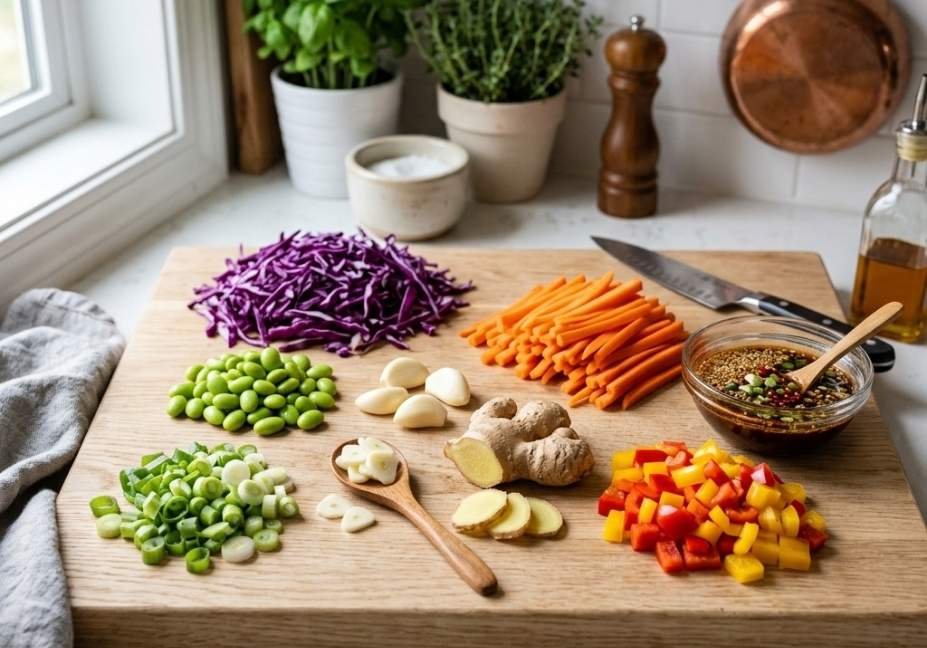
Stir frying moves quickly, so all vegetables should be washed, dried, and cut before the pan gets hot. Cut the vegetables into similar sizes.
Keep the vegetables in separate groups based on how quickly they cook.
A useful order is:
Carrots and broccoli → onions and peppers → mushrooms and zucchini → snap peas and other tender vegetables
This method helps each ingredient cook properly.
Step 2: Prepare the Sauce
Add soy sauce, honey, lime juice, rice vinegar, sesame oil, ginger, garlic, chili flakes, cornstarch, and water to a small bowl.
Whisk until smooth.
Set the sauce aside.
Stir it again before adding it to the pan because cornstarch can settle at the bottom.
Step 3: Heat the Pan
Place a wok or large skillet over medium-high to high heat. Allow the pan to become hot before adding the oil. Add about 1 tablespoon of neutral cooking oil.
The pan should be large enough to hold the vegetables without creating a deep pile.
Step 4: Cook the Hard Vegetables
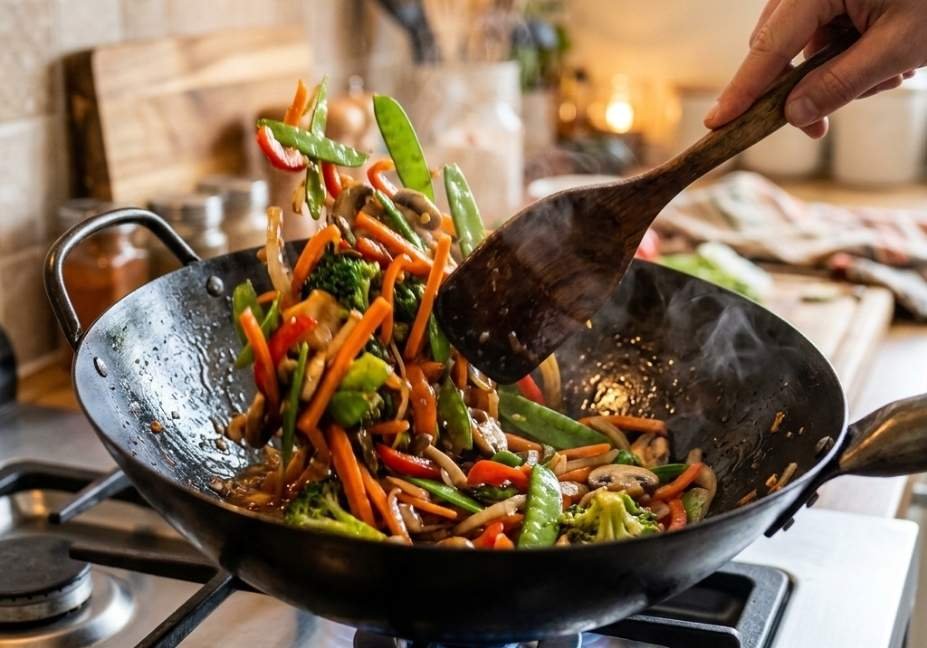
Add the carrots and broccoli. Stir continuously for about 2 to 3 minutes. The vegetables should begin to soften while keeping some firmness. Avoid cooking them until completely soft.
Step 5: Add the Medium-Firm Vegetables
Add the red onion and bell pepper. Continue stir frying for another 2 minutes. Keep the vegetables moving around the pan. This helps create light browning while maintaining a crisp texture.
Step 6: Add Mushrooms and Zucchini
Add the mushrooms and zucchini. Cook for about 2 minutes. Mushrooms may release moisture as they cook, so keeping the pan hot is important. If the pan becomes crowded, cook the vegetables in batches.
Step 7: Add Snap Peas and Aromatics
Add the snap peas, garlic, ginger, and chili. Stir fry for about 1 minute. The garlic and ginger should become fragrant without burning.
Step 8: Add the Sauce
Stir the sauce again. Pour it around the vegetables. Toss everything together for about 1 to 2 minutes. The sauce should become slightly thick and glossy.
It should coat the vegetables instead of forming a large pool at the bottom of the pan.
Step 9: Finish and Serve
Turn off the heat. Add sliced green onions and a small squeeze of fresh lime. Serve immediately with rice or noodles. For extra texture, add sesame seeds, crushed peanuts, fresh cilantro, or sliced chili.
How to Build the Perfect Fusion Stir Fry Sauce
A good stir fry sauce needs balance.
Salty
Soy sauce or tamari provides the main savory base.
Sweet
Honey, maple syrup, brown sugar, or another sweetener balances salty and sour flavors.
Sour
Lime juice or rice vinegar adds brightness.
Aromatic
Garlic, ginger, sesame oil, and green onions add depth.
Spicy
Chili flakes, fresh chili, chili garlic sauce, or Sriracha can add heat.
Thick
Cornstarch creates a thicker sauce that coats the vegetables.
This balance allows the same vegetable base to work with several different flavor profiles.
Fusion Flavor Variations
Teriyaki Vegetable Stir Fry
Replace the homemade sauce with a simple teriyaki-style mixture. Add sesame seeds and green onions at the end.
Teriyaki vegetable stir fry recipes commonly pair broccoli, snap peas, mushrooms, zucchini, garlic, ginger, and sesame with a sweet-savory sauce.
Spicy Chili Lime Stir Fry
Increase the chili flakes and add extra lime juice after cooking. This version works especially well with bell peppers, broccoli, cabbage, and mushrooms.
Peanut Vegetable Stir Fry
Mix 2 tablespoons of natural peanut butter with soy sauce, lime juice, warm water, and a little honey. The result is richer and creamier than a basic soy sauce.
Peanut sauce is also commonly paired with vegetable stir fries and
such as tempeh.
Curry Fusion Stir Fry
Add a small amount of curry powder to the sauce. Coconut milk can also be added for a creamy curry-inspired variation.
This creates a stronger fusion profile without requiring a completely different cooking method.
Hoisin Ginger Stir Fry
Use hoisin sauce with soy sauce, fresh ginger, garlic, and a little lime. Hoisin works well with vegetables because it provides a sweet and savory flavor in a concentrated sauce.
Best Vegetable Combinations
Classic Colorful Combination
Use:
- Broccoli
- Carrots
- Bell peppers
- Mushrooms
- Snap peas
This combination provides different colors and textures.
Budget-Friendly Combination
Use:
- Cabbage
- Carrots
- Onions
- Bell peppers
- Frozen peas
These vegetables are affordable and easy to find.
Green Vegetable Stir Fry
Use:
- Broccoli
- Green beans
- Snap peas
- Bok choy
- Zucchini
This version has a fresh and lighter flavor.
Mushroom-Lovers Version
Use:
- Shiitake mushrooms
- Button mushrooms
- Oyster mushrooms
- Broccoli
- Green onions
Mushrooms can add a deeper savory flavor without meat.
Protein Options
A fusion vegetable stir fry does not need meat, but protein can make it more filling.
Tofu
Firm tofu is a simple plant-based option. Press it before cooking, cut it into cubes, and pan-fry it until lightly golden. Then add it to the finished vegetables.
Tempeh
Tempeh provides a firmer texture and works well with peanut or soy-based sauces.
Chicken
Thinly sliced chicken breast can be cooked before the vegetables. Remove the chicken from the pan while the vegetables cook. Add it back near the end.
Shrimp
Shrimp cooks quickly and pairs well with garlic, ginger, lime, and chili. Cook shrimp until opaque and fully cooked, then combine it with the vegetables.
Rice and Noodle Serving Ideas
Steamed Rice
White rice provides a neutral base that allows the sauce to stand out.
Brown Rice
Brown rice adds a nuttier flavor and more texture.
Rice Noodles
Rice noodles work well with lighter sauces and vegetables.
Egg Noodles
Egg noodles create a richer and more filling meal.
Quinoa
Quinoa can be used when a grain-based alternative is preferred.
Stir fry recipes commonly use rice or noodles as the serving base, while some versions also work well as a standalone vegetable dish.
How to Keep Vegetables Crisp
Do Not Overcrowd the Pan
Too many vegetables at once can lower the pan temperature. The vegetables may release steam instead of developing light browning. For a large batch, cook in two rounds.
Keep Vegetables Dry
Wet vegetables add extra water to the pan. Pat them dry before cooking. This is especially important after washing leafy vegetables.
Cut Vegetables Evenly
Similar-sized pieces cook at a similar rate. Thin carrots cook faster than large carrot chunks.
Add Sauce at the End
Sauce should usually go in after the vegetables are nearly cooked. This helps preserve their texture and prevents excess liquid from building up.
Common Stir Fry Mistakes
Using a Cold Pan
A cold pan can make the vegetables release water before they begin to sear. Always preheat the wok or skillet.
Adding Every Vegetable at Once
Different vegetables have different cooking times. Hard vegetables need more time than leafy greens or zucchini.
Using Too Much Sauce
Too much sauce can make the vegetables soft and watery. Add enough to coat the ingredients without drowning them.
Cutting Vegetables Too Large
Large pieces may remain undercooked while smaller pieces become soft. Keep the pieces relatively uniform.
Burning Garlic and Ginger
Garlic and ginger cook quickly. Add them after the harder vegetables have started cooking, then stir constantly.
Leaving the Pan Unattended
Stir frying happens quickly. Once the cooking starts, the ingredients need regular attention.
Can Frozen Vegetables Be Used?
Yes. Frozen stir fry vegetables can make the recipe faster.
However, frozen vegetables contain more surface moisture than dry fresh vegetables.
Add them to a very hot pan and avoid overcrowding.
For the best texture, fresh vegetables are often easier to control, but frozen vegetables remain a useful option for busy weeknight meals.
How to Store Fusion Vegetable Stir Fry
Allow leftovers to cool before transferring them to an airtight container.
Keep them refrigerated and use them within about 4 to 5 days for best quality.
The Kitchn’s vegetable stir fry guidance also lists refrigerated leftovers for up to 5 days.
Store rice separately when possible.
This makes reheating easier and helps prevent the rice from absorbing too much sauce.
How to Reheat Vegetable Stir Fry
The best method is a hot skillet. Add the leftover stir fry with a small splash of water. Heat over medium-high heat while stirring frequently. Microwave reheating also works for convenience, but the vegetables may become softer. Add fresh green onion, sesame seeds, or lime after reheating to refresh the flavor.
Frequently Asked Questions
What makes a vegetable stir fry a fusion recipe?
A fusion stir fry combines the stir-fry cooking method with flavors from different cuisines. Ingredients such as soy sauce, lime, peanut butter, curry spices, teriyaki, chili, or herbs can create different fusion profiles.
What vegetables are best for stir frying?
Broccoli, carrots, bell peppers, mushrooms, snap peas, zucchini, cabbage, green beans, and bok choy are all useful choices.
What is the secret to a good vegetable stir fry?
The main secrets are a hot pan, dry vegetables, proper cooking order, enough space in the pan, and sauce added near the end.
Can this fusion vegetable stir fry be made vegan?
Yes. Use soy sauce or tamari and replace honey with maple syrup or another plant-based sweetener.
Can frozen vegetables be used?
Yes. Frozen vegetables can save preparation time, although they may release more moisture than fresh vegetables.
What sauce goes well with vegetable stir fry?
Soy-ginger sauce, teriyaki, hoisin, peanut sauce, chili lime sauce, and curry-inspired sauces all work well.
Can tofu be added?
Yes. Firm or extra-firm tofu can be cooked separately and added near the end.
Should vegetables be boiled before stir frying?
Most vegetables do not need to be boiled first. Some firm vegetables can be briefly blanched when a faster cooking time is needed.
Can vegetable stir fry be served without rice?
Yes. It can be eaten on its own or served with noodles, quinoa, cauliflower rice, or another preferred base.
Why does vegetable stir fry become watery?
Water usually comes from wet vegetables, overcrowding, frozen ingredients, or too much sauce. Keeping the pan hot and cooking in batches can reduce excess moisture.
Key Takeaway
The best fusion vegetable stir fry recipe does not depend on one fixed group of vegetables.
Instead, it uses a simple cooking system: prepare dry vegetables, heat the pan well, cook hard vegetables first, add softer vegetables later, and finish with a balanced sauce.
The same base can become teriyaki, peanut, chili lime, hoisin ginger, or curry-inspired stir fry with a few ingredient changes.
Conclusion
This fusion vegetable stir fry is a flexible recipe for busy weeknight meals.
Broccoli, carrots, bell peppers, mushrooms, zucchini, and snap peas create a colorful base. Garlic and ginger provide aroma, while soy sauce, lime, rice vinegar, honey, and sesame oil create a balanced sweet, salty, sour, and savory sauce.
The cooking technique matters just as much as the ingredients. A hot pan, dry vegetables, proper cooking order, and limited sauce help the vegetables stay crisp and flavorful.
For a complete meal, the stir fry can be served with steamed rice, brown rice, rice noodles, or egg noodles. Tofu, tempeh, chicken, or shrimp can also be added when extra protein is desired.
Because the recipe is flexible, it can easily become a regular clean-out-the-fridge dinner while still tasting fresh and different each time.


4 Comments