
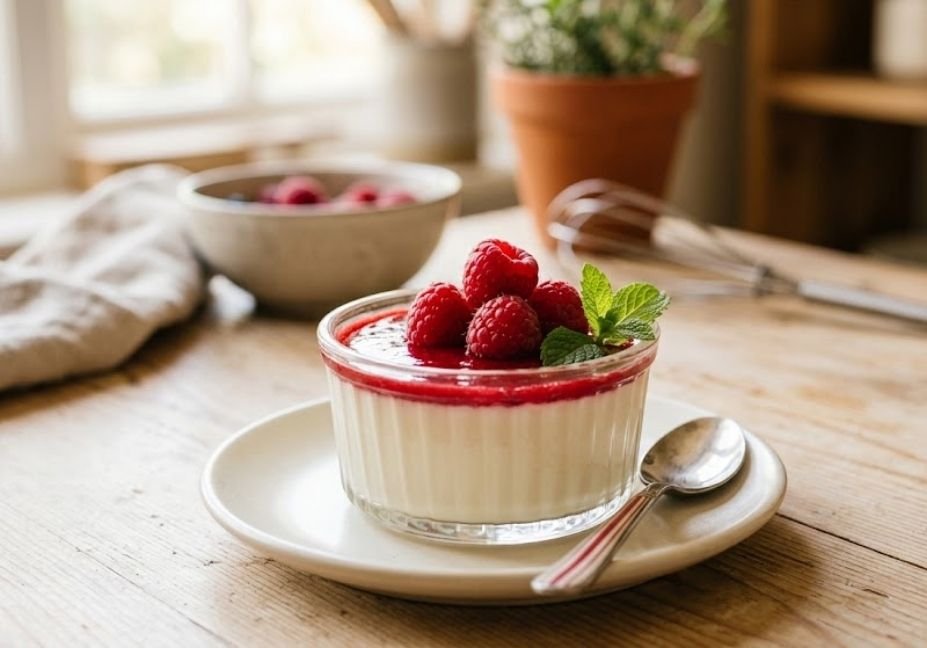
Simple Panna Cotta Recipe: Easy Creamy Italian Dessert
Panna cotta is a classic Italian dessert made with cream, sugar, vanilla, and gelatin. Despite its elegant appearance, it is surprisingly simple to prepare because it does not require baking, eggs, or complicated pastry techniques.
This simple panna cotta recipe creates a smooth, creamy dessert with a delicate vanilla flavor and a soft, lightly jiggly texture. The mixture takes only a few minutes to prepare, while the refrigerator does most of the work.
It can be served in small glasses or ramekins, or carefully unmolded onto plates. Fresh berries, fruit sauce, caramel, chocolate, or a little citrus zest can add extra flavor without making the recipe complicated.
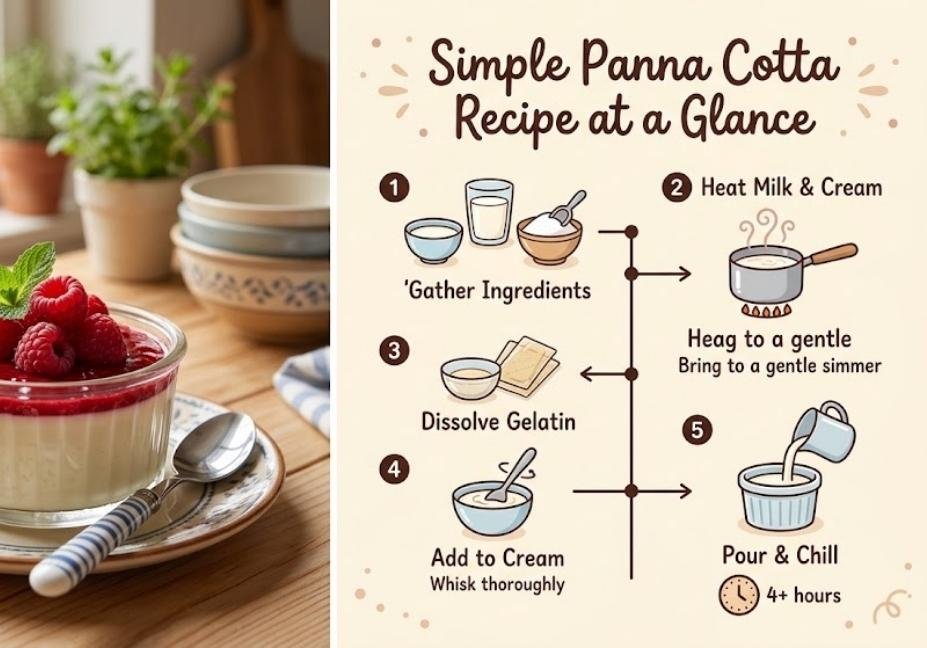
Simple Panna Cotta Recipe at a Glance
| Detail | Information |
| Recipe | Simple panna cotta |
| Cuisine | Italian |
| Prep time | About 10 minutes |
| Cook time | About 5 to 10 minutes |
| Chilling time | 4 hours or longer |
| Servings | 6 |
| Difficulty | Easy |
| Main flavor | Vanilla and cream |
| Cooking method | Stovetop and refrigeration |
| Best served | Chilled |
What Is Panna Cotta?
Panna cotta is an Italian chilled dessert whose name means “cooked cream.” Its basic structure comes from dairy, sugar, flavoring, and gelatin. Unlike custard desserts that depend on eggs, panna cotta uses gelatin to create its characteristic soft set.
The finished dessert should feel creamy and smooth rather than rubbery. It should hold its shape when unmolded but still have a gentle wobble when touched.
The basic technique is simple, but small details matter.
Ingredients for Simple Panna Cotta
This version uses common ingredients and keeps the preparation straightforward.
1. Heavy Cream
Use heavy cream or whipping cream for the rich, creamy texture associated with traditional panna cotta.
2. Whole Milk
Whole milk balances the richness of the cream and gives the dessert a lighter mouthfeel.
3. Unflavored Gelatin
Gelatin provides the structure that allows the panna cotta to set. Powdered unflavored gelatin works well for this recipe.
4. Granulated Sugar
Sugar adds sweetness and also helps balance the richness of the dairy.
5. Vanilla
. Vanilla bean or vanilla bean paste can also provide a stronger vanilla flavor.
6. Cold Water
A small amount of cold water is used to bloom the powdered gelatin before it is added to the warm dairy mixture.
Simple Panna Cotta Recipe
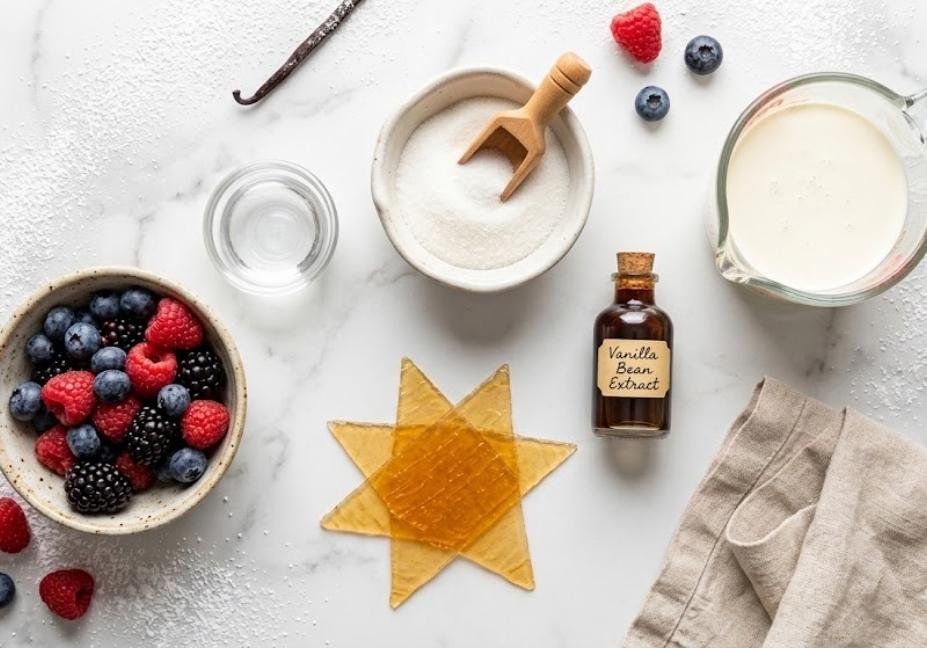
Ingredients
- 1 cup heavy cream
- 1 cup whole milk
- 1 1/2 teaspoons unflavored powdered gelatin
- 1/4 cup granulated sugar
- 1 teaspoon vanilla extract
- 2 tablespoons cold water
- A small pinch of salt, optional
The ingredient proportions are based on the general method used in established panna cotta recipes, with adjustments made to keep this version simple and beginner-friendly. Food Network recipes use cream and milk with powdered gelatin, while other established recipes use similar dairy and gelatin combinations.
How to Make Simple Panna Cotta
Step 1: Bloom the Gelatin
Pour the cold water into a small bowl. Sprinkle the powdered gelatin evenly over the water.
Let it stand for about 5 minutes.
The gelatin will absorb the water and become soft. This process is called blooming, and it helps the gelatin dissolve evenly later.
Do not skip this step because dry gelatin can form lumps when added directly to the hot mixture.
Step 2: Heat the Dairy
Add the heavy cream, whole milk, sugar, and optional salt to a saucepan.
Heat the mixture over medium-low heat while stirring gently.
The goal is to dissolve the sugar and warm the dairy. It should become hot but does not need a vigorous boil.
Several established recipes specifically use gentle heating rather than prolonged boiling.
Step 3: Add the Gelatin
Remove the saucepan from the heat.
Add the bloomed gelatin to the warm cream mixture. Whisk gently until the gelatin has completely dissolved.
This usually takes a short amount of time. Check the bottom and sides of the pan to make sure no gelatin remains undissolved.
Step 4: Add the Vanilla
Stir in the vanilla extract.
Step 5: Strain the Mixture
Pour the mixture through a fine-mesh strainer into a measuring jug or bowl.
This step is optional but useful. It can catch any small pieces of undissolved gelatin or vanilla particles and help create a smoother final dessert.
Step 6: Pour Into Serving Dishes
Divide the mixture between six small dessert glasses or ramekins.
Let the containers cool slightly at room temperature before placing them in the refrigerator.
Step 7: Refrigerate Until Set
Cover the panna cotta and refrigerate for at least 4 hours.
For a firmer set, it can be left overnight.
Established recipes commonly recommend several hours of chilling, with some recipes suggesting overnight refrigeration for the best set.
How Do You Know When Panna Cotta Is Ready?
A properly chilled panna cotta should look set around the edges and have a gentle wobble when the container is moved.
It should not look completely liquid in the center.
If it is still loose after several hours, give it more chilling time. Refrigerator temperature, container size, and gelatin quantity can all affect how quickly the dessert sets.
How to Unmold Panna Cotta
This is the easiest option because there is no risk of damaging the dessert during unmolding.
For a plate presentation, follow these steps:
- Take the chilled panna cotta from the refrigerator.
- Dip the outside or bottom of the ramekin briefly into warm water.
- Run a thin knife gently around the edge if necessary.
- Place a serving plate over the ramekin.
- Carefully turn the ramekin upside down.
- Lift the container slowly.
Do not leave the ramekin in hot water for too long. Excessive heat can soften the outside of the dessert.
Easy Toppings for Panna Cotta
One of the best things about this dessert is how easily the flavor can change.
Fresh Berries
Strawberries, raspberries, blueberries, and blackberries pair naturally with creamy vanilla panna cotta.
Berry Sauce
A quick berry sauce can be made by gently cooking berries with a little sugar and lemon juice. Allow the sauce to cool before spooning it over the chilled panna cotta.
Caramel
A small drizzle of caramel sauce adds a deeper, buttery sweetness.
Chocolate
Chocolate sauce or a light dusting of cocoa powder works well for a richer dessert.
Citrus Zest
Lemon or orange zest can add freshness without adding much extra sweetness.
Traditional Italian recipes commonly serve panna cotta with caramel, chocolate, or fruit sauces.
Simple Panna Cotta Flavor Variations
Vanilla Panna Cotta
Keep the recipe exactly as written for a classic vanilla dessert.
Chocolate Panna Cotta
Add a small amount of unsweetened cocoa powder or melted chocolate to the warm dairy mixture. Make sure the chocolate is fully incorporated before chilling.
Coffee Panna Cotta
Add a small amount of strong espresso or instant coffee dissolved in warm liquid for a coffee-flavored variation.
Strawberry Panna Cotta
Serve the finished vanilla panna cotta with fresh strawberries or a simple strawberry sauce.
Lemon Panna Cotta
Add a little finely grated lemon zest to the cream while heating. Strain the mixture before pouring it into the serving dishes.
How to Make Panna Cotta Without Molds
Special panna cotta molds are not necessary.
Small glasses, ramekins, custard cups, or other heat-safe dessert containers can work well.
Serving panna cotta directly in glasses is also easier for beginners because it removes the unmolding step.
This approach is especially useful when making the dessert for a dinner party.
Common Panna Cotta Mistakes
Using Gelatin Without Blooming It
Adding dry gelatin directly to the hot mixture can lead to uneven hydration and lumps.
Blooming it first helps the gelatin hydrate properly.
Boiling the Cream for Too Long
Panna cotta does not require aggressive boiling. Gentle heating is enough to dissolve the sugar and prepare the mixture.
Not Dissolving the Gelatin Completely
Any remaining gelatin granules can create an unpleasant texture.
Whisk the gelatin into the warm dairy until no visible granules remain.
Using Too Much Gelatin
Too much gelatin can make panna cotta overly firm and rubbery.
The ideal texture should be soft and creamy with enough structure to hold its shape.
Not Chilling It Long Enough
Panna cotta needs time to set.
Trying to serve it too early can result in a loose dessert that does not hold its shape.
Trying to Unmold It While It Is Warm
Always chill the panna cotta thoroughly before attempting to remove it from the container.
How to Store Panna Cotta
Keep panna cotta covered in the refrigerator.
For the best texture and flavor, it is useful to prepare it ahead and keep it chilled until serving. Established recipes vary in their recommended storage periods, with some suggesting several days when properly covered.
Keep toppings such as fresh fruit or sauces separate when possible and add them shortly before serving.
This helps prevent excess liquid from collecting on the surface.
Can Panna Cotta Be Made Ahead?
Yes. Panna cotta is especially suitable for make-ahead desserts.
The basic mixture can be prepared, poured into serving dishes, covered, and refrigerated several hours before serving.
It can also be prepared the day before a dinner or gathering. Epicurious notes that its panna cotta can be made ahead and kept chilled, while other recipes also recommend overnight chilling.
Is Panna Cotta Gluten-Free?
The basic panna cotta recipe can be gluten-free because its main ingredients are dairy, sugar, vanilla, gelatin, and water.
However, ingredient labels should always be checked, especially for flavored toppings, sauces, chocolate products, or packaged ingredients.
Is Panna Cotta Vegetarian?
Traditional panna cotta made with gelatin is generally not vegetarian because standard gelatin is derived from animal collagen.
Epicurious specifically notes that gelatin is an animal product and recommends alternative setting ingredients for those looking for a vegan version.
Simple Panna Cotta Recipe Nutrition
The exact nutrition depends on the ingredients, portion size, toppings, and type of cream or milk used.
Because cream and sugar contribute most of the calories, adding fruit instead of heavy sauces can change the overall nutrition profile.
For accurate nutrition information, the specific brands and quantities used should be entered into a reliable nutrition calculator.
Frequently Asked Questions
How long does panna cotta take to set?
Most panna cotta recipes need several hours in the refrigerator. A minimum of about 4 hours is a practical target for this recipe, while overnight chilling can provide a more reliable set.
Why is my panna cotta not setting?
The most common reasons include insufficient gelatin, gelatin that was not properly hydrated or dissolved, incorrect ingredient proportions, or not allowing enough chilling time.
Give the dessert additional refrigerator time before deciding that the recipe has failed.
Can panna cotta be made without vanilla?
Yes. Vanilla adds flavor but is not required for the structure. Citrus zest, coffee, chocolate, or fruit can be used for different flavor profiles.
Can panna cotta be served without unmolding?
Yes. Serving panna cotta directly in glasses or ramekins is one of the easiest presentation methods.
Can I use milk instead of cream?
Milk can be used to make a lighter dessert, but replacing all the cream changes the richness and texture. A combination of cream and whole milk gives the classic creamy result.
Can I use gelatin sheets instead of powdered gelatin?
Yes, but the amount depends on the strength and brand of the gelatin sheets. Different products can have different setting strengths, so the package conversion should be followed.
Traditional Italian recipes often use gelatin sheets, while many English-language recipes use powdered gelatin.
Can panna cotta be frozen?
Freezing can affect the smooth creamy texture, so refrigeration is generally preferable for the best result.
What can be served with panna cotta?
Fresh berries, berry sauce, caramel, chocolate sauce, citrus zest, or a small amount of fruit compote are simple options.
How firm should panna cotta be?
Panna cotta should be set enough to hold its shape but soft enough to have a gentle wobble. A very firm or rubbery texture usually indicates too much gelatin.
Can panna cotta be made the day before?
Yes. Preparing it the day before can make serving easier because the dessert has plenty of time to set properly.
Key Takeaway
A simple panna cotta recipe does not require baking or complicated equipment. The most important steps are blooming the gelatin, gently heating the dairy, dissolving the gelatin completely, and allowing enough refrigeration time.
For the smoothest result, the dessert should remain soft and creamy rather than firm and rubbery. Serving it in glasses is the easiest option, while careful warming of the molds makes unmolding possible when a more elegant presentation is desired.
Conclusion
This simple panna cotta recipe is an easy way to prepare an elegant Italian dessert with only a handful of ingredients. Cream, milk, sugar, vanilla, and gelatin create a smooth base that can be prepared in minutes.
The dessert can be kept classic with vanilla or customized with berries, caramel, chocolate, coffee, or citrus. Since panna cotta can be prepared ahead of time, it is also a practical choice for dinner parties, family meals, and special occasions.
With proper gelatin blooming, gentle heating, and enough chilling time, even a beginner can make a creamy panna cotta with a beautiful soft set.


2 Comments