
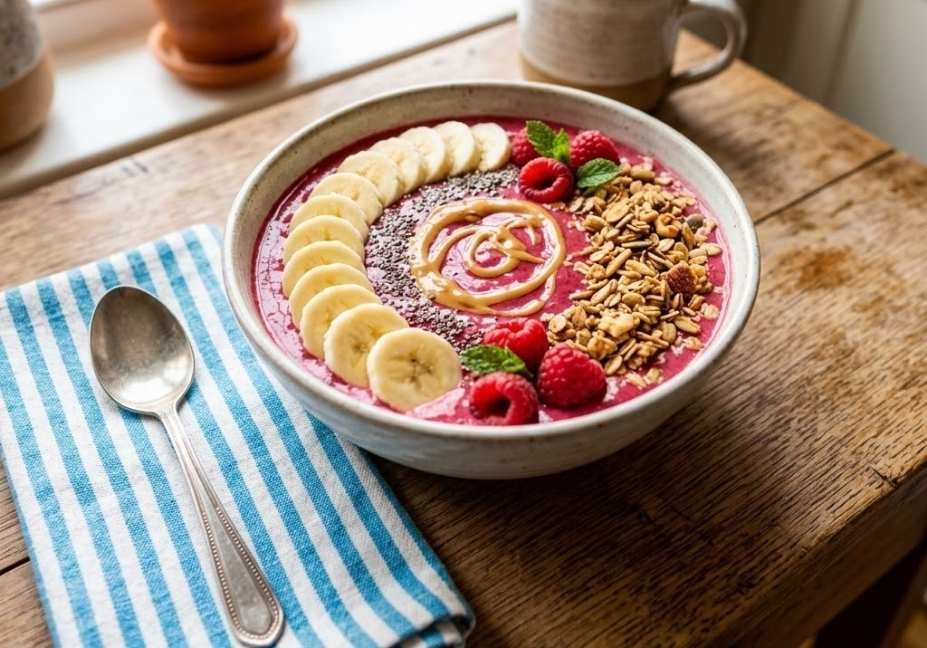
Budget Friendly Smoothie Bowls Recipe
Smoothie bowls can look expensive when they are topped with exotic fruits, specialty powders, premium granola, and several types of nuts and seeds. They do not have to be.
This budget friendly smoothie bowls recipe uses simple ingredients such as frozen bananas, frozen or seasonal fruit, yogurt, oats, and a small amount of milk. Most ingredients are easy to find, and several can be swapped based on what is already available at home.
The result is a thick, creamy breakfast that can be customized with affordable toppings. It is also easy to make in about 5 to 10 minutes.
Quick Answer
How can a smoothie bowl be made on a budget?
A budget-friendly smoothie bowl can be made with frozen bananas, inexpensive frozen or seasonal fruit, plain yogurt, oats, and a small amount of milk. Homemade toppings such as sliced banana, oats, peanut butter, and seeds can replace expensive superfoods and specialty products.
Budget Friendly Smoothie Bowl at a Glance
| Detail | Recipe |
| Prep time | 5 to 10 minutes |
| Cook time | None |
| Total time | About 10 minutes |
| Servings | 1 large bowl |
| Main ingredients | Banana, fruit, yogurt, oats |
| Method | Blender |
| Difficulty | Easy |
| Cost-saving ingredient | Frozen banana |
| Texture | Thick and creamy |
| Diet options | Vegetarian, vegan adaptable |
Ingredients
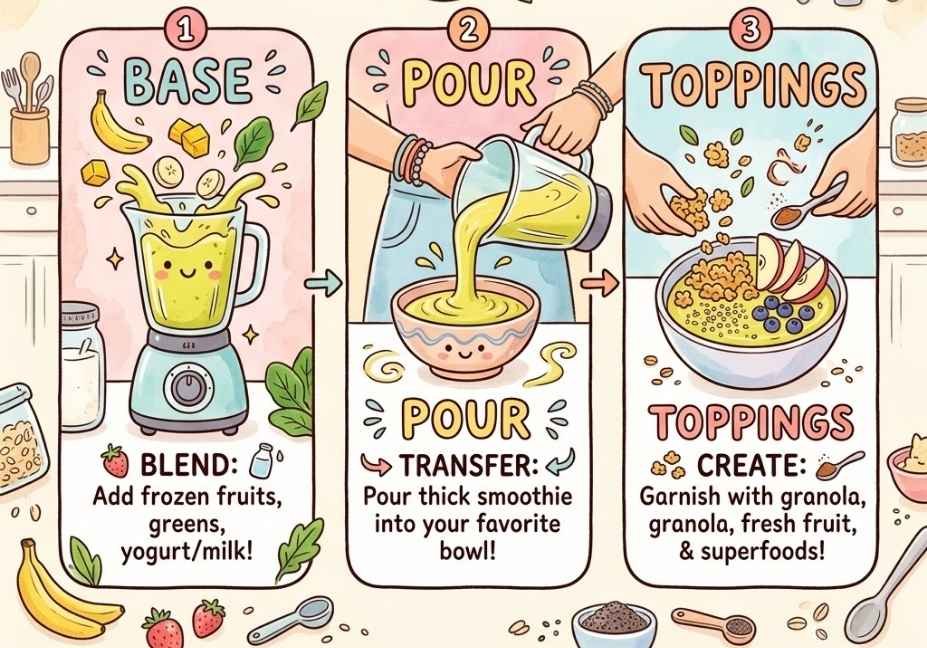
This recipe is designed around inexpensive ingredients that can be mixed and matched.
Smoothie Bowl Base
- 1 frozen banana
- 1 cup frozen fruit
- 1/2 cup plain yogurt
- 1/4 cup milk
- 2 tablespoons rolled or quick oats
- 1/2 teaspoon cinnamon
- 1 teaspoon honey or maple syrup, optional
Affordable Toppings
Choose two or three rather than using everything at once.
- 1/2 banana, sliced
- 1 tablespoon oats
- 1 tablespoon peanut butter
- 1 tablespoon sunflower seeds
- 1 tablespoon chia seeds
- A small handful of fresh or frozen berries
- 1 tablespoon homemade granola
- A sprinkle of cinnamon
- 1 teaspoon shredded coconut, optional
There is no need to buy every topping. The goal of a budget-friendly smoothie bowl is to use a few ingredients strategically.
Why This Recipe Is Budget Friendly
The biggest savings come from choosing ingredients that provide several uses.
Bananas are inexpensive and become especially useful when they are very ripe. Instead of throwing overripe bananas away, they can be peeled, sliced, and frozen for future smoothie bowls.
Frozen fruit can also be a practical choice. It has a long freezer life and can be purchased when on sale.
Plain yogurt works as both a creamy base and a source of protein. Oats add body and fiber without requiring an expensive specialty ingredient.
Budget Bytes uses a similar approach by building a smoothie bowl from frozen fruit, banana, milk, and inexpensive toppings such as chia seeds, granola, berries, and peanut butter.
How to Make a Budget Friendly Smoothie Bowl
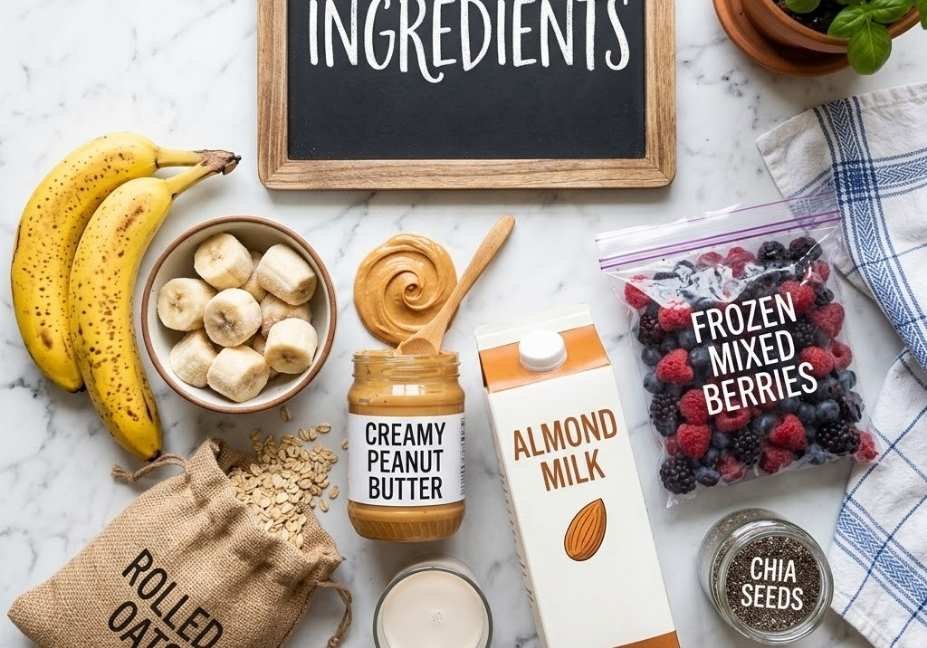
1. Freeze the Banana
Peel the banana before freezing it.
Slice it into smaller pieces and place the pieces in a freezer-safe container or bag.
A frozen banana helps create a thick and creamy texture without requiring large amounts of yogurt or ice.
2. Add the Frozen Fruit
Place the frozen banana and frozen fruit into a blender.
Mixed berries, strawberries, mango, peaches, or a homemade mixture of leftover fruit can work.
There is no need to buy an expensive smoothie fruit blend. A basic frozen fruit bag or fruit that was frozen at home can work just as well.
3. Add Yogurt and Milk
Add the yogurt and about 1/4 cup of milk.
Start with less liquid rather than adding too much at once.
Smoothie bowls need to be much thicker than regular smoothies because they are eaten with a spoon. Cleveland Clinic also recommends decreasing the liquid and increasing the thickening ingredients when turning a smoothie into a bowl.
4. Add Oats and Cinnamon
Add the oats and cinnamon.
The oats add thickness and can make the bowl more filling. They also provide an inexpensive way to add texture and fiber.
5. Blend Until Thick
Blend the ingredients until smooth.
A powerful blender makes the process easier, but the mixture can also be prepared in a standard blender by stopping occasionally and scraping down the sides.
If the blender struggles, add only one tablespoon of milk at a time.
Adding too much liquid can quickly turn the mixture into a drinkable smoothie.
6. Add the Toppings
Transfer the thick smoothie mixture to a bowl.
Add sliced banana, oats, a small amount of peanut butter, berries, seeds, or another topping.
Serve immediately while the base is cold and thick.
How to Make a Smoothie Bowl Without Expensive Ingredients
A smoothie bowl does not need acai powder, hemp hearts, goji berries, expensive protein powders, or imported superfoods.
Simple ingredients can provide plenty of flavor and texture.
For example, peanut butter provides richness, oats add texture, bananas provide sweetness, and frozen berries provide color and fruit flavor.
A small amount of cinnamon can also make a simple bowl taste more interesting without adding meaningful cost.
The key is to build the bowl around affordable staples rather than specialty ingredients.
Best Cheap Fruits for Smoothie Bowls
Several fruits work particularly well when the goal is to keep costs down.
Bananas
Bananas are one of the most useful smoothie bowl ingredients because they add sweetness and creamy texture.
Very ripe bananas are particularly useful because they can be frozen instead of wasted.
Strawberries
Frozen strawberries can be less expensive than buying fresh berries out of season.
They also create a naturally sweet and colorful smoothie bowl.
Mango
Frozen mango can provide a thick tropical smoothie base.
It works particularly well with banana and plain yogurt.
Mixed Berries
Frozen mixed berries can be convenient because one bag provides several types of fruit.
Using frozen berries also eliminates the need to worry about fresh fruit spoiling quickly.
Seasonal Fruit
Seasonal fruit can sometimes cost less than imported or out-of-season produce.
Fruit that is slightly overripe but still safe to eat can be chopped and frozen for future bowls.
Fresh Fruit vs Frozen Fruit
Both fresh and frozen fruit can work, but frozen fruit has an important advantage for smoothie bowls.
Frozen fruit makes the base colder and thicker. It can also reduce the need for ice.
North Carolina State University recommends pre-slicing and freezing fruit to improve smoothie texture.
Fresh fruit can still be used when that is what is available. In that case, a few ice cubes may help create a colder, thicker mixture..
Three Cheap Smoothie Bowl Flavor Ideas
The same base recipe can create several different flavors.
Banana Peanut Butter Bowl
Use frozen banana, yogurt, oats, milk, and cinnamon.
Top with sliced banana, peanut butter, and a small amount of oats.
This version is especially useful when bananas and peanut butter are already available at home.
Berry Oat Bowl
Blend frozen berries, banana, yogurt, oats, and milk.
Top with a few berries, oats, and cinnamon.
Frozen mixed berries can keep the cost lower than buying several types of fresh berries.
Chocolate Banana Bowl
Blend frozen banana, yogurt, oats, milk, and one teaspoon of unsweetened cocoa powder.
Top with banana slices and a small amount of peanut butter.
No expensive chocolate topping is necessary.
How to Make a Smoothie Bowl More Filling
A smoothie bowl can be made more satisfying by including protein, fiber, and a moderate amount of healthy fat.
Plain Greek yogurt can increase protein compared with some regular yogurts. Oats provide carbohydrates and fiber, while seeds or peanut butter provide fat and additional texture.
Cleveland Clinic recommends considering protein-rich ingredients such as Greek yogurt, tofu, or protein powders and pairing them with fiber-rich toppings.
For a budget-conscious approach, Greek yogurt, oats, peanut butter, and seeds can provide these benefits without requiring several specialty products.
How to Make a Smoothie Bowl Without Yogurt
Yogurt is useful but not essential.
For a dairy-free version, unsweetened soy milk, oat milk, almond milk, or another preferred plant milk can be used.
However, plant milk is more liquid than yogurt, so only a small amount should be added.
Frozen banana becomes particularly important because it helps create thickness and creaminess.
How to Make a Vegan Smoothie Bowl
A vegan smoothie bowl can be made by replacing dairy yogurt with a plant-based yogurt or simply increasing the amount of frozen fruit and banana.
Use plant milk and avoid honey.
Maple syrup can be used as an optional sweetener, although ripe bananas may provide enough sweetness on their own.
How to Make a Smoothie Bowl Without a High-Powered Blender
A high-powered blender makes thick smoothie bowls easier, but it is not always necessary.
Use small frozen fruit pieces and allow the frozen banana to sit at room temperature for a few minutes before blending.
Blend in short intervals and stop to scrape the sides when necessary.
Avoid adding a large amount of liquid just to make the blender run more easily. Instead, add small amounts gradually.
Several current smoothie bowl recipes specifically recommend using a powerful blender because the mixture is considerably thicker than a normal smoothie.
How to Fix a Smoothie Bowl That Is Too Thin
A thin smoothie bowl usually contains too much liquid.
Add more frozen banana or frozen fruit and blend again.
A tablespoon of oats can also help thicken the mixture.
If the bowl is already blended and still too thin, placing it in the freezer for a short period can help improve the texture.
How to Fix a Smoothie Bowl That Is Too Thick
Add one tablespoon of milk at a time.
Blend after each addition until the mixture becomes smooth enough to spoon into a bowl.
It is much easier to fix a thick smoothie bowl than a watery one, so liquid should always be added gradually.
How to Reduce the Cost Even More
There are several simple ways to lower the cost of homemade smoothie bowls.
Buy Frozen Fruit
Frozen fruit can be stored for longer and reduces food waste.
Freeze Ripe Bananas
Instead of throwing away bananas that have become too ripe, peel and freeze them.
Make Homemade Granola
Oats, cinnamon, a little oil, and a small amount of sweetener can create a simple homemade granola.
Use Store-Brand Ingredients
Store-brand yogurt, oats, frozen fruit, and peanut butter can often reduce the overall ingredient cost.
Buy Ingredients in Larger Packs
If smoothie bowls are prepared regularly, larger bags of oats, frozen fruit, or seeds can reduce the cost per serving.
Use What Is Already Available
A smoothie bowl does not need a specific topping list.
Leftover fruit, oats, nuts, seeds, or yogurt can all be used.
Can Smoothie Bowls Be Prepared Ahead?
The best texture comes from eating a smoothie bowl immediately after blending.
However, the ingredients can be prepared ahead.
Bananas and fruit can be frozen in individual portions. Dry ingredients such as oats, cinnamon, and seeds can also be portioned into small containers.
In the morning, the prepared ingredients can go directly into the blender.
This method makes the recipe faster while maintaining the thick texture.
Are Smoothie Bowls Healthy?
Smoothie bowls can provide fruit, vegetables, protein, fiber, and healthy fats depending on the ingredients selected.
However, a smoothie bowl is not automatically healthy simply because it contains fruit. Large amounts of granola, nut butter, sweeteners, dried fruit, or other calorie-dense toppings can significantly increase the total calories.
Cleveland Clinic specifically recommends paying attention to portions of toppings and added sugar.
A balanced bowl can include a fruit-based smoothie, a protein source such as Greek yogurt, a fiber-rich ingredient such as oats, and a small amount of nuts or seeds.
How Many Calories Are in a Budget Smoothie Bowl?
The calorie content depends heavily on the ingredients and toppings.
For example, a smoothie bowl made with fruit, Greek yogurt, and modest toppings can have a very different calorie count from one loaded with peanut butter, granola, coconut, nuts, seeds, and sweeteners.
One current smoothie bowl recipe from Olive Magazine lists about 157 calories per serving, while another Cleveland Clinic blueberry smoothie bowl lists 226 calories per serving. These differences demonstrate why the exact ingredients and portion sizes matter.
For an accurate nutrition figure, the exact brands, weights, and toppings used in the final recipe should be entered into a nutrition calculator.
Common Mistakes to Avoid
Adding Too Much Milk
Too much liquid creates a drink instead of a thick bowl.
Using Too Much Ice
Ice can make the mixture cold, but too much can dilute the flavor as it melts.
Frozen fruit is usually a better way to create thickness.
Adding Every Topping
More toppings do not necessarily make a better smoothie bowl.
A few well-chosen toppings can provide enough crunch, flavor, and texture.
Using Only Fresh Fruit
Fresh fruit can work, but the mixture may become thinner. Frozen banana or frozen fruit helps create the spoonable consistency expected from a smoothie bowl.
Adding Expensive Superfoods
Specialty powders and imported toppings are optional. They are not required to make a tasty smoothie bowl.
Frequently Asked Questions
What is the cheapest way to make a smoothie bowl?
The cheapest approach is usually to use frozen bananas, seasonal or frozen fruit, plain yogurt, oats, and inexpensive toppings such as peanut butter or sunflower seeds.
Are smoothie bowls expensive to make?
They do not have to be. Homemade smoothie bowls can be inexpensive when they use basic fruit, yogurt, oats, and toppings already available in the kitchen.
Can frozen fruit be used in smoothie bowls?
Yes. Frozen fruit is particularly useful because it creates a thick, cold texture and can be stored for longer than fresh fruit.
What can be used instead of acai in a smoothie bowl?
Frozen berries, strawberries, mango, or banana can be used instead. Acai is not necessary for creating a thick or flavorful smoothie bowl.
How do you make a smoothie bowl thick?
Use frozen fruit, frozen banana, yogurt, oats, or another thickening ingredient and keep the added liquid low.
What is the best cheap topping for a smoothie bowl?
Oats, sliced banana, peanut butter, sunflower seeds, and homemade granola are inexpensive options that add flavor or texture.
Can a smoothie bowl be made without yogurt?
Yes. Frozen banana and fruit can create a thick base without yogurt. A small amount of plant milk can help the ingredients blend.
Can smoothie bowls be made ahead?
The ingredients can be prepared ahead, especially frozen fruit portions. For the best texture, the bowl itself should be blended shortly before serving.
How do you make a smoothie bowl more filling?
Add a protein source such as Greek yogurt and fiber-rich ingredients such as oats. A small amount of peanut butter or seeds can also add healthy fats.
Is a smoothie bowl healthier than a smoothie?
Neither is automatically healthier. A smoothie bowl can encourage slower eating and provides opportunities for protein, fiber, and texture through toppings, but excessive toppings can increase calories and added sugar.
Key Takeaway
A budget friendly smoothie bowls recipe does not require expensive superfoods or specialty ingredients.
Frozen bananas, affordable frozen fruit, plain yogurt, oats, and a small amount of milk can create a thick and creamy base. Simple toppings such as banana, peanut butter, oats, seeds, or homemade granola add flavor and crunch without requiring a large grocery bill.
The biggest trick is to keep the base thick by using frozen fruit and adding liquid gradually. It is also useful to prepare fruit portions ahead and use ingredients already available in the kitchen.
Conclusion
A homemade smoothie bowl can be both affordable and satisfying when the recipe focuses on simple ingredients rather than expensive toppings.
Frozen bananas help create a creamy texture, while seasonal fruit and basic frozen fruit blends keep costs manageable. Yogurt and oats can make the bowl more filling, and inexpensive toppings such as peanut butter, seeds, and banana provide extra texture.
The recipe is also flexible enough to fit different diets and budgets. With a few inexpensive staples, a thick smoothie bowl can become a practical breakfast without the cost of a café-style bowl.
2 Comments