Pear Simple Syrup Recipe: Easy Homemade Fruit Syrup
Pear simple syrup is a sweet, fruity syrup made with fresh pears, sugar and water. It has a delicate flavor that works beautifully in lemonades, iced tea, mocktails, sparkling water and desserts. With its gentle sweetness and subtle pear aroma, this homemade syrup is an easy way to add a fruity touch to everyday recipes.
Unlike plain simple syrup, which provides sweetness without a distinct fruit flavor, pear simple syrup adds the taste of ripe pears to your favorite drinks and treats. You can drizzle it over pancakes, stir it into iced tea or use it to create refreshing pear flavored beverages at home.
One of the best things about this recipe is its simplicity. You need only a few basic ingredients and a saucepan to prepare a batch. The pears simmer with sugar and water until they soften and release their flavor. After straining the mixture, you are left with a pourable syrup that is easy to use in different recipes.
You can also customize pear simple syrup with ingredients such as cinnamon, vanilla, ginger or lemon. These additions complement the pear flavor and allow you to create different versions for different seasons and occasions.
Whether you have ripe pears that need using or simply want to try a new homemade syrup, this recipe offers a practical way to bring pear flavor into your kitchen.
What Is Pear Simple Syrup?
Pear simple syrup is a sweetened liquid infused with the flavor of pears. It is usually made by simmering fresh pear pieces with sugar and water, then straining the mixture to remove the fruit.
Traditional simple syrup is made by dissolving sugar in water. Fruit simple syrup uses the same basic idea but includes fruit to add flavor, aroma and sometimes color.
Pears have a naturally mild, sweet taste that makes them suitable for a wide range of drinks and desserts. Depending on the variety and ripeness of the fruit, the syrup may have a light floral note or a richer, honey-like flavor.
Homemade pear syrup is versatile because you can control the sweetness and add complementary ingredients. For example, cinnamon gives it a warm flavor, ginger adds a gentle spicy note and lemon juice provides brightness.
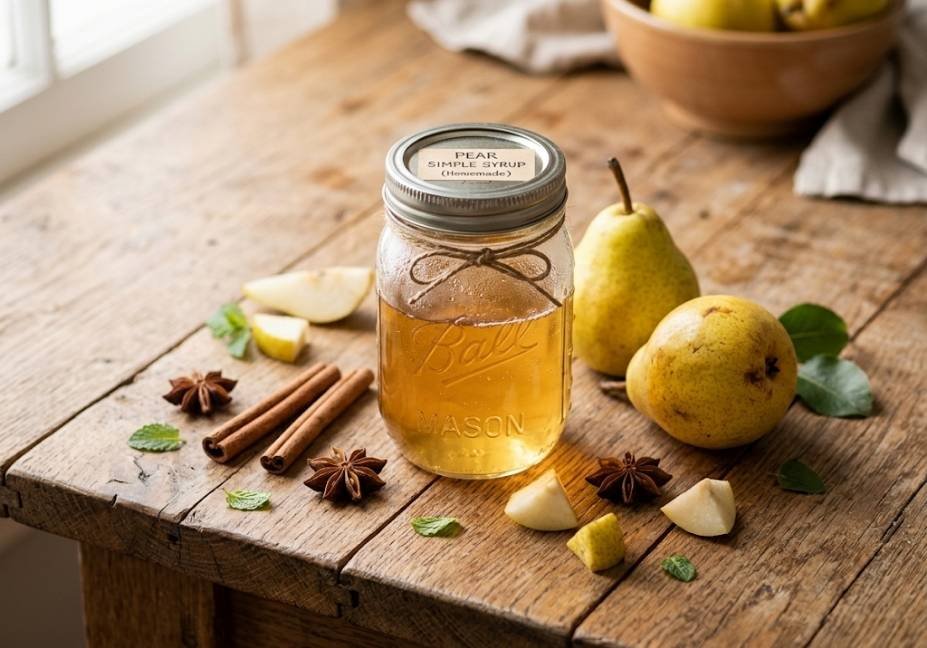
The finished syrup is generally pale gold or amber rather than strongly colored. Its exact appearance depends on the pear variety, the cooking process and how thoroughly the liquid is strained.

Why You Will Love This Pear Simple Syrup Recipe
There are several reasons to make pear simple syrup at home.
- Easy ingredients: The recipe uses pears, sugar and water.
- Simple preparation: You can make it with a saucepan and a fine-mesh strainer.
- Delicate fruit flavor: Pears provide a gentle sweetness that complements many drinks.
- Customizable taste: You can add cinnamon, ginger, vanilla or citrus.
- Versatile uses: The syrup works in drinks, breakfast dishes and desserts.
- Useful for ripe pears: It offers another way to use pears that are ready to eat.
- Adjustable sweetness: You can adapt the recipe to suit your preferences.
Homemade pear syrup is especially useful when you want something different from the more common strawberry, cherry or blueberry syrups.

Ingredients for Pear Simple Syrup
This recipe requires three main ingredients. Optional flavorings can be added if you want to create a variation.
1. Fresh Pears
Use 1 cup of chopped ripe pears.
Choose pears that are fragrant and ripe but not spoiled. Ripe fruit generally releases its flavor more easily during cooking.
Wash the pears before preparing them. Remove the stems and cores, then cut the flesh into small pieces. You can peel them if you prefer, although peeling is not essential for this recipe.
Different pear varieties may produce slightly different flavors. Bartlett pears have a sweet, recognizable pear flavor, while Bosc pears tend to have a richer taste and firmer texture.
2. Granulated Sugar
Use 1 cup of white granulated sugar.
Sugar dissolves in the water and combines with the pear juices to create the syrup. White sugar is a useful choice because its flavor does not compete strongly with the pears.
You can experiment with slightly less sugar if you prefer a less sweet result. However, changing the sugar ratio affects the syrup’s consistency and keeping quality, so the finished syrup should be refrigerated promptly and used within a short period.
3. Water
Use 1 cup of water.
Water dissolves the sugar and helps extract the flavor from the pears during cooking. Measuring it carefully helps keep the recipe consistent.
Optional Ingredients
You can add one of these ingredients to complement the pear flavor:
- A small cinnamon stick
- A few thin slices of fresh ginger
- A little lemon juice
- A small splash of vanilla extract
- A strip of lemon zest
These additions are optional. Start with the basic recipe if you want the natural pear flavor to remain the main focus.
Pear Simple Syrup Recipe
Prep time: 10 minutes
Cook time: 10 to 15 minutes
Total time: About 20 to 25 minutes
Yield: Approximately 1 to 1½ cups, depending on cooking and straining
Difficulty: Easy
Recipe type: Homemade fruit syrup
Ingredients
- 1 cup ripe pears, chopped
- 1 cup granulated sugar
- 1 cup water
Optional: A small cinnamon stick, a little lemon juice or a small splash of vanilla extract.
Instructions
Step 1: Prepare the pears
Wash the pears under clean running water. Remove the stems and cores, then cut the fruit into small pieces.
Peeling is optional. If you leave the skin on, strain the finished mixture carefully to remove any remaining pieces.
Step 2: Combine the ingredients
Add the chopped pears, sugar and water to a small saucepan.
Stir gently to distribute the ingredients. The sugar does not need to dissolve completely before heating.
Step 3: Heat the mixture
Place the saucepan over medium heat. Stir occasionally while the sugar dissolves.
As the mixture warms, the pears will begin to soften and release their juices. The liquid should gradually develop a sweet, fruity aroma.
Step 4: Simmer gently
Reduce the heat and allow the mixture to simmer gently for about 10 to 15 minutes.
Stir occasionally to prevent the sugar from sticking to the bottom of the saucepan. Avoid a vigorous boil because excessive evaporation can change the final consistency.
The pear pieces should become soft, and the liquid should develop a noticeable pear flavor.
Step 5: Remove from the heat
Once the pears have softened and the liquid has developed its flavor, remove the saucepan from the heat.
If you are using a cinnamon stick or ginger, you can remove the larger pieces before straining.
Allow the mixture to cool slightly before handling it.
Step 6: Strain the syrup
Place a fine-mesh strainer over a clean, heatproof bowl. Pour the mixture through the strainer and allow the liquid to drain naturally.
Avoid pressing the pears too firmly if you want a smoother, clearer syrup. Pressing the fruit can push pulp through the strainer and change the texture.
Step 7: Add optional flavoring
If desired, stir in a little lemon juice or vanilla extract after straining.
Taste the syrup once it has cooled enough to sample safely. Add extra flavoring gradually so that it complements rather than overpowers the pears.
Step 8: Cool and store
Allow the syrup to cool before transferring it to a clean, airtight container.
Refrigerate it promptly and aim to use it within about three to four days for best quality. This homemade fruit syrup has not been tested for shelf-stable storage, so do not keep it at room temperature for extended periods.
Tips for Making the Best Pear Simple Syrup
A few simple techniques can help you achieve a flavorful syrup with a pleasant consistency.
Choose Ripe, Flavorful Pears
The quality of the fruit affects the finished syrup. Ripe pears generally have a sweeter, more noticeable flavor than underripe fruit.
Avoid pears that have an unpleasant smell or signs of spoilage.
Cut the Pears Into Small Pieces
Smaller pieces soften more easily and allow the fruit to release its flavor during cooking. You do not need to mash the pears before adding them to the saucepan.
Keep the Heat Gentle
A gentle simmer helps extract the pear flavor without reducing the liquid too quickly. Strong boiling may cause excessive evaporation and make the syrup thicker than expected.
Avoid Overcooking
Pears have a delicate flavor. Cooking them for too long can change their taste and reduce the fresh fruit character.
Check the mixture after about 10 minutes and remove it from the heat once the pears have softened and the liquid has developed a pleasant aroma.
Strain Carefully
Use a fine-mesh strainer to remove the fruit pieces. For a clearer syrup, allow the liquid to drain naturally instead of forcing the fruit through the strainer.
Let the Syrup Cool Before Checking Its Thickness
Hot syrup is often thinner than cooled syrup. Allow it to cool before deciding whether its consistency suits your recipe.
Add Spices Gradually
Cinnamon and ginger can complement pears, but strong spices may overpower the fruit. Start with a small amount and adjust future batches according to your taste.
Should You Peel Pears Before Making Syrup?
Peeling pears is optional for this recipe.
Leaving the skin on saves preparation time and allows you to use more of the fruit. However, the skin may contribute small particles to the liquid, making the finished syrup less clear.
Peeling the pears can make straining easier if you want a smoother appearance. It is especially useful when the pears have thick or firm skins.
If you leave the skin on, use a fine-mesh strainer and allow the liquid to drain without pressing the fruit too firmly.
Both approaches can produce flavorful syrup, so choose the method that best suits your preferences.
Flavor Variations to Try
Once you have made the basic recipe, you can experiment with different flavors to create new versions.
Cinnamon Pear Simple Syrup
Add a small cinnamon stick to the saucepan while the pears simmer. Remove it before straining.
Cinnamon gives the syrup a warm, comforting flavor that works well with pancakes, waffles, oatmeal and autumn inspired drinks.
Ginger Pear Simple Syrup
Add a few thin slices of fresh ginger during cooking. Remove the ginger before straining.
Ginger contributes a gentle spicy note that balances the sweetness of the pears. This version works well in sparkling water, tea and nonalcoholic drinks.
Vanilla Pear Simple Syrup
Stir in a small splash of vanilla extract after straining.
Vanilla adds a smooth, dessert-like aroma that complements pear flavored milkshakes, ice cream and cakes.
Lemon Pear Simple Syrup
Add a little fresh lemon juice after cooking.
Lemon provides a bright, tangy note that balances the syrup’s sweetness. This version is particularly suitable for lemonade, iced tea and sparkling water.
Honey Pear Syrup
Replace part of the granulated sugar with honey if you prefer its distinct flavor.
Honey changes the taste and consistency, so start with a small adjustment. The finished syrup will still need appropriate refrigerated storage.
Pear and Rosemary Syrup
Add a small sprig of fresh rosemary during the final few minutes of simmering. Remove it before straining.
Rosemary contributes an herbal aroma that can work well in sparkling drinks and creative nonalcoholic beverages. Use it sparingly because its flavor can become strong.
Ways to Use Pear Simple Syrup
Pear simple syrup is a versatile ingredient that can add fruity sweetness to drinks, desserts and breakfast favorites.
1. Pear Sparkling Water
Add a little pear syrup to a glass of sparkling water and stir gently.
Serve over ice with a thin slice of pear or a small squeeze of lemon juice. This is a simple way to make a refreshing homemade fruit soda.
2. Pear Lemonade
Stir pear syrup into freshly prepared lemonade. Adjust the amount to balance the citrus flavor with the sweetness of the pear.
Serve chilled for a refreshing fruit drink.
3. Iced Tea
Add a small amount of syrup to chilled black tea or green tea.
Pear provides a delicate fruity flavor without requiring fruit pieces in the glass. Lemon juice can add brightness if you prefer a more tangy drink.
4. Mocktails
Combine pear syrup with lime juice and sparkling water for a simple nonalcoholic drink.
You can also add ginger, cucumber or fresh herbs to create different flavor combinations.
5. Iced Coffee
If you enjoy experimenting with flavored coffee, try adding a small amount of pear syrup to iced coffee.
Pear is not a traditional coffee syrup flavor, so start with a small quantity. Taste the drink before adding more to avoid making the flavor too sweet or fruity.
6. Milkshakes
Blend a little pear syrup with milk and vanilla ice cream to create a pear flavored milkshake.
You can also add a pinch of cinnamon for a warmer flavor.
7. Pancakes and Waffles
Drizzle pear syrup over pancakes, waffles, French toast or crepes.
Its mild sweetness provides an alternative to ordinary syrup. Cinnamon pear syrup is especially suitable for breakfast dishes.
8. Ice Cream
Pour a small amount over vanilla ice cream or frozen yogurt.
You can also serve the syrup with fresh pear slices for a simple fruit dessert.
9. Yogurt Bowls
Add a drizzle of pear syrup to plain yogurt and top with granola, nuts or fresh fruit.
This provides a little sweetness and a subtle pear flavor.
10. Oatmeal
Stir a small amount into oatmeal after cooking. Cinnamon pear syrup can be particularly enjoyable in a warm breakfast bowl.
Adjust the quantity according to your preferred sweetness.
11. Cakes and Cupcakes
Brush a small amount of syrup onto cake layers to add flavor and moisture. You can also drizzle it over plain cupcakes or use it as part of a dessert topping.
Apply the syrup gradually so the cake does not become too wet.
12. Homemade Popsicles
Mix pear syrup with water, lemonade or another suitable drink. Pour the mixture into popsicle molds and freeze according to the mold instructions.
Taste the mixture before freezing so you can adjust its flavor.
13. Fruit Salads
Drizzle a little pear syrup over a bowl of fresh fruit. It can complement apples, pears, grapes and berries.
Use a small amount so that the syrup does not overpower the natural sweetness of the fruit.
Common Mistakes to Avoid
Using Underripe Pears
Underripe pears may have a weaker flavor and less sweetness. Choose ripe fruit for a more noticeable pear taste.
Boiling the Syrup Too Vigorously
High heat can cause the water to evaporate too quickly, changing the syrup’s consistency. Keep the mixture at a gentle simmer.
Cooking the Pears for Too Long
Extended cooking can alter the fruit’s delicate flavor. Check the mixture regularly and remove it from the heat once the pears have softened.
Expecting a Dark or Strongly Colored Syrup
Pear flesh is usually pale, so the finished syrup may be light gold or nearly clear. Its color does not need to be dark to have a good flavor.
Pressing the Fruit Too Firmly
Pressing the pears through the strainer can make the syrup cloudy. Let the liquid drain naturally for a smoother finish.
Adding Too Much Spice
Cinnamon, ginger and rosemary can complement pears, but excessive amounts may hide the fruit’s flavor. Begin with small quantities.
Storing the Syrup Incorrectly
Homemade pear syrup contains fresh fruit and should be refrigerated promptly. Use a clean, airtight container and avoid leaving it at room temperature for extended periods.
Discard the syrup if you notice mold, an unusual smell, unexpected bubbling or other signs of spoilage. Do not taste it to check whether it is safe.
How to Store Pear Simple Syrup
Proper storage helps maintain the flavor and quality of homemade pear syrup.
- Allow the syrup to cool before transferring it to a container.
- Use a clean, airtight glass jar or food-safe container.
- Refrigerate it promptly.
- Use a clean spoon whenever you serve it.
- Aim to use it within about three to four days for best quality.
The exact keeping time can vary depending on the fruit, preparation and handling. This recipe has not been tested for shelf-stable storage, so do not store it in a cupboard or pantry.
If you make more syrup than you can use within a few days, consider freezing small portions in a freezer-safe container, leaving room for expansion. Thaw the syrup in the refrigerator and use it promptly.
Frequently Asked Questions
Can I make pear simple syrup without lemon juice?
Yes. Lemon juice is optional. The basic recipe requires only pears, sugar and water.
Can I use less sugar?
Yes, you can experiment with a smaller amount of sugar. However, reducing the sugar changes the consistency and keeping quality. Refrigerate the syrup promptly and use it within a short period.
Can I use brown sugar instead of white sugar?
Yes. Brown sugar adds a deeper, caramel-like flavor and may darken the syrup. White granulated sugar is a good choice when you want the pear flavor to remain prominent.
Why is my pear syrup cloudy?
Cloudiness can occur when fruit pulp passes through the strainer. Use a fine-mesh strainer and avoid pressing the pears too firmly if you want a clearer result.
Why is my pear syrup too thin?
The syrup may appear thin while warm. Allow it to cool before checking the consistency. If it is still thinner than you prefer, return it to the saucepan and simmer briefly to reduce some of the liquid.
Watch it carefully to avoid excessive thickening.
Can I use canned pears?
You can experiment with canned pears, but the result will depend on whether they are packed in water, juice or syrup. Canned pears packed in syrup may make the finished recipe much sweeter, so you may need to adjust the sugar and water.
Can I make pear simple syrup with cinnamon?
Yes. Add a small cinnamon stick while the pears simmer and remove it before straining. Cinnamon complements the natural sweetness of pears.
Is pear simple syrup the same as pear juice?
No. Pear juice is made from the fruit and may contain no added sugar. Pear simple syrup is a sweetened liquid prepared by cooking pears with sugar and water.
Can I add pear syrup to hot tea?
Yes. Stir a small amount into hot tea and adjust the sweetness to your preference. Pear syrup is also useful in chilled tea and sparkling drinks.
Can I preserve homemade pear syrup at room temperature?
This recipe is intended for refrigerated storage and has not been developed or tested as a shelf-stable canning recipe. Keep it refrigerated and use it promptly.
Final Thoughts
Pear simple syrup is an easy homemade recipe that adds delicate fruity sweetness to drinks, desserts and breakfast favorites. With just pears, sugar and water, you can create a versatile syrup that is simple to customize.
Use it in sparkling water, lemonade, iced tea and mocktails or drizzle it over pancakes, waffles, yogurt and ice cream. You can also experiment with cinnamon, ginger, vanilla and lemon to create different flavor combinations.
For the best results, choose ripe pears, simmer the ingredients gently and strain the liquid carefully. Refrigerate the finished syrup promptly and use it within a few days for best quality.
Once you have tried this pear simple syrup recipe, you can experiment with new ways to bring its gentle fruit flavor into your favorite homemade drinks and desserts.