

Sage Simple Syrup: Easy Homemade Recipe for Drinks
INTRODUCTION
Sage simple syrup is an easy homemade sweetener that combines sugar, water and fresh sage leaves. It has a sweet, earthy flavor with a gentle herbal aroma. You can add it to lemonade, iced tea, sparkling water, mocktails and many other drinks.
Making sage syrup at home takes only a few ingredients and a small saucepan. The sugar dissolves in warm water, then fresh sage leaves steep in the mixture to release their flavour. After straining and cooling, the syrup is ready to use.
The best part is how easily you can adjust the flavor. A short infusion creates a mild herbal taste, while a longer steep produces a stronger sage aroma. This recipe gives you a simple starting point for homemade drinks and desserts.
Quick Answer: What Is Sage Simple Syrup?
Sage simple syrup is a liquid sweetener made by dissolving sugar in water and infusing the mixture with fresh sage leaves. This recipe uses equal parts sugar and water for a light syrup that mixes easily into hot and cold drinks.
For the best flavor, remove the saucepan from the heat before adding the sage. Let the leaves steep for 10 to 15 minutes, then strain them out before storing the syrup.
- Prep time: 5 minutes
- Cook time: 5 minutes
- Infusion time: 10 to 15 minutes
- Total time: About 20 to 25 minutes
- Yield: Approximately 1 cup
- Course: Beverage syrup
- Cuisine: International
- Diet: Vegan when made with suitable plant-based sugar
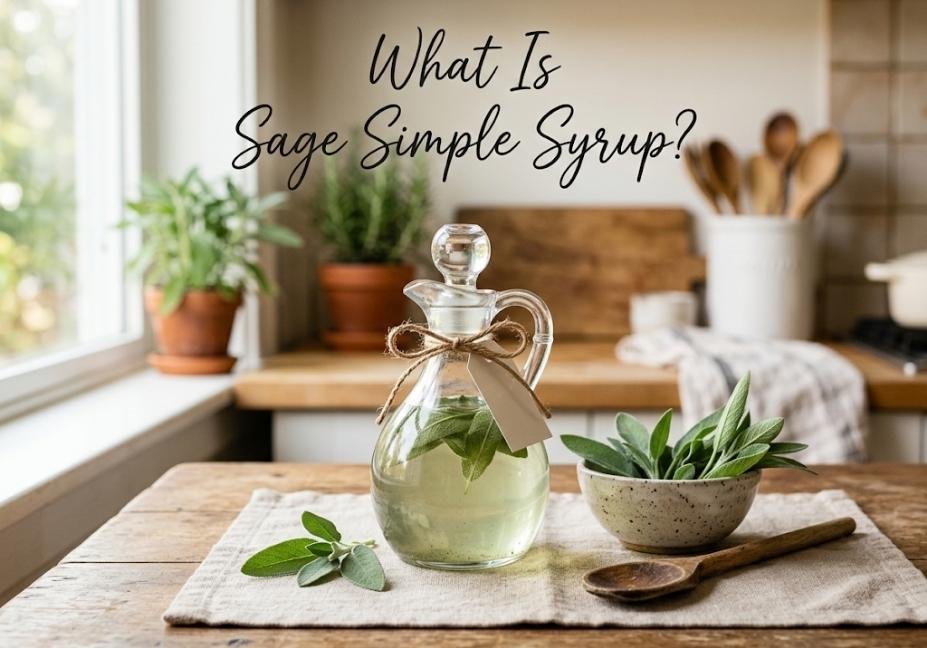
What Is Sage Simple Syrup?
Sage simple syrup is a flavored version of traditional simple syrup. Regular simple syrup contains sugar and water, while this recipe adds fresh sage for a distinctive herbal flavor.
Fresh sage has an earthy, slightly peppery taste. Its aroma works particularly well with lemon, grapefruit, berries and other ingredients that balance its herbal character.
This syrup is useful because it sweetens drinks without leaving undissolved sugar at the bottom of the glass. It also makes it easier to add a consistent amount of sweetness to different beverages.
You can use sage syrup in cold drinks, warm tea, fruit salads and selected desserts. Start with a small amount because the herb has a noticeable flavour.

Ingredients for Sage Simple Syrup
You only need three ingredients for this easy recipe.
| Ingredient | Amount | Purpose |
| Granulated white sugar | 1 cup | Adds sweetness and body |
| Water | 1 cup | Dissolves the sugar |
| Fresh sage leaves | 8 to 10 leaves | Adds herbal flavor |
Fresh Sage
Fresh sage gives this recipe its main flavor. Choose clean, fragrant leaves without dark spots or slimy areas. Rinse them under cool running water and pat them dry before use.
You can gently press or tear the leaves to release their aroma. Avoid crushing them too aggressively because a strong infusion may overpower the syrup.
Granulated Sugar
White granulated sugar is a good choice because it adds sweetness without covering the sage flavor. You can use cane sugar if you prefer, although it may give the finished syrup a slightly darker color.
Brown sugar also works, but its molasses notes will change the flavor and make the syrup taste richer.
Water
Use clean drinking water. Filtered water is helpful if your tap water has a strong taste or odour.
The equal-parts ratio creates a light syrup that pours easily. If you want a thicker version, use two parts sugar to one part water and adjust the amount you add to your drinks.
How to Make Sage Simple Syrup
Follow these steps to prepare a fragrant syrup with a balanced herbal flavour.
Step 1: Prepare the Ingredients
Measure 1 cup of sugar and 1 cup of water. Rinse 8 to 10 fresh sage leaves and pat them dry.
Set out a small saucepan, a spoon, a fine-mesh strainer and a clean storage jar. Preparing everything first makes the process easier.
Step 2: Heat the Sugar and Water
Add the sugar and water to the saucepan. Place it over medium heat and stir gently until the sugar dissolves completely.
Bring the mixture to a gentle simmer if needed. You do not need to boil it for a long time because prolonged heating can reduce the liquid and change the consistency.
Step 3: Add the Fresh Sage
Remove the saucepan from the heat. Add the sage leaves and stir gently to submerge them in the warm syrup.
Cover the pan and let the leaves steep for 10 to 15 minutes. Start tasting after 10 minutes if you prefer a milder herbal flavor.
Step 4: Strain the Syrup
Place a fine-mesh strainer over a clean heat-safe bowl or measuring jug. Pour the syrup through it to remove the sage leaves.
Do not leave the leaves in the finished syrup for extended storage. Removing them helps prevent the herbal flavor from becoming too strong.
Step 5: Cool and Store
Allow the strained syrup to cool. Pour it into a clean, airtight glass jar or bottle.
Close the container and place it in the refrigerator. Use the syrup within about 1 to 2 weeks for the best quality, and discard it if you notice mold, an unusual smell or other signs of spoilage.
Tips for the Best Sage Simple Syrup
A few small details can improve the taste and consistency of your homemade syrup.
Control the Steeping Time
Sage has a strong herbal aroma, so a longer infusion is not always better. Taste the syrup after 10 minutes and strain the leaves once the flavour reaches your preference.
Avoid Long Boiling
Heat the sugar and water only until the sugar dissolves. Long boiling can evaporate water and make the syrup thicker than intended.
Use Fresh Leaves
Fresh sage usually gives the syrup a clean, aromatic flavor. Dried sage is more concentrated and may produce a different taste, so fresh leaves are the better choice for this recipe.
Keep the Syrup Balanced
The syrup should taste sweet with a noticeable herbal note. If the sage overwhelms the sweetness, reduce the number of leaves or shorten the steeping time in your next batch.
Use a clean storage jar.
Wash the jar and lid thoroughly before filling them. Proper refrigeration and clean equipment help maintain the syrup’s quality.
How to Use Sage Simple Syrup
Sage syrup works in many drinks and recipes. Add a small amount first, taste and adjust as needed.
1. Sage Lemonade
Mix 1 to 2 tablespoons of sage syrup into a glass of lemonade. Stir well and add ice.
The citrus flavor balances the earthy taste of sage. You can also add a lemon slice or a few fresh berries.
2. Iced Tea
Add a little syrup to brewed black tea or green tea. Let the tea cool, then pour it over ice.
Lemon juice pairs well with this combination. Add the syrup gradually so the sweetness does not cover the tea’s natural flavour.
3. Sparkling Water
Fill a glass with ice and sparkling water. Stir in 1 to 2 teaspoons of sage syrup and add a squeeze of lemon or grapefruit juice.
This simple combination makes a refreshing nonalcoholic drink with a subtle herbal taste.
4. Mocktails and Cocktails
Sage simple syrup can add depth to citrus-based mixed drinks. It also pairs well with blackberry, blueberry, grapefruit and pineapple flavours.
Begin with a small measure and adjust according to the other ingredients. The sage should complement the drink rather than dominate it.
5. Iced Coffee
For a less common combination, add a teaspoon of sage syrup to iced coffee. Its herbal notes can create an interesting contrast with the coffee’s roasted flavour.
Try a small amount first to see whether you enjoy the combination.
6. Desserts and Fruit
Drizzle a little sage syrup over sliced peaches, berries or pears. You can also brush a small amount onto cake layers to add moisture and a subtle herbal aroma.
Use it sparingly with delicate desserts because too much sage can overpower their flavour.
Sage Simple Syrup Variations
You can change the basic recipe with citrus, spices or other sweeteners.
Lemon Sage Simple Syrup
Add two or three thin strips of lemon zest to the warm syrup with the sage leaves. Remove the zest when you strain the mixture.
This version has a brighter aroma and works well in lemonade, iced tea and sparkling water.
Ginger Sage Simple Syrup
Add a few thin slices of fresh ginger to the sugar and water while heating. Remove the pan from the heat, add the sage and let both ingredients steep.
Strain the syrup before storing it. Ginger adds a warm, spicy note that works well with lemon and grapefruit.
Honey Sage Syrup
Replace some or all of the sugar with honey. Stir the honey into warm water until it dissolves, then add the sage after removing the pan from the heat.
Honey gives the syrup a more pronounced flavor. Since this changes the recipe, adjust the sweetness to suit your taste and do not assume it will have the same storage life.
Rich Sage Simple Syrup
For a thicker syrup, use 2 cups of sugar with 1 cup of water. Heat the mixture gently until the sugar dissolves, then add the sage and steep as directed.
This version contains more sugar per spoonful, so you may need less of it in drinks.
How to Store Sage Simple Syrup
Proper storage helps maintain the flavour and quality of homemade sage syrup.
- Refrigerate it: Keep the syrup in a refrigerator rather than on the counter.
- Use a clean container: Choose a clean, airtight jar or bottle.
- Label the date: Write the preparation date on the container.
- Use it promptly: Aim to finish the syrup within 1 to 2 weeks.
- Check for spoilage: Discard the syrup if you notice mould, an unusual smell, unexpected bubbling or other changes.
Sugar helps create the syrup’s texture, but it does not make a homemade herb infusion shelf-stable. Always keep it refrigerated.
You can also freeze small portions in a freezer-safe container. Leave space for expansion and thaw the amount you need in the refrigerator.
Common Mistakes to Avoid
Steeping the Sage Too Long
A long infusion can create a stronger herbal taste than you want. Taste the syrup during steeping and strain the leaves once the flavour is balanced.
Using Too Many Leaves
More sage does not always mean better flavour. Begin with 8 to 10 leaves and adjust the quantity in future batches.
Boiling the Syrup Too Long
Extended boiling can evaporate too much water. Stir until the sugar dissolves and avoid unnecessary cooking.
Adding Too Much Syrup to Drinks
Sage has a distinctive taste. Add the syrup gradually, especially when making lemonade, iced tea or mocktails.
Storing It at Room Temperature
Homemade sage syrup should be refrigerated. Do not treat it like a commercially processed, shelf-stable syrup.
Key Takeaway
Sage simple syrup is an easy way to add sweetness and herbal flavor to homemade drinks. You only need sugar, water and fresh sage to make a light syrup that pairs well with lemonade, iced tea, sparkling water and desserts.
The key is to dissolve the sugar completely, steep the sage for 10 to 15 minutes and strain the leaves before storing the syrup. Keep it refrigerated and use it within about 1 to 2 weeks.
Once you master the basic recipe, try adding lemon zest or ginger for a different flavor. Start with a small amount in each drink and adjust the sweetness to your taste.
Frequently Asked Questions
1. What does sage simple syrup taste like?
Sage simple syrup tastes sweet with an earthy, slightly peppery herbal aroma. The flavour should be noticeable without overpowering the drink.
2. How long does sage simple syrup take to make?
It takes about 20 to 25 minutes, including preparation, heating, steeping and cooling time.
3. Can I use dried sage instead of fresh sage?
Fresh sage is the preferred choice for this recipe. Dried sage has a different and more concentrated flavour, so it may not produce the same result.
4. How long does homemade sage syrup last?
Store it in a clean, airtight container in the refrigerator and aim to use it within 1 to 2 weeks. Discard it if you notice signs of spoilage.
5. Can I add simple sage syrup to lemonade?
Yes. Sage pairs well with lemon. Add 1 to 2 tablespoons to a glass of lemonade, stir and adjust the amount to your taste.
6. Do I need to boil sage leaves?
No. Dissolve the sugar in water first, remove the saucepan from the heat and steep the sage in the warm syrup.
7. Can I make sage simple syrup with brown sugar?
Yes. Brown sugar adds a deeper flavor with molasses notes and makes the syrup darker. White sugar gives the sage flavour a cleaner background.
8. What drinks pair well with sage syrup?
Sage syrup works well in lemonade, iced tea, sparkling water, citrus mocktails and some cocktails. It can also add a subtle herbal note to iced coffee.
9. Can I make sage simple syrup ahead of time?
Yes. Prepare it in advance, let it cool and store it in a clean, airtight container in the refrigerator.
10. Why does my sage simple syrup taste too strong?
The leaves may have steeped too long or you may have used too many. Shorten the steeping time or reduce the number of sage leaves in your next batch.


![[A tall glass of strawberry protein smoothie topped with whipped cream and sprinkles, surrounded by a banana, protein powder, almond milk, peanut butter, and strawberries on a yellow marble counter.]](https://polycooks.com/wp-content/uploads/2026/09/5-ing-protein-shake-1-768x537.jpg)
One Comment