

Gluten-Free Pizza Dough Recipe: Easy Homemade Crust
Quick Answer
A gluten free pizza dough recipe uses a gluten-free flour blend instead of regular wheat flour. A good blend, the right amount of liquid, a binder such as xanthan gum or psyllium, and proper baking heat help create a crust that is crisp outside and soft or chewy inside.
Unlike regular pizza dough, gluten free dough is usually sticky and does not need traditional kneading. It is better to mix the dough well, let it rest or rise, shape it with oiled or wet hands, and bake it until the crust is firm and golden.
Also read the article : 10 Best Falafel Substitute Ingredients for Every Diet
Why This Gluten Free Pizza Dough Works
Making homemade gluten free pizza does not have to be difficult. The biggest difference is that gluten free flour does not contain the gluten proteins that normally give wheat dough its stretch and structure.
That is why this gluten free pizza dough recipe uses a balanced flour blend and a binder. Xanthan gum helps hold the dough together, while olive oil adds moisture and tenderness. Yeast gives the crust a light texture and a familiar pizza flavor.
Many tested recipes use a combination of gluten-free flour, yeast, water, salt and oil. Some also use psyllium husk, eggs, baking powder or cornmeal to change the texture.
The finished dough should be soft and slightly sticky. It should not look exactly like traditional wheat dough.
Also read the article : Falafel Nutrition Facts: Calories, Protein & Benefits

Gluten Free Pizza Dough Ingredients
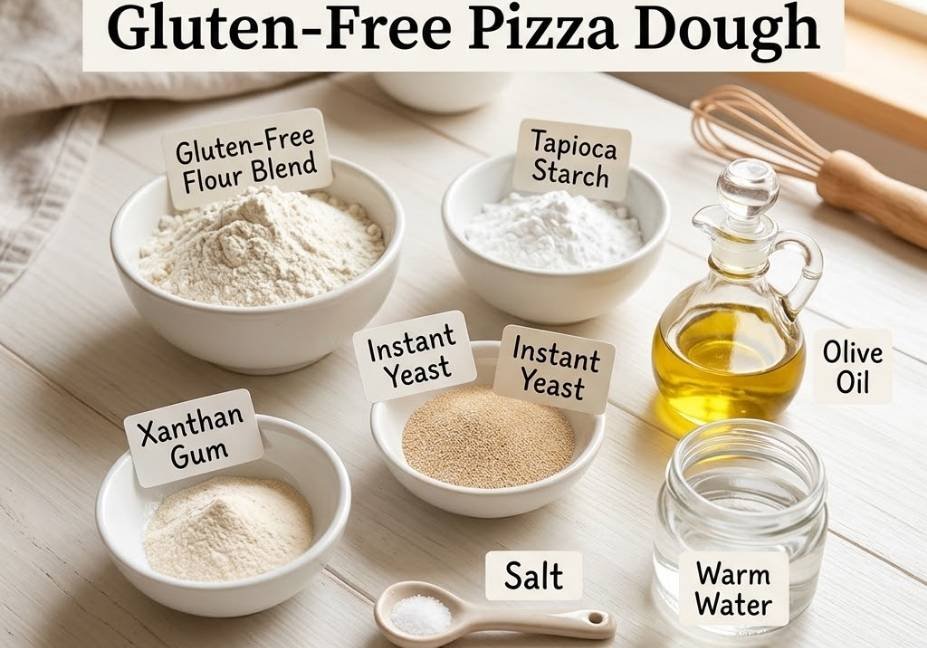
For about two medium pizzas, the recipe can use:
| Ingredient | Amount | Purpose |
| Gluten-free flour blend | 2 3/4 cups or about 385 g | Main structure |
| Instant yeast | 2 teaspoons | Helps the dough rise |
| Sugar | 1 tablespoon | Supports yeast and browning |
| Salt | 1 teaspoon | Adds flavor |
| Xanthan gum | 1 teaspoon, if needed | Helps bind the dough |
| Warm water | About 1 1/4 cups | Hydrates the flour |
| Olive oil | 2 tablespoons | Adds moisture and tenderness |
The exact amount of water can change slightly depending on the flour blend. Gluten-free flours absorb water differently, so it is better to add liquid gradually if the dough seems too loose.
Choose a gluten-free flour blend designed for baking. Some commercial blends already contain xanthan gum, so adding more may make the crust too gummy. Gluten-Free Palate, for example, recommends checking whether the blend already contains a binder before adding extra xanthan gum.
Also read the article : Traditional Beef Tacos Recipe: An Authentic Mexican Favorite
How to Make Gluten Free Pizza Dough
1. Mix the Dry Ingredients
Add the gluten-free flour blend, yeast, sugar, salt and xanthan gum to a large mixing bowl. Whisk everything together so the ingredients are evenly distributed.
If the flour blend already contains xanthan gum, do not automatically add another large amount.
2. Add Warm Water and Olive Oil
Pour in the warm water and olive oil. Mix with a wooden spoon, electric mixer or stand mixer until the ingredients form a smooth dough.
The dough may look wetter and stickier than regular pizza dough. This is normal. Food Network also notes that gluten free pizza dough can be quite wet before resting because the flour and other dry ingredients absorb moisture over time.
Do not keep adding flour just because the dough feels sticky.
3. Let the Dough Rest
Cover the bowl and leave the dough in a warm place for about 45 to 60 minutes.
The dough may not double in size like traditional wheat dough. A noticeable increase in volume and a slightly puffy texture are better signs.
Some recipes use a longer cold rise in the refrigerator. This can improve flavor and make homemade pizza easier to prepare ahead of time. Gluten Free on a Shoestring recommends refrigerating its dough for several days as a make-ahead option.
4. Shape the Pizza Base
Place parchment paper on a baking sheet or pizza pan. Lightly oil your hands or use wet hands because gluten free dough can be sticky.
Press the dough gently into a round shape. Avoid trying to toss or stretch it like traditional pizza dough.
For a thin crust, spread it to around 10 to 12 inches. For a thicker pizza base, leave the dough slightly deeper.
King Arthur Baking also shows that gluten free dough can be adapted into thin, Sicilian-style and deep-dish pizzas.
5. Pre-Bake the Crust
Heat the oven to 450°F or about 230°C.
Bake the plain crust for around 8 to 12 minutes, depending on its thickness. The surface should become firm and begin to turn lightly golden.
Pre-baking is one of the best ways to prevent a soggy center. Several tested gluten free pizza recipes use this method before adding sauce and toppings.
6. Add Toppings and Finish Baking
Remove the crust from the oven. Add pizza sauce, cheese and toppings.
Return the pizza to the oven and bake for another 8 to 12 minutes, or until the cheese is melted and the crust is golden and crisp.
Let the pizza rest for a few minutes before cutting. This helps the crust firm up and makes it easier to serve.
How to Make a Crispy Gluten Free Pizza Crust
A crispy gluten free pizza crust depends on moisture, thickness and oven temperature.
First, avoid making the crust too thick unless a soft crust is the goal. A thinner base usually becomes crispier.
Second, fully preheat the oven. Putting pizza into a partly heated oven can leave the center soft.
Third, use a pizza stone, steel or heavy baking sheet when available. These surfaces can provide stronger bottom heat.
Finally, do not overload the pizza with wet toppings. Fresh tomatoes, mushrooms and other high-moisture foods can release water during baking.
For an extra-crispy pizza base, par-bake the crust before adding toppings. King Arthur Baking specifically found that par-baking helps its gluten free sheet-pan pizza become crisp before the sauce and cheese are added.
How to Make Soft and Chewy Gluten Free Pizza Dough
For a softer crust, make the dough slightly thicker and avoid overbaking it.
A balanced gluten-free flour blend can also make a major difference. Some modern blends use starches and fiber sources such as psyllium to improve structure and chew.
King Arthur’s gluten-free pizza flour, for example, combines gluten-free wheat starch with cornstarch, sorghum, cellulose, psyllium and xanthan gum to create a dough that behaves more like traditional pizza dough.
The choice of flour is important because not every gluten free flour works equally well for yeast-based pizza.
Can This Be a Gluten Free Pizza Dough Without Yeast?
Yes. A gluten free pizza dough without yeast can be made with baking powder or baking soda and an acidic ingredient.
Yeast-free dough is useful when there is not enough time for rising. It can also be helpful for people who prefer not to use yeast.
However, yeast-free crust usually has a different texture. It may be more tender, crisp or cracker-like instead of having the airy texture of a yeast-raised pizza.
For example, Minimalist Baker has a vegan and yeast-free gluten free crust using almond flour, potato starch, arrowroot starch and flaxseed.
Easy Toppings for Homemade Gluten Free Pizza
Once the crust is ready, almost any gluten-free pizza topping can work.
Good choices include:
- Tomato pizza sauce
- Mozzarella cheese
- Bell peppers
- Mushrooms
- Olives
- Onions
- Spinach
- Pepperoni labeled gluten-free
- Cooked chicken
- Fresh basil
- Italian herbs
For a dairy-free pizza, use dairy-free cheese or leave the cheese out and add vegetables, herbs and a protein of choice.
For people who need a strict gluten-free diet, every topping should be checked for gluten and possible cross-contact.
The Celiac Disease Foundation notes that pizza can be a cross-contact risk because gluten-free crust may be prepared around wheat-based dough.
For the same reason, home cooks should use clean utensils, cutting boards and preparation surfaces.
For another recipe idea using simple ingredients, readers can also explore this falafel substitute ingredients guide.
Common Gluten Free Pizza Dough Problems
| Problem | Likely reason | Simple fix |
| Dough is very sticky | Gluten-free dough naturally holds more moisture | Use oiled or wet hands |
| Crust is crumbly | Too much flour or not enough liquid | Add a little more water |
| Center is gummy | Pizza is too thick or underbaked | Par-bake and bake longer |
| Crust is hard | Too little moisture or overbaking | Reduce baking time slightly |
| Pizza is soggy | Too many wet toppings | Pre-cook wet vegetables |
| Dough does not rise | Yeast may be inactive | Check yeast freshness |
| Crust breaks while shaping | Dough lacks enough structure | Check flour blend and binder |
One common mistake is treating gluten free dough exactly like wheat dough. Traditional dough can be kneaded to develop gluten. Gluten free dough has no gluten network to develop, so extended kneading is generally unnecessary. Bob’s Red Mill specifically recommends skipping traditional kneading for gluten free pizza dough.
How to Store Gluten Free Pizza Dough
The dough can be prepared ahead of time.
For short-term storage, place covered dough in the refrigerator. Many recipes use refrigerated dough as a convenient make-ahead option. Gluten Free on a Shoestring recommends keeping its dough refrigerated for up to three days.
A par-baked crust can also be cooled completely, wrapped well and frozen. When needed, thaw it, add toppings and bake until hot and crisp.
For longer storage, freezing the dough or par-baked crust can make homemade pizza much easier on busy days.
Is Gluten Free Pizza Safe for People With Celiac Disease?
A recipe made with gluten-free ingredients can be suitable for a gluten-free diet, but ingredients and preparation still matter.
The FDA’s U.S. standard says foods labeled gluten-free must contain less than 20 parts per million of gluten and meet other requirements.
For someone with celiac disease, the kitchen setup also matters. Gluten can reach an otherwise gluten-free pizza through shared utensils, cutting boards, flour dust, surfaces or ingredients.
The Celiac Disease Foundation recommends avoiding cross-contact and checking ingredient labels carefully.
Frequently Asked Questions
What is the best flour for gluten free pizza dough?
A good all-purpose gluten-free flour blend made for baking is a practical choice. Blends containing rice flour, starches and a suitable binder can produce a better pizza texture than using a single gluten-free flour.
Why is gluten free pizza dough so sticky?
Gluten free dough does not have the gluten network found in wheat dough. As a result, it often feels wetter and stickier. Use oiled or wet hands instead of adding large amounts of extra flour.
Can gluten free pizza dough rise?
Yes. Gluten free pizza dough can rise when made with yeast. It may not double in size like wheat dough, so look for a noticeable increase in volume and a puffy texture.
How do you make gluten free pizza dough crispy?
Use a hot, fully preheated oven, keep the crust reasonably thin, control wet toppings and consider pre-baking the crust before adding toppings.
Can gluten free pizza dough be made without yeast?
Yes. Baking powder or baking soda can be used in some recipes. The result will usually have a different texture from yeast-based pizza dough.
Can gluten free pizza dough be frozen?
Yes. Dough and par-baked crust can both be frozen when wrapped properly. Par-baked crust is especially convenient for quick homemade pizza later.
Final Thoughts
A good gluten free pizza dough recipe does not need to be complicated. The key is using the right gluten-free flour blend, keeping the dough properly hydrated, avoiding unnecessary kneading and giving the crust enough heat to bake through.
For a best gluten free pizza dough, the goal is not to make the dough behave exactly like wheat dough. Instead, the right flour blend, binder, hydration and baking method can create a pizza crust that is crisp on the outside, soft in the center and strong enough for favorite toppings.
With a little practice, homemade gluten free pizza dough can become an easy option for pizza night at home.

4 Comments