

Overnight Oats for Diabetics: Easy Blood Sugar Friendly Recipe
Overnight oats for diabetics can be a convenient breakfast when they are prepared with the right ingredients and portion size. Oats contain carbohydrates, so they can raise blood glucose, but they also provide fiber, including soluble fiber. The CDC notes that fiber can help with blood sugar control, while oats are included among whole grain carbohydrate choices.
A diabetes-friendly overnight oats recipe does not need to be complicated. Old-fashioned rolled oats, unsweetened milk, plain Greek yogurt, chia seeds, berries, nuts and cinnamon can create a filling combination without relying on added sugar.
The American Diabetes Association also features Cinnamon Apple Overnight Oats in its Diabetes Food Hub. Its recipe uses rolled oats, unsweetened almond milk, plain Greek yogurt, apple, almonds and cinnamon. One serving contains 210 calories, 28 grams of total carbohydrate, 5 grams of fiber and 10 grams of protein.
Also read the article : Gluten-Free Pizza Dough Recipe: Easy Homemade Crust
Are Overnight Oats Good for Diabetics?
Yes, overnight oats can be included in a diabetes-friendly breakfast. The key is to manage the total carbohydrate portion and combine oats with protein, fiber and healthy fats.
A practical combination is rolled oats + plain Greek yogurt + chia seeds + unsweetened milk + berries + nuts. It is also helpful to avoid large amounts of honey, maple syrup, brown sugar, sweetened yogurt, dried fruit and sugary granola.
The exact amount that works best depends on a person’s overall eating plan, medication, activity level and blood glucose response. People who use insulin or medication that can cause low blood glucose should follow their healthcare professional’s individualized carbohydrate guidance
Also read the article : 10 Best Falafel Substitute Ingredients for Every Diet.
| Recipe Detail | Recommended Choice |
| Oats | Old-fashioned rolled oats |
| Milk | Unsweetened almond or other unsweetened milk |
| Protein | Plain Greek yogurt |
| Fiber | Chia or ground flaxseed |
| Fruit | Berries or a small portion of apple |
| Healthy fat | Almonds, walnuts or nut butter |
| Sweetener | Usually unnecessary |
| Flavor | Cinnamon, vanilla or unsweetened cocoa |
| Preparation | Refrigerate overnight |
| Best approach | Watch portion size and total carbohydrates |
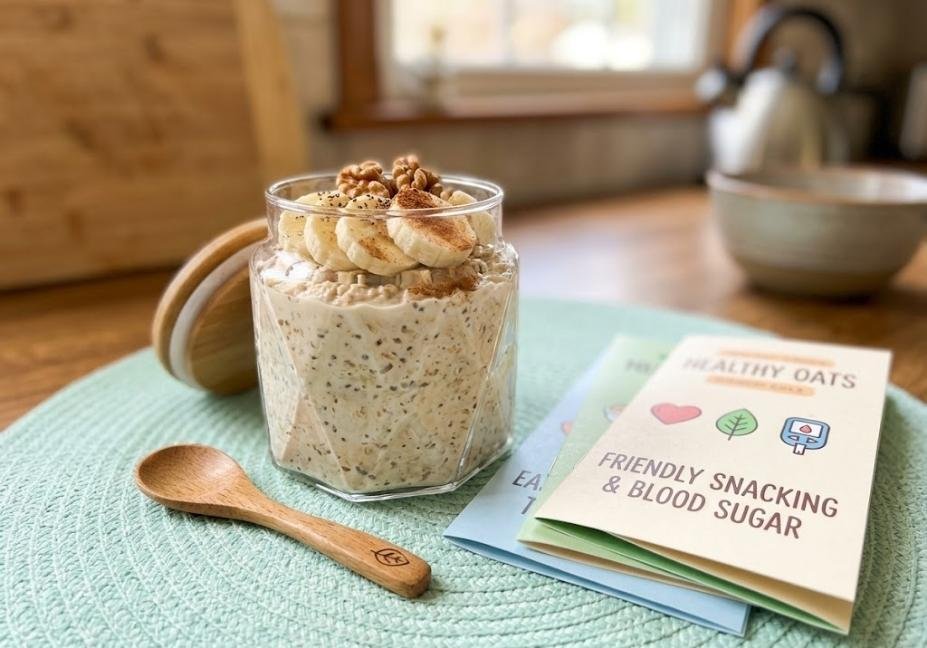
Why Can Oats Fit Into a Diabetes-Friendly Diet?
Oats are a whole grain and contain carbohydrates, but they also provide fiber. The CDC explains that fiber is a type of carbohydrate that the body does not fully digest and that it can help with blood sugar control. Soluble fiber can form a gel-like substance during digestion, slowing digestion and helping with blood sugar and cholesterol management.
Oats are also a source of soluble fiber called beta-glucan. This is one reason oats can be different from a highly refined, low-fiber breakfast food.
However, “healthy” does not mean unlimited. Oats still contribute carbohydrates to a meal. The CDC explains that starches such as oats can raise blood glucose, while fiber is not digested in the same way.
That is why a diabetes-friendly overnight oats recipe should focus on the whole meal, rather than treating oats as a food that automatically prevents blood sugar increases.
Also read the article : Falafel Nutrition Facts: Calories, Protein & Benefits
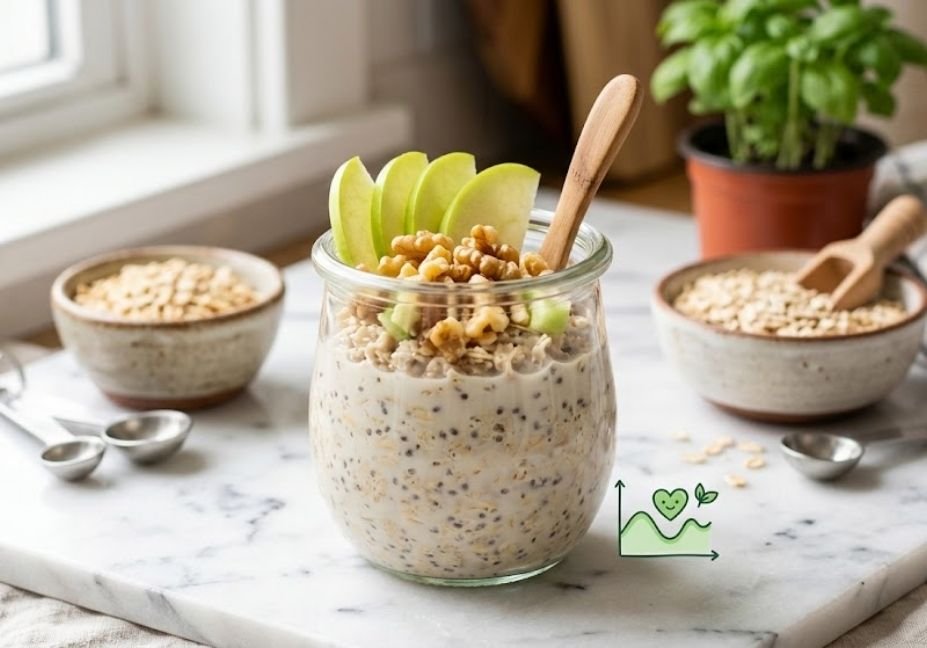
Best Overnight Oats Recipe for Diabetics
This simple version emphasizes fiber, protein and unsweetened ingredients.
Ingredients
- 1/2 cup old-fashioned rolled oats
- 1/2 cup unsweetened almond milk
- 1/2 cup plain Greek yogurt
- 1 tablespoon chia seeds
- 1/4 cup fresh or frozen berries
- 1 tablespoon chopped almonds or walnuts
- 1/2 teaspoon cinnamon
- 1/2 teaspoon vanilla extract
- Optional: a small amount of unsweetened cocoa powder
Instructions
- Add the rolled oats and chia seeds to a clean jar or container.
- Pour in the unsweetened almond milk.
- Add the plain Greek yogurt and vanilla.
- Stir everything until well combined.
- Add the cinnamon.
- Fold in the berries or place them on top.
- Cover the container and refrigerate overnight, or for at least several hours.
- In the morning, stir the mixture.
- Add the chopped nuts before eating.
- Add a small splash of unsweetened milk if the oats are too thick.
There is no need to add sugar, honey or syrup if the berries and cinnamon provide enough sweetness.
The American Diabetes Association’s own overnight-oats recipe also uses rolled oats, unsweetened almond milk, Greek yogurt, fruit, nuts and cinnamon, showing that this general ingredient pattern can fit into a diabetes-focused recipe collection.
Also read the article : Traditional Beef Tacos Recipe: An Authentic Mexican Favorite
What Makes These Overnight Oats Diabetes Friendly?
The ingredient combination is more important than the word “overnight.”
Rolled Oats Provide Whole-Grain Carbohydrates
Old-fashioned rolled oats provide carbohydrates along with fiber. The CDC specifically recommends whole grains and lists old-fashioned or steel-cut oats as alternatives to sugary cereals.
The amount still matters. A large serving of oats can provide considerably more carbohydrate than a smaller serving, especially when additional fruit, milk and sweeteners are added.
Greek Yogurt Adds Protein
Plain Greek yogurt adds protein without requiring added sugar. Protein can make a meal more filling, and pairing carbohydrate-containing foods with protein is part of practical diabetes meal planning. The CDC recommends adding a protein source when eating a meal or snack containing carbohydrates.
Flavored Greek yogurt is a different choice because some varieties contain added sugar. Plain yogurt gives the person more control over the sweetness.
Chia Seeds Add Fiber
Chia seeds provide fiber and can make overnight oats thicker. They also add texture and healthy fats.
Because fiber intake can increase digestive discomfort when increased suddenly, people who are not accustomed to high-fiber foods should increase fiber gradually and drink enough fluid. The CDC specifically recommends increasing fiber slowly.
Berries Add Fruit Without Requiring Added Sugar
Berries can provide natural sweetness and fiber. They can be used instead of honey, maple syrup or brown sugar.
Fresh or frozen berries can work well. A small portion is generally enough to add flavor without turning the bowl into a large fruit-heavy breakfast.
Nuts Add Texture and Fat
Almonds and walnuts can add healthy fats, protein and texture. However, nuts are energy-dense, so a small portion is usually enough.
Ingredients to Limit in Overnight Oats for Diabetics
The biggest problem with many overnight-oats recipes is not the oats themselves. It is the collection of sweet ingredients added around them.
Honey and Maple Syrup
Honey and maple syrup are still sources of sugar. A recipe can contain nutritious oats and yogurt but become much higher in added sugar after several spoonfuls of syrup are added.
For a lower-sugar version, cinnamon, vanilla, berries or unsweetened cocoa can provide flavor without relying heavily on added sweeteners.
Sweetened Yogurt
Fruit-flavored and dessert-style yogurts may contain added sugar. Plain Greek yogurt provides more control over what goes into the bowl.
Granola
Granola can add crunch, but some varieties are high in added sugars and carbohydrates. If granola is used, checking the Nutrition Facts label and keeping the serving small is important.
Dried Fruit
Raisins, dates, dried cranberries and other dried fruits are concentrated sources of carbohydrate. A small amount can fit into some eating plans, but it is easy to add more than intended.
Fresh berries or a small portion of fresh apple can be easier options for a lower-sugar overnight-oats recipe.
Sweetened Plant Milk
Unsweetened almond milk and other unsweetened milk alternatives can help reduce added sugar. Always check the label because products in the same category can have very different nutrition profiles.
How Much Oats Should a Diabetic Eat?
There is no single portion that is correct for every person with diabetes.
Carbohydrate needs vary according to factors such as medication, insulin use, activity, body size and individual treatment goals. The CDC notes that people with diabetes may count carbohydrates to help manage blood glucose and that one carbohydrate serving is approximately 15 grams of carbohydrate.
For that reason, the better approach is to look at the total carbohydrate in the finished bowl, not just the oats.
For example, 1/2 cup oats may be combined with milk, yogurt, fruit and seeds. Each ingredient contributes to the overall nutrition profile.
A person following a specific carbohydrate target should adjust the recipe with guidance from their diabetes care team.
Best Toppings for Diabetes-Friendly Overnight Oats
Toppings can turn a simple bowl into a dessert-like breakfast, so choosing them carefully makes a difference.
Good Options
- Fresh strawberries
- Blueberries
- Raspberries
- Blackberries
- Chia seeds
- Ground flaxseed
- Almonds
- Walnuts
- Pumpkin seeds
- Unsweetened coconut
- Cinnamon
- Unsweetened cocoa powder
- Plain Greek yogurt
Use Smaller Portions Of
- Banana
- Mango
- Grapes
- Dried fruit
- Granola
- Honey
- Maple syrup
- Sweetened coconut
- Chocolate chips
The goal is not to label individual foods as completely forbidden. Instead, portion size and the total carbohydrate and added sugar content of the meal should be considered.
5 Easy Overnight Oats Variations for Diabetics
1. Berry Chia Overnight Oats
Combine rolled oats with unsweetened almond milk, plain Greek yogurt, chia seeds, cinnamon and mixed berries.
This version is naturally sweet from the fruit and does not need syrup.
2. Apple Cinnamon Overnight Oats
Use a small chopped apple, rolled oats, plain Greek yogurt, unsweetened almond milk, almonds and cinnamon.
This combination is closely related to the American Diabetes Association’s Cinnamon Apple Overnight Oats recipe. Their published version provides 5 grams of fiber and 10 grams of protein per serving.
3. Peanut Butter Overnight Oats
Add a small amount of natural peanut butter to rolled oats, unsweetened milk, Greek yogurt and chia seeds.
Choose peanut butter without added sugar when possible and check the nutrition label.
4. Chocolate Berry Overnight Oats
Mix unsweetened cocoa powder with oats, Greek yogurt, chia seeds and unsweetened milk. Add a small portion of berries in the morning.
This creates a chocolate flavor without relying on chocolate syrup.
5. Apple Walnut Overnight Oats
Combine chopped apple, walnuts, cinnamon, rolled oats, plain Greek yogurt and unsweetened milk.
The apple provides natural sweetness while cinnamon and walnuts add flavor and texture.
Are Overnight Oats Better Than Cooked Oatmeal for Diabetes?
Not necessarily.
Overnight oats and cooked oatmeal can both be part of a balanced eating pattern. The bigger issue is the ingredients, portion size and total carbohydrate content.
Overnight oats are convenient because they can be prepared ahead of time. The American Diabetes Association specifically describes overnight oats as a grab-and-go breakfast that can be prepared the night before.
Cooked oatmeal can also be nutritious when made with minimally processed oats and diabetes-friendly toppings.
Rather than focusing on whether soaking or cooking is automatically “better,” it makes more sense to consider the complete meal.
Can Overnight Oats Cause a Blood Sugar Spike?
They can.
Oats contain carbohydrates, and carbohydrates can raise blood glucose. Adding large portions of fruit, sweeteners, sweetened yogurt or granola can increase the carbohydrate load further.
The CDC explains that sugars and starches raise blood glucose, while fiber is not absorbed in the same way.
The response can also differ between individuals.
Someone with diabetes may find that one overnight-oats recipe produces a different glucose response from another. Medication, activity, portion size and individual metabolism can all influence the result.
People who monitor blood glucose can use their healthcare professional’s recommended monitoring plan to understand how specific meals affect them.
How to Make Overnight Oats Lower in Added Sugar
A few simple changes can substantially change the recipe.
Choose plain yogurt: Use plain Greek yogurt instead of sweetened yogurt.
Use unsweetened milk: Check the label for added sugars.
Choose whole fruit: Use berries or a small amount of apple instead of fruit syrup.
Skip the syrup: Cinnamon and vanilla can provide plenty of flavor.
Watch granola: Use a small amount or replace it with nuts and seeds.
Read labels: Different brands of yogurt, milk and nut butter can have very different carbohydrate and sugar amounts.
The CDC recommends choosing whole foods and paying attention to nutrition information when building a healthy eating pattern.
Can Diabetics Eat Overnight Oats Every Day?
Some people with diabetes can include overnight oats regularly, but there is no universal requirement to eat them every day.
A varied diet can provide different nutrients and flavors. Overnight oats can be rotated with other breakfast options such as eggs with vegetables, plain Greek yogurt with berries and nuts, or another whole-grain breakfast that fits an individual’s meal plan.
For people who enjoy overnight oats and find that the recipe fits their carbohydrate goals and blood glucose response, it can be a convenient breakfast option.
Storage and Food Safety Tips
Overnight oats should be prepared in a clean container and kept refrigerated.
Because the recipe commonly contains milk or yogurt, it should not be left at room temperature for extended periods.
Prepare the oats in a covered container, refrigerate them promptly and follow the storage guidance for the specific dairy or milk product used.
Adding fresh toppings such as berries and nuts shortly before eating can also help preserve texture.
Common Mistakes When Making Overnight Oats for Diabetics
Making the Portion Too Large
Even nutritious ingredients contain calories and carbohydrates. A very large jar can turn a moderate breakfast into a high-carbohydrate meal.
Adding Too Many Sweet Ingredients
Honey, syrup, sweetened yogurt, granola and dried fruit can quickly increase added sugar and carbohydrate.
Forgetting Protein
Oats and fruit provide carbohydrates, but adding Greek yogurt, nuts or seeds can make the meal more balanced.
Ignoring Nutrition Labels
“Healthy,” “natural” or “organic” on a package does not automatically mean that the product is low in sugar or carbohydrates.
Increasing Fiber Too Quickly
A sudden increase in fiber may cause bloating or other digestive discomfort. The CDC recommends increasing fiber gradually and drinking enough water.
Overnight Oats for Diabetics: Simple Formula
A useful formula for building a balanced jar is:
Whole-grain oats + unsweetened liquid + protein + fiber-rich seeds + a small fruit portion + healthy fat
For example:
1/2 cup rolled oats + unsweetened almond milk + plain Greek yogurt + chia seeds + berries + walnuts
This combination provides several complementary ingredients without requiring added sugar.
The exact portion should still be adjusted according to an individual’s carbohydrate needs.
Frequently Asked Questions
Are overnight oats good for diabetics?
Yes, overnight oats can fit into a diabetes-friendly eating pattern when portions and ingredients are appropriate. Oats provide whole-grain carbohydrates and fiber, while Greek yogurt, seeds and nuts can add protein, fat and additional fiber.
What oats are best for diabetics?
Old-fashioned rolled oats and steel-cut oats are generally preferable to highly sweetened instant-oat products. The CDC specifically recommends old-fashioned or steel-cut oats as whole-grain alternatives to sugary cereals.
Can diabetics eat overnight oats every morning?
They may be able to, depending on their individual meal plan and glucose response. Variety is still useful, and people using insulin or glucose-lowering medication should follow their healthcare professional’s carbohydrate guidance.
Is Greek yogurt good in overnight oats for diabetics?
Plain Greek yogurt can be a useful addition because it provides protein without requiring added sugar. Sweetened varieties may contain more added sugar, so nutrition labels should be checked.
Can I add bananas to diabetic overnight oats?
Banana can be included in some diabetes meal plans, but portion size matters because fruit contributes carbohydrates. A smaller portion can be used instead of adding a large banana to the jar.
Is honey okay in overnight oats for diabetics?
Honey is a source of sugar, so it should not be treated as a sugar-free ingredient. Many overnight-oats recipes can be sweetened naturally with berries, apple, cinnamon or vanilla instead.
Do overnight oats lower blood sugar?
Overnight oats should not be described as a food that lowers blood sugar. Oats contain carbohydrates and can raise blood glucose. Their fiber content and the way they are combined with other foods can make them part of a balanced meal, but individual responses vary.
How long should overnight oats soak?
A common approach is to refrigerate them overnight. The American Diabetes Association’s Cinnamon Apple Overnight Oats recipe recommends refrigerating the mixture overnight or for at least 8 hours.
Key Takeaways
- Overnight oats can fit into a diabetes-friendly breakfast.
- Oats still contain carbohydrates, so portion size matters.
- Fiber is an important part of a diabetes-friendly eating pattern.
- Plain Greek yogurt can add protein without added sugar.
- Chia and flaxseed can increase fiber.
- Berries and small portions of apple can add natural sweetness.
- Unsweetened milk is generally preferable to sweetened versions.
- Honey, syrup, sweetened yogurt and sugary granola can increase added sugar.
- Individual blood glucose responses can vary.
- People taking diabetes medication should follow their individualized meal and carbohydrate guidance.
Conclusion
Overnight oats for diabetics can be a simple, filling and convenient breakfast when the recipe is built around balanced ingredients. Old-fashioned rolled oats provide whole-grain carbohydrates and fiber, while plain Greek yogurt, chia seeds, nuts and berries can create a more balanced meal.
The American Diabetes Association already features a Cinnamon Apple Overnight Oats recipe containing rolled oats, unsweetened almond milk, Greek yogurt, apple, almonds and cinnamon, demonstrating that overnight oats can be included in diabetes-focused meal planning.
The most important consideration is not simply whether oats are “good” or “bad” for diabetes. The portion, total carbohydrates, added sugars, protein, fiber and individual blood glucose response all matter.
For a simple starting point, a small serving of rolled oats combined with unsweetened milk, plain Greek yogurt, chia seeds, berries and a few nuts offers a practical way to prepare breakfast the night before without relying on large amounts of added sugar.




3 Comments